

Ochrana přírody 5/2026 — 29. 10. 2026 — Summary — Tištěná verze článku v pdf
Summary – Ochrana přírody 5/2026
Krása A., Franc D., Chalupka F., Musil Z., Skočková L. & Tůma A.: The Moravský kras/Moravian Karst Protected Landscape Area Celebrates 70 years
The Moravský kras/Moravian Karst Protected Landscape Area (South Moravia) is the second oldest PLA in the Czech Republic and the year 2026 marks the 70th anniversary of its designation. A very significant milestone was the restriction of motor traffic in Pustý a Suchý žleb/Wild Glen and Dry Glen, at the same time one of the most valuable and most popular parts of the Protected Landscape Area. Cooperation with farmers, landowners and local authorities has also been developing successfully, thanks to which a more natural landscape structure is being restored. The habitats have also been changing there; for example, there has been an increase in the number of sinkholes. The length of known cave passages has also increased, and entirely new large cave chambers have been discovered there. The Moravský kras/Moravian Karst has not been spared the negative impacts of recent decades, particularly the lack of moisture and the resulting European spruce bark beetle (Ips typographus) plagues and wind damage to the forest stands. Many wild plant populations are responding to this with a decline in vitality or abundance. The PLA´s iconic taxonomic group is the bats. They are generally thriving and the populations of most species have been increasing. However, a number of issues has still been awaiting a solution, in particular further improvements to wastewater treatment and the mitigation of the negative impacts caused by intensive agricultural practices. Sufficient funding is, however, essential for this. ■
Antl J. & Korytář J.: The New Primeval Forest on the Ještědský hřeben/Ještěd Ridge – 20 Years’ Experience of Forest Conversion at the Vápenice-Basa Site of Community Importance/Special Area of Conservation
Twenty years after its launch, the ‘New Primeval Forest’ project demonstrates that, from a technical point of view, the conversion of Norway spruce (Picea abies) monocultures/plantations into a diverse, close-to-natural forest need not be particularly difficult or complex. In 2004, the first 8 hectares of forest on the Ještědský hřeben/Ještěd Ridge (northern Bohemia) were successfully purchased. It was a young spruce monoculture, broken by snow, damaged by cloven-hoofed game, dark and almost without any undergrowth. Over the following twenty years, further areas were gradually acquired. The Čmelák/Bumblebee non-profit organisation now owns 38.8 hectares of land there, representing approximately 28 per cent of the total area of the Vápenice–Basa Site of European Importance (SEI, pursuant to Act No. 114/1992 on Nature Conservation and Landscape Protection, as amended later, the term for Site of Community Importance, SCI, later Special Area of Conservation, SAC, under the European Union’s Habitats Directive) The spruce trees are felled in such a way as to create clearings of varying sizes and shapes. New tree species are planted in mixed groups, rather than in rows or single-species stands, and some of the felled and debarked trunks have been left lying just in situ, partly for visual and aesthetic reasons. Due to high cloven-hoofed game numbers, 53 fenced enclosures with a total length of 6.3 km have already been constructed within the SCI/SAC. The reality is that some of them will need to be maintained for thirty years or more. The site demonstrates that a visible transformation of a damaged forest can be initiated within a few decades. Should a European spruce bark beetle (Ips typographus) infestation or plagues occur today, it would no longer mean the destruction of the entire stand across much of the land, but rather an acceleration of the ongoing transformation. ■
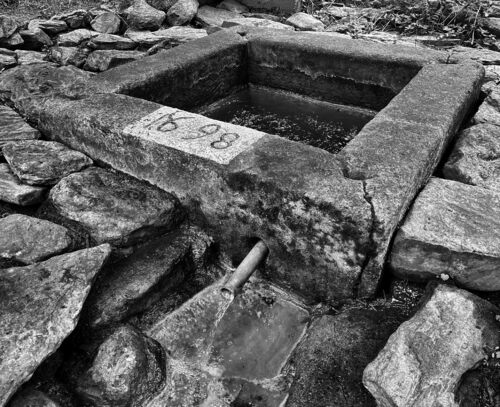
A mineral spring drained into a historic basin (a granite monolith dating from 1698) at the Kyselecký hamr Hammer Mill (western Bohemia). Photo by Přemysl Bobek
Prach M., Iberl K., Fér T., Skálová H., Chrtek J. & Herben T.: The Genetic Structure of Common Meadow Species as a Basis for the Development of Seed Mixtures
In addition to the species composition itself, the genetic structure of meadow species – which is less visible but equally important – reflects their historical distribution, spatial isolation and natural population boundaries. Furthermore, seed originating from areas outside a given region may, over time, result in the genetic ‘dilution’ of local populations and thus a reduction in their viability. Alongside additional targeted collection in less well-covered regions, 398 sites across the Czech Republic were visited with the help of 66 volunteers, and a total of 10,200 samples were collected (mostly 5 samples per species per site). The results of genetic (ddRADseq) analyses for 7 species and flow cytometry for 4 known polyploid species are now available. Populations from the Carpathian region in the country´s east almost always differ from those in western Bohemia; however, the transition between them is often gradual, poorly defined, and any boundary between them also varies in its geographical location. Therefore, the long-distance dispersal of seeds may be potentially problematic – for most species, this involves distances exceeding 100 km or more. Thus, the practice of using local regional seed mixtures is well supported by genetic data, and their use does not pose a significant risk of genetic erosion. ■
Lysák F., Franková M. & Bobek P.: Anthropogenic Influences on the Landscape of Mineral Springs in Western Bohemia
The mineral springs of western Bohemia are among the most remarkable natural phenomena in the Czech Republic. They represent unique sites where deep geological processes interact with surface ecosystems. Many populations of living organisms have survived there for hundreds to thousands of years, often in the conditions of primary or culturally created treeless oligotrophic wetlands. The natural emergence of mineral water is usually widespread and diffuse, so that the water rises to the surface through multiple pores across an area ranging from a few square metres to tens of square metres. Simple wooden structures were traditionally used to capture natural seepage, most commonly a so-called ‘stump’ – a thick hollow trunk sunk approximately one to two metres into the ground. These modifications concentrated the seepage into a single point and facilitated water extraction. In the 20th century, deep, technically equipped boreholes became particularly prevalent. Water abstraction is generally associated with the suppression of natural flooding and the reduction of waterlogged habitats, thereby diminishing the conditions suitable for the existence of wetland habitats. At the same time, however, there are technical solutions for water abstraction which, when sensitively designed and implemented, make it possible to preserve the natural hydrological regime of spring areas and minimise negative impacts on their biodiversity. ■
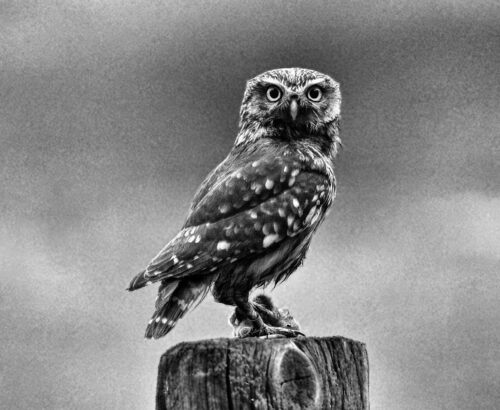
Little Owl (Athene noctua). Photo by Jiří Hornek
Dusík M. & Plesník J.: The Use of Birds of Prey and Owls in the Conservation Biological Control of Rodent Pests in Farmland
When using conservation biological control to protect crops and forest woody plants against small rodents as part of Integrated Pest Management, the focus should be primarily on myophagous predators, whose population density can be significantly increased within a reasonable timeframe through support measures in the landscape. In Central Europe, these include, in particular, common species of hole/cavity-nesting birds of prey and owls. In 1978-1994 hole/cavity-nesting birds of prey and owls were supported during both the breeding and non-breeding seasons, small mammal were trapped and Common vole (Microtus arvalis) active burrows were counted and the diet of the selected avian predators analysed using various methods in intensively used farmland in the Hradec Králové region, eastern Bohemia: the study area covered 536 km2. Initially, wooden nest boxes of various types and sizes were used to encourage breeding of the rodent-eating hole-nesting avian predators there. These were subsequently successfully replaced by nest boxes made from plastic canisters with a capacity of 25–30 litres for the Common kestrel (Falco tinnunculus) and the Long-eared owl (Asio otus), and 40–60 litres for the Tawny owl (Strix aluco). Totally, 1,250 plastic nest boxes were erected there. In Common vole peak years, 730 pairs of Common kestrel, 69 pairs of Tawny owl, 16 pairs of Long-eared owl and individual pairs of the Barn owl (Tyto alba) and Little owl (Athene noctua) bred within the study area. Between 1979 and 1994, the number of breeding pairs of supported avian predators increased tenfold. By the placement of artificial perches the Common Buzzard (Buteo buteo) and other species of birds of prey and owls wintering there also became part of conservation biological control of small rodents. Compared with the control plots, sites where perches had been installed showed a significant reduction in the number of active Common vole burrows of at least 30% and, under certain circumstances, as much as 80% between December and March. A significant and sustained reduction in small rodent numbers, particularly of Common Vole was found following ten years of intensive nesting support and the installation of perches and rodenticide application was also heavily reduced there. The authors suggest that avian predators cannot prevent Common vole peaks in the agricultural landscape but they can by long-term permanent predation pressure significantly decrease population density of the rodent in peaks and shifted them towards the post-harvest period. ■
Šálek M., Rolečková B., Linhart P., Madhavan M., Procházka P., Sailas S. & Valterová R.: What Voices, Rings, and Genes Revealed About the Dispersal, Survival, and Genetic Status of the Little Owl Population in the Czech Republic
The Little owl (Athene noctua) is among the most endangered bird species in the Czech Republic, with a population not exceeding 120 breeding pairs. It has been found that a male’s call is not merely a fixed “signature” of his identity but may also be related to his social surroundings. Males living in close proximity to other little owls exhibit more distinct individual vocalizations than isolated individuals. It was further found that among Czech little owls, genetically more closely related males have statistically more similar calls; however, the relationship was not demonstrated in the Hungarian population. The results showed that the first year of life is the period of highest mortality risk for these avian predators. According to estimates, only 28.6% of juveniles survived from one year to the next, while the probability of survival among adults was significantly higher, reaching 70.3%. Therefore, even a relatively small increase in the survival of young birds could have a significant positive impact on the species’ population trajectories. Furthermore, allowing individuals (and their genes) to move between populations appears to be essential for the species’ long-term survival. It is precisely sufficient connectivity between populations that can significantly help prevent the loss of genetic diversity and inbreeding, which have already been beginning to manifest in some parts of the Czech population. ■
Hošková L.: The Czech Society for Ornithology Celebrates 100 Years—100 Years of Efforts for Birds and People
The need for mutual communication, the sharing of experiences, and the joining of forces in the research on and conservation of avifauna brought thirteen leading Czech professional and amateur ornithologists to the U Bumbrlíčka/ The Glutton restaurant on Prague’s Národní třída Avenue on April 5, 1926, to found a new nationwide ornithological organization. Women were the exception among the members; teacher Karla Totušková became the first female member of the Czechoslovak Ornithological Society (ČsOS) in 1936. Today, women make up more than half of the membership, and the rifles and collections of the past have been replaced by binoculars, cameras, online databases, and other modern technologies. At the national level, a key milestone was the launch of the Avif faunal database in 2010. Currently, it contains nearly 16 million bird sighting records, manages data from the National Museum’s Bird Ringing Station, and is used by thousands of users. Since 2017, the Czech Society for Ornithology (ČSO) has operated a canine unit that searches for poisoned bait; its work, in cooperation with the police, has already contributed to the conviction of three poisoners. Today, the ČSO, inter alia, operates eight private reserves, called bird parks, in eight regions and is working to establish them in all regions of the Czech Republic. Thus, the ČSO has changed from a small expert club to an increasing non-governmental organisation with more than 8,000 members dealing with research on and protection, conservation and management of birds and their habitats in the Czech Republic. ■
Pešout P. & Šůlová K.: The Ochrana přírody/The Nature Conservation Journal Celebrates its 80th Anniversary
Eighty years ago, the first issue of the journal Ochrana přírody/The Nature Conservation Journal saw the light of day. The journal simultaneously served as the official gazette for the State Nature Conservancy. It therefore comprised not only a technical/expert section but also an official section, in which the relevant authorities published decrees on the declaration of protected areas and other decisions and recommendations. In 1965, the first supplement to the journal was published, namely a guide to the first Czechoslovak nature trail/educational path in the Medník Hill State Nature Reserve (Central Bohemia). In 1976, the journals Památková péče/Historical Heritage Preservation and Ochrana přírody/The Nature Conservation Journal merged to form the joint periodical Památky a příroda/Monuments and Nature. Since 1992, both the specialist journals have been published separately once again – Zprávy památkové péče/Czech Journal of Historical Heritage Preservation and Ochrana přírody/The Nature Conservation Journal, the latter entering its 47th volume. The year 2007 brought a new layout, and the journal has now been published as a full-colour bimonthly. Since 2008, individual articles have also been published in electronic form, with readership statistics available on a dedicated website. Since 2020, an English-language review has begun to be published – a selection of articles from the previous year volume, presenting new information, methods or findings that might be of interest to international partners. The review also offers summaries of all other articles from the relevant volume. ■
Hromas, J.: Twenty Years of the Independent Caves Administration of the Czech Republic
On April 1, 2026, twenty years passed unnoticed since the establishment of the independent Caves Administration of the Czech Republic. Its main task is the protection and preservation of the most significant and valuable cave systems, alongside their appropriate presentation to the public and the aim of promoting knowledge and education. In recent years, a number of conservation measures have been carried out in the caves across the country. Excessive concrete surfaces, disused walkways and staircases have been removed. To prevent irreversible changes to the cave microclimate, visitor numbers have been limited in accordance with research findings and in consultation with the State Nature Conservancy authorities. Maximum group sizes, intervals between groups and daily visitor limits have been set. A truly remarkable achievement was discovering the causes of the degradation in the unique crystalline aragonite coatings at Opona/Curtain in the Zbrašovské jeskyně/Zbrašov Caves, (Central Moravia), the development of an effective method and the subsequent preservation of these rare formations. The JESO system (Unified Cave Register) gathers information and basic documents on 4,232 caves located across the Czech Republic, and the linked mapping application, Jesowiev, presents the information in a broader context. International cooperation is also significant; for example, in 2019 a study was carried out for the Republic of Moldova on opening up the world’s third-longest gypsum cave, the Emile Racovita (Zoluška) cave, being over 92 km long. ■
Plesník J.: UNESCO World Heritage Was on the agenda in Busan
In July 2026, 750 delegates travelled to Busan, South Korea’s second-largest city in terms of both area and population where the 48th Session of the UNESCO’s World Heritage Committee (WHC) was held. For the first time, the delegation of the Czech Republic participated in the meeting as WHC member because the country had been elected for that position for 2026-2029 in November 2025. The event’s agenda was indeed packed: over the course of eleven days, participants had to discuss 33 nominations for inscription on the UNESCO World Heritage List and carefully assess the state of conservation of a further 146 sites. Of the nine proposed natural sites, a total of six were successful: the Aqaba Marine Reserve (Jordan), Okefenokee Swamp (USA), Wadi Wurayah (UAE), Western Limfjord sites (Denmark), and an emergency inscription for the Boma–Badingilo Migratory Landscape (South Sudan). Due to criteria modification Garamba National Park (Democratic Republic of the Congo) was again inscribed on the prestigious list but similarly to the South Sudan property it was simultaneously placed on the List of World Heritage in Danger. The Greater Region of the Mount Olympus (Greece) became the only mixed World Heritage property approved during the session. The meeting in Busan also addressed international assistance, particularly for Parties in Africa and Small Island Developing States as well as improvements to the implementation of the World Heritage Convention. The meeting clearly confirmed the importance of preserving and managing the natural, cultural and mixed UNESCO World Heritage. ■
- - - -
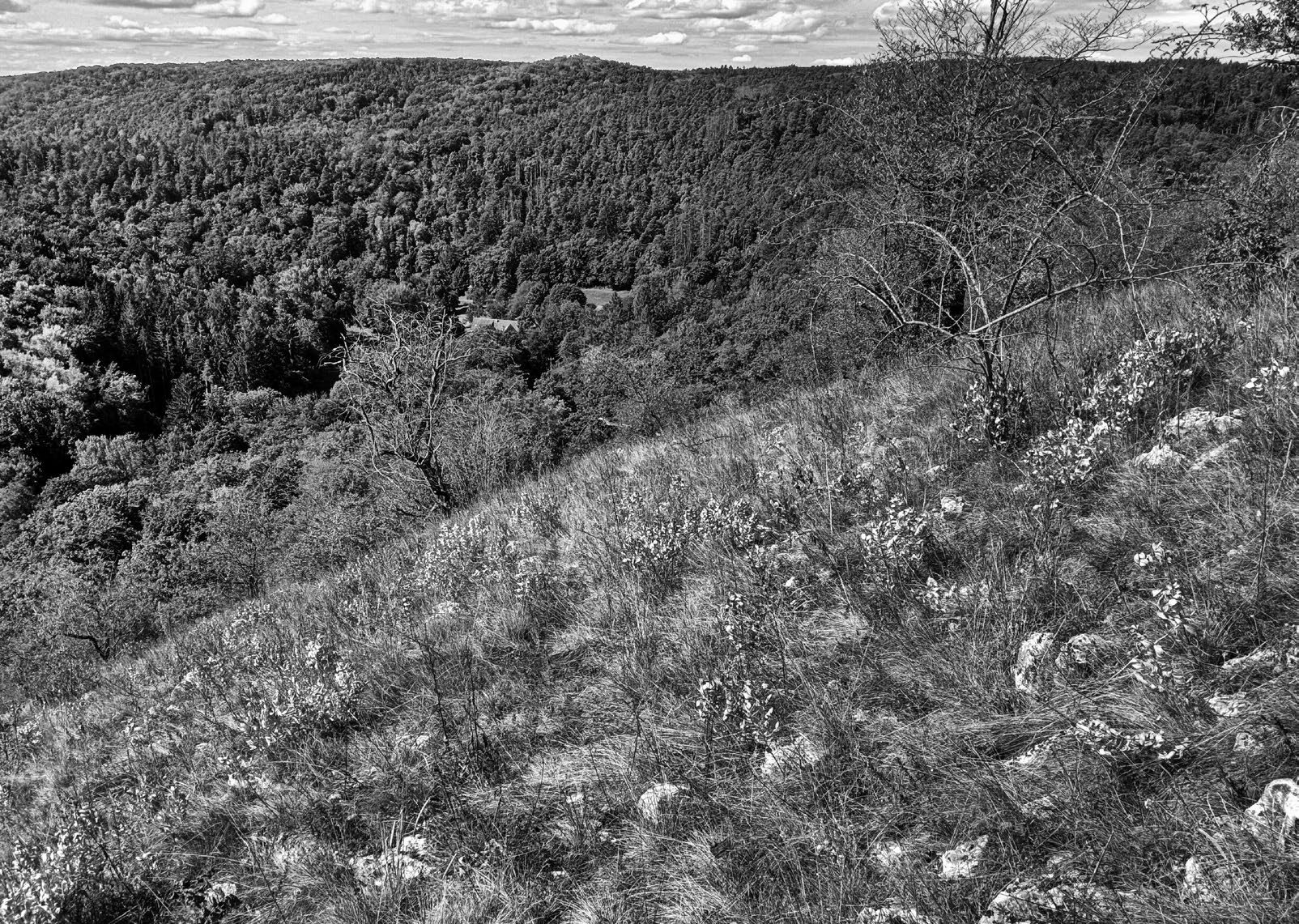
Intro photo: Lysá hora/Bare Hill in the Moravský kras/Moravian Karst Protected Landscape Area (South Moravia). Photo by Antonín Krása