

Ochrana přírody 4/2026 — 27. 8. 2026 — Summary — Tištěná verze článku v pdf
Summary – Ochrana přírody 4/2026
Budský F., Bělohouběk J., Kopecký V. & Kyselka J.: Half a Century in the Embrace of Extinct Volcanoes – 50 years of the České středohoří/Central Bohemian Uplands Protected Landscape Area
The České středohoří/Central Bohemian Uplands (northern Bohemia) harbours a unique and aesthetically fascinating landscape within Central Europe. The year 2026 marks the 50th anniversary of the official designating the Protected Landscape Area of the same name. The extraordinary geomorphological diversity of the local terrain has had its origins in Neogene volcanic activity. The landscape is characterised by isolated, sharp volcanic cones, phonolite or basalt volcanic domes, vast plateaus, watercourses, steep gorges and romantic waterfalls. A fundamental turning point in the landscape use by humans occurred after 1945. The expulsion of the German population and the onset of agricultural collectivisation led to a change in traditional farming practices, the consolidation of land parcels, the ploughing up of field boundaries or balks and the felling of fruit trees. At some sites, agricultural land was also completely abandoned; steep slopes began to become overgrown with self-sown trees, and secondary broadleaved deciduous woodland began to form. It is impossible to maintain species richness without active human interventions. LIFE projects funded by the European Union have led to the restoration of dry grasslands and feather grass steppes, controlled grazing by sheep and goats, the removal of self-sown scrub, and the restoration of orchards. They have also had a positive impact on the Hermit (Chazara briseis), the European ground squirrel (Citellus citellus), the European green lizard (Lacerta viridis) and the Eastern pasqueflower (Pulsatilla patens). However, the Central Bohemian Uplands also face intensive quarrying of building stone, new linear infrastructure projects, suburbanisation, and new residential and commercial development. The future is in adaptation, active land-use/physical planning, comprehensive land replotting schemes and sustainable and close-to-nature or nature-friendly land management. ■
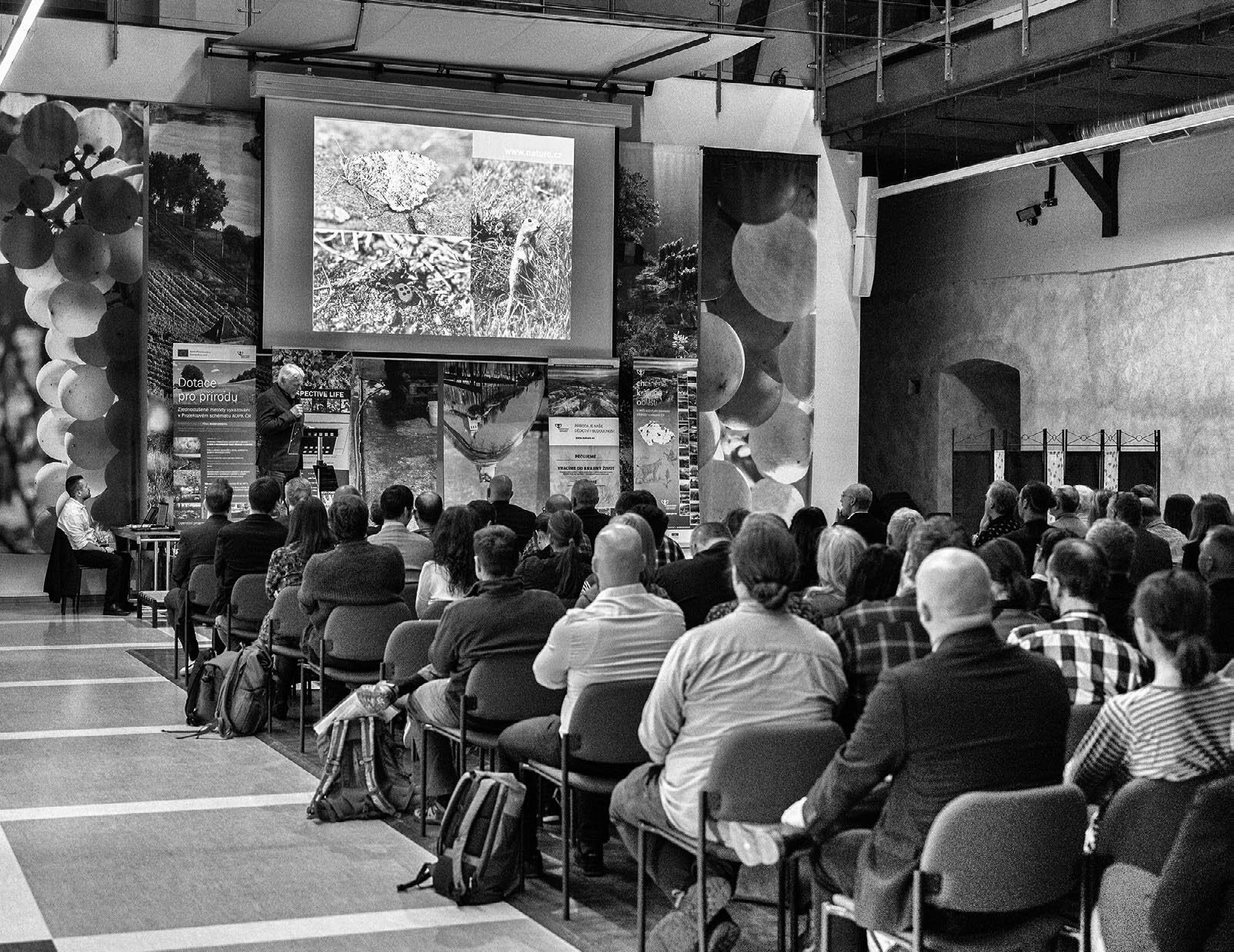
Conference marking the 50th anniversary of the České Středohoří/Central Bohemian Uplands Protected Landscape Area (northern Bohemia). Photo by Jana Holubcová
Hrozek A. & Lánská L.: The Fifth Decade of the Lužické hory/Lusatian Mountains Protected Landscape Area: Marked by the Bark Beetle and the Wolf
The main themes of the fifth decade of the Lužické hory/Lusatian Mountains Protected Landscape Area (northern Bohemia) are the European spruce bark beetle (Ips typographus) plague and the return of the apex predator – the Grey wolf (Canis lupus). The most significant event in the forests was the bark beetle outbreak of 2019–2022, which peaked in 2021; the central and western parts were hardest hit, where widespread destruction of forest stands occurred. The main cause was adverse climatic conditions, which reached their peak in 2018. From the perspective of the forest as a natural habitat, the assessment of the extensive disaster is quite different. One positive consequence is the rapid change in forest tree species composition. The regenerated stands often comprise 5–10 tree species, with broadleaved deciduous trees frequently predominating and a significant increase in the proportion of oaks, maples and lime trees. The resulting opening up of the forest growths has led to an increase in the species diversity of both wild plants and animals, as well as improved foraging opportunities for forest game. On the negative side, there is a habitat loss for certain bird species, short-term changes to the microclimate and water regime, and the risk of overpopulation of cloven-hoofed game/ungulates. The resulting clearings and young growths will require considerable management. Over the last ten years, wolves have re-established themselves in the Lužické hory/Lusatian Mts. The first sighting was recorded by a camera trap in 2016. In 2017, a pair of wolves established the first permanent wolf territory, and a year later, reproduction was confirmed. Every year, pups from one or two wolf families, i.e. packs are confirmed. As the Grey wolf is an apex predator, its return has altered the baseline conditions for the animals that are its usual prey. For farmers, however, the arrival of wolves presents a difficult choice and requires costly measures to protect their livestock. The Nature Conservation Agency of the Czech Republic provides informative lectures, consultation services and advice on subvention programmes/subsidy schemes. Both grazing on the meadows and the presence of wolves contribute to the health and biodiversity of the Lužické hory/Lusatioan Mts’ natural environment, and it is the task of the State Nature Conservancy to find ways to preserve both. ■
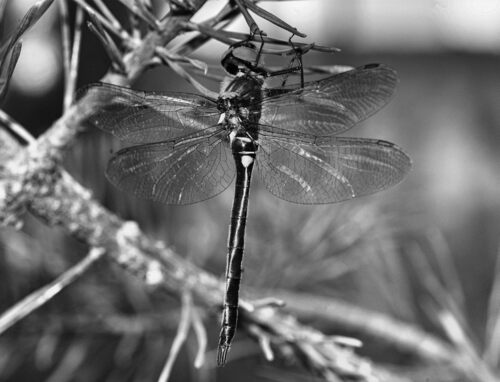
The Northern emerald (Somatochlora arctica) from the Lužické hory/Lusatian Mountains (northern Bohemia).
Photo by Martin Waldhauser
Forejt J: A New Site of the Aesculapian Snake in the Poohří/Ohře River Basin
Records of the Aesculapian snake’s (Zamenis longissimus) occurrence in the Kadaň area (northwestern Bohemia) date back as far as 1932. The Běšický chochol site was formerly another meander of the Ohře River; the riverbank was flanked by meadows and fields, from which this hill rose gently. It can be assumed that piles of stones cleared from cultivated fields, and perhaps even stone walls, were formed there. Due to plans to construct the Nechranice waterworks, the meander disappeared in 1968. In 2022, a survey was launched at the Běšický chochol site and the adjacent sludge lagoon to confirm the presence of the Green lizard (Lacerta viridis). On June 20, 2024, an Aesculapian snake measuring almost one metre in length was discovered during the survey. Subsequently, between 2024 and 2025, 11 tree snakes were observed at the site. In 2025, five nesting sites for egg-laying were constructed there. The discovery of three juveniles this season is very encouraging, indicating that the local population is reproducing naturally. The site was immediately included in the Aesculapian snake Action Plan/Recovery Programme in the Czech Republic. The question remains as to the origin of the population: it may be an expansion from the nearest existing site, the Želinský meandr/Želina Meander; alternatively, it may be the hidden survival of the original local population following the flooding of the Nechranice Water Reservoir. In the Czech Republic, only the eastern lineage of the above reptile had previously been known, the northern boundary of which extended precisely into the Poohří/Ohře River Baisn. However, following a thorough DNA analysis, a new haplotype belonging to the western clade of the tree snake was identified. ■
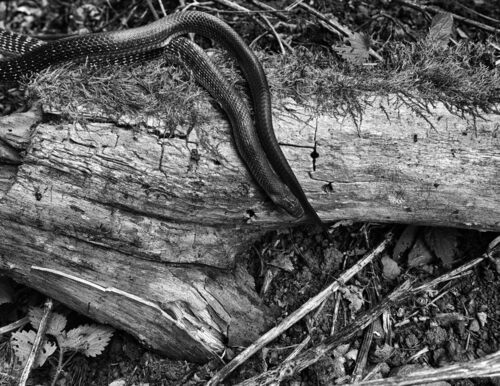
The Aesculapian snake (Zamenis longissimus). Photo by Jaroslav Forejt
Kuras T., Jozek D., Cabejšek M. & Mazalová M.: From Success to Uncertainty - the Apollo Butterfly at Štramberk Four Decades after Reintroduction
The Apollo butterfly (Parnassius apollo) is one of Europe’s most iconic and threatened species, strongly associated with open rocky and steppe habitats on calcareous substrates. Its last autochthonous population in the Czech Republic disappeared around 1935. In 1986, the first successful reintroduction of the species in the world was carried out at Štramberk (northeastern Moravia, Czech Republic), using source individuals from the Manín area in western Slovakia. The reintroduced population reached its peak of over 2,000 individuals in 1997, but has since declined dramatically to only tens of individuals confined to the terraces of the active Kotouč limestone quarry. Using long-term satellite data (NDVI), the authors demonstrate that progressive vegetation succession and habitat closure are the primary drivers of this decline. Climate change acts as an amplifying factor, particularly through mild and wet winters that increase mortality of overwintering stages, and through indirect effects on host plant availability. The results presented in the article emphasize that the long-term survival of the population depends not on climatic determinism but on active habitat management — specifically the suppression of woody encroachment and maintenance of open, sun-exposed microsites with abundant host plants (Sedum spp.) and nectar sources. The active quarry at Kotouč represents a unique opportunity, as its terraces and rock faces can functionally substitute for the original rocky steppes that were largely destroyed by limestone extraction in the late 19th and early 20th centuries. ■
Uhlíková J.: Is It Possible to Harmonize Wind Farms with the Protection of Birds and Bats?
Wind power is considered one of the key tools for reducing greenhouse gas emissions, but it can also have negative impacts on biodiversity. The main negative impacts include habitat loss and fragmentation, disturbance of wildlife, and, above all, direct mortality caused by collisions with rotating turbine blades. Particularly vulnerable are some species of raptors, storks, cranes, and migratory bats. In bats, fatalities may also result from barotrauma, caused by rapid air-pressure changes near turbine rotors. Current evidence suggests that the most effective mitigation measure is careful site selection during the planning stage of a project. Where high-risk locations cannot be avoided, impacts can be reduced through measures such as temporary turbine shutdowns during periods of elevated collision risk. However, robust evidence on the effectiveness of many proposed mitigation measures remains limited. The issue of wind energy therefore highlights a broader challenge in nature conservation: we often understand quite well what threatens biodiversity, but we know much less about which measures can reliably protect and conserve it. ■
Bartoň D., Muška M., Váchová V., Augustýnek J., Kočvara L. & Šmejkal M.: The European Bullhead among Rocks and Paddles
The European bullhead (Cottus gobio) is a cryptic fish species associated with cold, clean, and stony sections of rivers. In the monitored stretch of the Jizera River within the Český ráj/Bohemian Paradise Protected Landscape Area, abundant populations of this protected species were recorded in both 2024 and 2025, both at a reference site without significant canoeing pressure and at the site near the village of Rakousy, which is heavily used for river recreation. The monitoring itself did not demonstrate a clear decline in bullhead abundance caused by boating activity. However, it did reveal significant recreational pressure, especially during low flows, when paddlers often get out of their boats and wade through the stony riverbed in places that the bullhead uses as key habitat. The article points out that, in addition to direct mechanical injury to the fish, disturbance of the riverbed and shelter sites may also occur. Therefore, protection measures should at this stage be based on prevention: better public awareness, monitoring of high-risk sites, and restricting boating during periods of very low flow. ■
Gaigr J., Ježek V., Leština D., Račanský Z., Vojík M. & Chobot K.: New Biodiversity Monitoring Methods at the Nature Conservation Agency of the Czech Republic
Long-term biodiversity monitoring across Europe is often fragmented, with significant taxonomic and spatial gaps. To bridge these deficiencies, the European Biodiversity Partnership (Biodiversa+) launched innovative pilot projects testing advanced technologies to establish a harmonised, interconnected pan-European monitoring network. Active participation by the Nature Conservation Agency of the Czech Republic spans governance assessments, remote sensing for habitat tracking, automated AI-driven image and bioacoustic sensors, and cutting-edge molecular methods like eDNA and organismal DNA metabarcoding. These initiatives demonstrate how transforming scientific innovation into practical nature conservation management can enhance early detection of biodiversity shifts and invasive alien species. ■
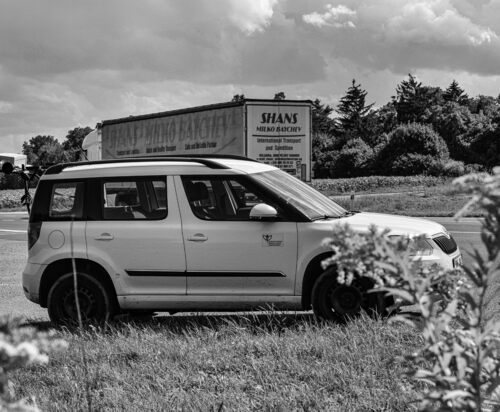
CamAlien is a system capable of continuously scanning the shoulders and verges of roads and highways at speeds of up to 130 km/h. This generates large volumes of data, which are analysed using AI to identify the target taxa. Photo by Martin Vojík
Karlík P., Vaníček J. & Zeidler M.: How Can Be the Impact of Cloven-hoofed Game/Ungulates on Forest Stands Assessed?
Overgrazing is one of the biggest problems facing forest management and the protection and conservation of biodiversity in the Czech Republic. Cloven-hoofed gme populations are enormous across the country and continue to grow in a large proportion of hunting grounds. The Nature Conservation Agency of the Czech Republic commissioned several studies aimed at identifying, quantifying and proposing possible solutions to the damage caused to protected forests. The research examined the devastation of open forests caused primarily by the European mouflon (Ovis aries musimon), subalpine beech forests threatened by the Red deer (Cervus elaphus), Roe deer (Capreolus capreolus) and the European mouflon, and the impact of red deer on browsing in mountain forests. The populations of the ungulates have a significant impact on the species composition of forest stands and can substantially reduce their health. Browsing destroys the buds of young trees, leading to stunted growth, deformities and reduced vitality. Bark stripping and gnawing weaken the trees, creating an entry point for infectious fungi and diseases. Grazing on the herbaceous layer causes the disappearance of rare and endangered wild plants as well as soil erosion, depletes the seed bank and reduces populations of pollinators and small invertebrates. To demonstrate and quantify the damage, paired plots inside and outside the fenced areas can be used, along with monitoring of bark stripping and gnawing, repeated phytosociological surveys, area-wide mapping or transects. In the Karlický potok/Karlík Brook Valley (the Český kras/Bohemian Karst, Central Bohemia), the herbaceous layer, including endangered wild plant species, is recovering rapidly within the fenced areas. In the Nebesa National Nature Reserve (western Bohemia), 74.6% of young trees were damaged by cloven-hoofed game. In the Hrubý Jeseník Mountains (northern Moravia/Silesia), repeated browsing damage to tree trunks was recorded in 60% of rowan trees and in approx.. 20% of Norway spruce trees. Assessing the extent of the damage is the first step towards remedying the situation. Hunting quotas should be based on the extent of damage caused by game, rather than on game population numbers alone. Hunters must be incentivised to reduce game populations, and cooperation between the State Hunting Aadministration and State Nature conservancy authorities must be developed. ■
Mlčochová E.: What Influences Public Attitudes towards Large Carnivores?
Over the past 20 years, large carnivores have been returning to the Czech Republic. These include the Eurasian lynx (Lynx lynx), the Grey wolf (Canis lupus) and the Brown bear (Ursus arctos). Their return provides both benefits and challenges. Among the positives are their role in the ecosystem, the prevention of overpopulation of certain species, the hunting of sick individuals and the consumption of carrion. However, their return also entails conflicts and economic and safety concerns amongst the human population. For the successful coexistence of the public and large carnivores, tolerance and the general public´s attitude are important, and these are influenced by the level of knowledge acquired. The author’s research confirmed the significant influence of socio-ecological literacy on the acceptance of large carnivores. The study involved 529 respondents from urban and rural areas, as well as five experts. Higher levels of education and an understanding of the broader context lead to a more positive perception of and greater tolerance towards the mammalian predators. Respondents with secondary education and a vocational qualification demonstrated the lowest level of literacy. The research revealed differences between urban and rural areas. Whilst the level of factual knowledge was comparable, a significant difference emerged in attitudes and the degree of acceptance. Rural areas are characterised by more polarised views and strong ideological divisions. People most often gather information from the mass media and social media, in which, however, they place little trust. Experts, specialists and scientists are regarded as the most trustworthy sources. Communication with the public is hampered by too technical jargon and the trivialisation of emotions. Respectful dialogue, an empathetic tone, practical solutions, regional ambassadors and communication on social media are therefore important for nature conservation. The future of large carnivores depends on society’s tolerance, clear education, access to information, mutual respect and a willingness to compromise. ■
Šimečková B.: The 100th anniversary of the Making the Zbrašov Aragonite Caves Showcaves
The Zbrašov Aragonite Caves (Central Moravia) are the only caves of hydrothermal origin in the Czech Republic. They were discovered at the turn of 1912/1913 in the local quarry via a chasm-like chimney. From the outset, the discoverers, together with their families and a number of colleagues, adapted the caves to make them more accessible to the public, and in 1914, they opened a new, more convenient entrance. These modifications involved radical structural alterations to the original character of the caves. The caves were opened to the public as showcaves in 1926, and the route was subsequently modified several times. The initial development, subsequent technological interventions and visitor traffic had negative consequences in the form of excessive rock fill, microbial infestation of the aragonite formations and undesirable effects on the cave’s microclimate; all of these were gradually eliminated. The caves are operated by the Caves Administration of the Czech Republic, which has been organising a series of accompanying events to mark the 100th anniversary of their opening to the public. Looking ahead, the focus is on presenting the site in a way that balances educational and marketing approaches, whilst prioritising the rigorous protection and expert/technical management of the unique natural phenomenon. ■

Membership card of the Association for the Preservation of the Zbrašov Caves in Hranice belonging to the younger of the two brothers who discovered the caves—Čeněk Chromý. Photo courtesy of the Zbrašov Aragonite Caves archive.
Starý M.: The Conservation Carpathia Foundation and Land Acquisitions for one of Europe’s Largest National Parks
The Conservation Carpathia Foundation was established in 2009 on the initiative of Christoph and Barbara Promberger, who have dedicated their lives to wilderness and the natural world. The foundation’s long-term goal is to establish the Făgăraș National Park, covering an area of approx.. 2,500 km2. Its activities is based on five strategic pillars: the protection of forest ecosystems, ecological restoration, the protection and reintroduction of wildlife, community development, and entrepreneurship in nature conservation. The foundation has purchased and saved more than 280 km2 of forest and alpine pastures from exploitation. It carries out reforestation and revitalisation, as well as monitoring and controlling invasive alien wild plant species. It also manages five former hunting grounds, conducts wildlife monitoring, scientific research and DNA analysis, and resolves conflicts between people and wild animals. Over the past 14 years, more than 75 European bison (Bison bonasus) have been gradually released into the Făgăraș area, where they roam freely. According to the foundation, the successful establishment of the National Park depends on a thorough consultation process and on creating sustainable economic opportunities for local residents. The foundation provides jobs, organises nature history education programmes, and supports children and students, local projects and community activities. At the same time, it supports the transition from a mining-based economy to a green economy based on sustainable business, ecotourism and local products. International cooperation enables the use of research data and locally verified findings. The Foundation collaborates with the Bayerischer Wald/Bavarian Forest Mts. National Park (Germany), the EUROPARC Federation and, from 2025, also with the Šumava/Bohemian Forest Mts. National Park (the Czech Republic). There is an ongoing exchange of expertise and staff, as well as joint projects and collaboration in the areas of public engagement, environmental education, zoological research, operational economics, IT and GIS. The Conservation Carpathia Foundation demonstrates that direct state involvement is not an insurmountable obstacle to success. Although the Făgăraș National Park has not been officially established yet, the Foundation has demonstrated over the course of its 17 years of operation that it is capable of functioning successfully as a smaller National Park. Through its activities, it is showing a possible way forward and serving as an inspiration in other countries too. ■