

Ochrana přírody 3/2026 — 25. 6. 2026 — Summary — Tištěná verze článku v pdf
Summary – Ochrana přírody 3/2026
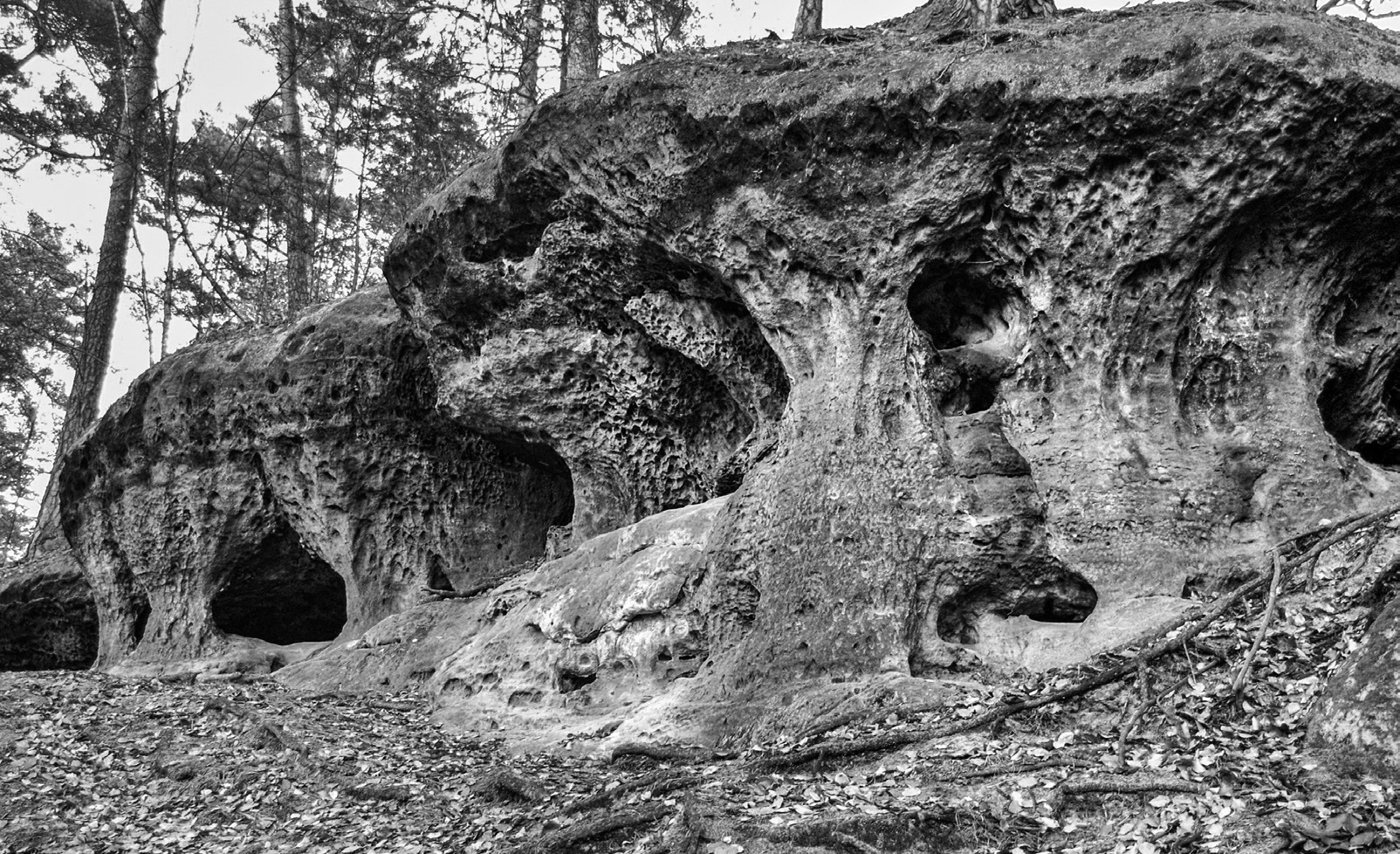
Pořízek L.: 50 Years of the Kokořínsko – Máchův kraj/Kokořín Region-Macha‘s Country Protected Landscape Area
The Kokořínsko/Kokořín Region displays unique landscape chatacter/scenery. It is characterized by a highly rugged terrain featuring deep valleys, sandstone rock formations, and specific microclimatic conditions. The geological foundation consists of Upper Cretaceous sandstones. In addition to the sandstones, Tertiary neovolcanic rocks also define the character of the area. The landscape of the Kokořínsko/Kokořín Region shows a long history of human settlement. Archaeological finds beneath sandstone overhangs document an intense human presence as early as the Mesolithic period. The main cause of the decline in biodiversity was a radical change in land management following the expulsion of the German population after 1945 and the subsequent collectivization of agriculture in rural areas. The abandonment of hard-to-reach sloping pastures, terraced fields, and the flat areas of smaller valleys led to these areas becoming overgrown with forest. The changes also affected the hydrological regime, particularly in the Pšovka River Basin. In 1976, the Kokořínsko/Kokořín Region Protected Landscape Area (PLA) was established in the Central Bohemian and North Bohemian regions. In 1992, there were only 5 Nature Reserves (NRs) and Natural Monuments (NMs) within the PLA; subsequently, thanks to the efforts of the PLA Administration, the network of NRs and NMS grew to 21 by 2014. Subsequently, effective September 2014, the original Kokořínsko/Kokořín Region PLA (276 km²) was expanded into its current form, the Kokořínsko/Kokořín Region-Máchův kraj/Mách‘s Cuntry PLA (410 km²). The strategic framework for the PLA‘ s protection, conservation and management is the Management Plan for the PLA, which defines the necessary general and specific measures. The current landscape faces intense anthropogenic pressures on both local and global scales, which manifests itself in the region primarily as widespread desiccation of the landscape. The key solution for preserving the natural values of the Kokořínsko/Kokořín Region is comprehensive landscape revitalization/restoration and protection focused on restoring landscape features, water retention, and supporting biodiversity. This requires building and modification of pools and wetlands, the restoration of fishponds, the planting of tree-lined avenues/alleys and hedgerows, and the establishment of flowering meadows. Nature conservation efforts aimed at the public must combine making the landscape physically accessible with clearly justified restrictions, e.g. the effective communication of legal prohibitions on entry. ■
Neumannová B. & Štefl L.: What Are Urban Greenery Studies?
Greenery plays an exceptionally important role in the urban environment, and its value extends far beyond its aesthetic benefits. On the contrary, it has a fundamental impact on residents’ daily quality of life/well-being as well as the overall state of the environment in a given area. Individual trees, groups of trees, tree-lined avenues, park areas, gardens, and other vegetation elements and green spaces contribute to the creation of a healthier, more pleasant, and more sustainable environment, which is crucial especially in today’s world characterized by increasing urbanization and the significant impacts of ongoing climate change. A conceptual and systematic approach to urban greenery/urban green space management is absolutely essential for maintaining the optimal condition of urban green spaces and ensuring their successful development. The urban green space system encompasses public, reserved, and private green spaces. The very existence and functionality of the system have a fundamental impact on the quality of living standards and the ability of settlements to adapt to the effects of a changing climate. The main objective of the urban green space system study is to establish an interconnected and functional system of green areas within built-up areas and developable areas that is also integrated with the surrounding landscape. In most cases, nearly two-thirds of the urban green space total area in the Czech Republic is owned by the respective municipalities. Therefore, local governments thus play a pivotal role in the management, planning, and development of urban green spaces. A total of 122 applications for the elaborating studies, valued at over CZK 194.5 million (EUR 8 million), were funded from the Nature Conservation Agency of the Czech Republic Project Scheme, with 95% of this amount coming from the European Union. ■
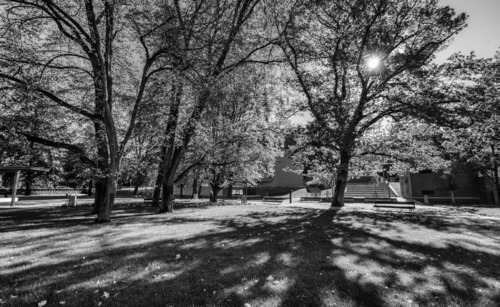
Importance of urban greenery/green spaces increases in relation to climate change. Photo by Jan Retter
Pešout P.: Should the State Own Protected Areas?
In the Czech Republic, there has recently been discussion regarding the appropriate extent of state ownership of protected areas, or rather, the management of the areas by State Nature Conservancy authorities. Although ensuring conservation through the direct exercise of property rights is one of the most economically demanding forms of nature conservation, in many cases it is the most effective tool. However, this is particularly true when State Nature Conservancy authorities are directly responsible for managing state property. Today, the direct exercise of property rights by State Nature Conservancy authorities is primarily governed by the Act on Nature Conservation and Landscape Protection (ANCLP). Nevertheless, the targeted acquisition of areas of natural value into state ownership has historical roots dating back to the land reform of the First Czechoslovak Republic (the term used for the former Czechoslovakia in 1918 – 1938). The need to keep significant protected areas in state ownership was also taken into account during the privatization of state land and in church restitutions. From a nature conservation perspective, the fundamental reasons why the state should own land include the ability to exercise property rights in landscape management, in nature restoration, and to ensure the protection of the most scientifically valuable areas requiring special management measures that private owners are unwilling or unable to provide. State ownership of significant Specially Protected Areas enables State Nature Conservancy authorities—provided they are authorized to manage this state property—to effectively provide appropriate protection, conservation and management without the administrative costs associated with recurring negotiations with landowners and without the need to provide annual compensation for losses resulting from restrictions on land use. ■
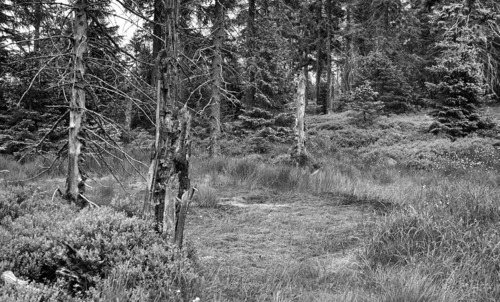
Božídarské rašeliniště/Božídar Peat-bog National Nature Reserve. Photo by Pavel Pešout
Kyselovič, J.: The Pasture Grove below Brník Hill in the České středohoří/ České středohoří/Central Bohemian Uplands
The Oblík–Srdov–Brník Site of European Importance (SEI, pursuant to Act No. 114/1992 on Nature Conservation and Landscape Protection, as amended later, the term for Site of Community Importance, SCI, later Special Area of Conservation, SAC, under the European Union’s Habitats Directive) is located in the Lounské středohoří/Louny Uplands in the southwestern part of the České středohoří/Central Bohemian Uplands Protected Landscape Area (northern Bohemia). The grove below Brník Hill is the only continuous forest within the entire SEI/SAC. It was likely originally a coppice forest. According to indicative sketches, the forest was previously surrounded on all sides by pastures. After traditional management practices had been abandoned, many non-forested areas began to become overgrown with self-sown trees. The stand became significantly denser, eventually forming a completely closed by canopy and dark forest. In 2021, the Nature Conservation Agency of the Czech Republic reached an agreement with the forest owner—the municipality of Libčeves—that the forest below Brník Hill would become an experimental site for the restoration of an open pasture forest grove aiming at supporting, inter alia, the conservation target of the SEI/SAC—the Jersey tiger (Euplagia quadripunctaria). Following the amendment to the Forest Act coming into force in 2026, the forest owner’s consent will suffice for the implementation of forest grazing. Preparatory measures included the removal of undergrowth, the harvesting of young trees, felling of oaks “to a high stump” (a tree trunk intentionally left standing after a tree has been felled or broken), and the “pollarding” of oaks. Since 2022, a herd of 100 to 150 sheep has been grazing annually on the cleared area. In terms of the total number of species from the monitored groups, significantly higher species richness was consistently found in the managed area than in the control one where no intervention took place. Thus, the restoration of the forest’s open character and the introduction of grazing management led to greater species diversity. ■
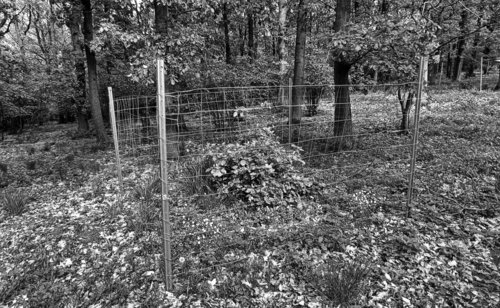
Individual protection of regenerating oak trees in a pasture grove in the the České středohoří/Central Bohemian Uplands Protected Landscape Area. Photo by Jakub Kyselovič
Pánek M., Kočárková T. & Koberová Z.: A Return to Traditional Forest Management Practices
Open forests is a habitat just at the boundary between forest and the open landscape. Their value is based not only on the presence of trees, but also in the abundance of light, warmth, and space for the herbaceous layer. Such conditions in the landscape have been created since time immemorial by large grazers, a function later taken over by humans themselves when they began to systematically use the forest and manage it for their own benefit. The integrated LIFE One Nature project made it possible to verify under what conditions these management measures can once again function in current nature conservation while also offering forest owners and managers an alternative management approach. The LIFE One Nature project tested coppicing in the Hodonínská Dúbrava/Hodonín Oak Grove and Karlštejn–Koda Sites of European Importance (SEI, pursuant to Act No. 114/1992 on Nature Conservation and Landscape Protection, as amended later, the term for Site of Community Importance, SCI, later Special Area of Conservation, SAC, under the European Union’s Habitats Directive). Combining regeneration from coppice shoots and maintaining selected mature trees in the habitat, known as “reserved trees” have been applied tehre. The target state is similar at both sites: an open, age- and spatially diverse stand. A supplementary measure was the removal of litter. Forest grazing was gradually introduced in several SEIs/SAcs. Sensitively adjusting the grazing regime to the specific site proved to be key. Monitoring was provided at all sites. Properly managed coppicing and forest grazing can positively influence herbaceous layer diversity and support light-demanding species. These measures are also supported by the amendment to the Forest Act entering into force in January 2026. ■
Mašková R., Beranová J., Kudláčková L. & Trnka M.: Vegetation Classification from the Perspective of Fire Prevention
The growing threat of wildfires in the Czech Republic due to climate change requires a reassessment of current practices for fire risk classification and prevention. Instead of subjective estimates, it is advisable to introduce a standardized method for assessing vegetation in terms of its flammability and potential functioning during a fire. Fuel models make it possible to predict vegetation functioning once a fire has started and the vegetation is burning. The classification of vegetation cover into fuel models serves as the basis for decisions regarding intervention tactics and the need for staff and resources, and thus aids the Fire Rescue Service in planning interventions. The significance of fuel models result from their ability to simplify the highly complex vegetation cover into functional units that can be used for mathematical modelling. The key parameters defining each fuel model are a synthesis of vegetation characteristics that influence burning. A layer of fuel models for the Czech Republic as a whole was developed at a high spatial resolution of 30 × 30 meters, which allows for capturing the fine mosaic of the Czech Republic‘s landscape. Under conditions in the Czech Republic, 23 basic fuel models were identified. In conclusion, it is important to reiterate that in the vast majority of cases, humans are responsible for the outbreak of fires in Czech Republic‘s nature and the landscape; therefore, it is not just about the “fuel” in the landscape, but primarily about how humans behave themselves there. ■
Hanzalíková K.: The Overlooked Issue of Anticoagulant Rodenticides in Nature in the
As proved by findings from abroad studies, results from the Czech Republic and Slovakia confirm that the majority of examined cadavers of wild carnivorous birds display anticoagulants. Of the 100 bird cadavers tested for anticoagulant rodenticides, 84% were positive. Potentially lethal concentrations were found in 22 individuals, including individuals of Specially Protected Species. Warfarin was not detected in any of the samples; brodifacoum was the most frequently detected and had the highest concentrations, followed by bromadiolone, while difenacoum was detected at lower levels and frequencies. The findings provide relevant information to veterinarians, wild animal rescue & rehabilitation centres, and the public, reflecting the current state of the environment and highlighting potential health hazards for both humans and wildlife. ■
Šichmanová K.: Best Practices in Nature Conservation Communication
Neither the preservation of the natural values of protected areas nor the restoration of nature can succeed without communication and cooperation between Satte nature Conservancy authorities‘ officials and local landowners, farmers, and site managers. The LIFE One Nature project has focused intensively on the topic. Generalizations of communication practices, combined with the practical experience of the Nature Conservation Agency of the Czech Republic‘s staff, were incorporated into the methodology titled “Best Communication Practices in Nature Conservation.” A key aspect of understanding is establishing and maintaining trust among stakeholders and creating an open space for dialogue. The fundamental principle upon which successful cooperation is based, is a personal approach to the landowner or land manager. Management in Specially Protected Areas is always related to explaining the purpose and appropriate methods of implementation; therefore, it is necessary to clearly communicate to the landowner or land manager what, why, and how protection, conservation or management is needed. One approach is the “win-win” approach, which outlines four phases of negotiation that can help achieve a “win-win” solution. In the first phase, it is crucial for each party to clarify its most important interests and objectives. The second phase involves mutually exploring the interests of both parties and the possibilities for reaching the consensus, i..e. agreement. A proven method is the principle of active listening. The third phase deals with the conclusion of the agreement. Finally, it is necessary to ensure that the agreement is carried out through to completion. Sharing positive experiences with State Nature Conservancy authorities can subsequently stimulate interest among other landowners and managers. ■
Starý M.: Who Is the Most Beautiful in the Šumava/Bohemian Forest Mountains?
The questionnaire survey focused on how people in the Šumava/Bohemian Forwest Mountains perceive large vertebrates and coexistence with them. The aim of the survey was to determine the popularity of the main species and to map and describe people’s emotions. All of this was assessed among a random sample of locals and visitors within the Šumava/Bohemian Forest Mts. National Park. The survey was conducted by PPM Factum Research during the summer vacation of 2025. The Gray wolf (Canis lupus) is unquestionably the strongest symbol of Šumava/Bohemian Forest Mts.’ nature. For many, the relationship is contradictory. Conversely, the least controversial representative of large animals in the Šumava/Bohemian Forest Mts. is no doubts the Eurasian lynx (Lynx lynx). The overwhelming majority of both locals and visitors do not feel fear at the prospect of encountering a lynx. On the other hand, the Elk (Alces alces), in American English called the moose, could be boldly described as “the unknown.” Most visitors are completely unaware that the large big ungulates occur in the Šumava/Bohemian Forest Mts. In contrast, the Brown bear (Ursus arctos) evokes strong and predominantly negative emotions. Both residents and visitors consider the bear a dangerous animal. Therefore, attitudes toward a potential return of brown bears to the Šumava/Bohemian Forest Mts. are therefore negative. The European bison (Bison bonasus) was assessed as the last large animal. Approx. 50% of residents agree with its potential return to the wild. By an overwhelming majority, the most frequently cited source of information for both residents and visitors was friends and other people. Visitors actively seek out information, primarily at visitor centres and online. Regular surveys are an important part of the Šumava/Bohemian Forest Mts. National Park Administration’s activities; the findings are essential for effective communication with, education of raising awareness among the public. ■
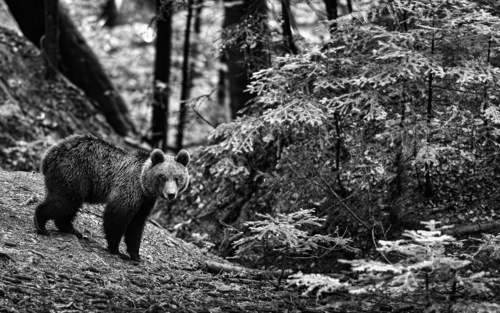
Return of brown bears (Ursus arctos) to the Šumava/Bohemian Forest Mts. National Park has not been currently realistic possibility. Photo by Berndt Fischer
Zajíček, P.: Revived Treasures from the Karel Absolon‘s Archive
Archives often include materials that have been neglected for decades but can now be of inestimable value. One example is the Karel Absolon‘s Memorial located in the Dietrichstein Palace of the Moravian Museum in Brno, which contains a collection of items from his private study, an extensive library, personal belongings, paintings, instruments, and more. The files harbouring diverse materials such as photographs, illustrations, maps, and manuscripts are of immense value and significance. Numerous experts and journalists have conducted research in the archive. Many other valuable archival items and documents have been discovered there, many of which were previously considered lost. The discovery of two original illustrative paintings by the world-renowned painter and illustrator Zdeněk Burian was particularly extraordinary. Among the unique finds is a collection of eight original cabinet photographs of the bottom of Macocha/Stepmother Abyss (the Moravský kras/Moravian Karst), created in the late 19th century by Adolf Podroužek. The Memorial also managed to track down what is likely the oldest photograph of the Moravský kras/Moravian Karst. The discovery of a double X-ray photograph of the Šipka Neanderthal jaw was completely surprising. Recently, correspondence between Jindřich Wankl and other persons was found, as well as the long-sought correspondence between Karel Absolon and Eduard Štorch. A collection of handwritten reports on the progress of research in various caves of the Moravský kras/Moravian Karst was also very valuable. Also significant is Absolon’s typescript of his forthcoming book “The Moravský kras/Moravian Karst”. It is likely that Karel Absolon’s archive contains many more unique archival documents. ■
Herich, P.: National Park Zoning as a Troubled Legacy for the Future
The reform of National Parks in Slovakia is currently being finalized through zoning shedules and management plans for some National Parks. The reform must be completed if we wish to access the associated European Union funds, but it is at the same time essential to see it through, particularly to harmonize the scope of competencies and ensure their effective and consistent use by National Park Administrations across Slovakia. The approved zoning is also linked to the demarcation of state-owned land in favour of separate legal entities—the above National Park Administrations. While five national parks have already undergone the zoning process, the Slovak oldest Tatra Mts. National Park and the Nízké Tatry/Low Tatras Mts. National Park, along with Malá Fatra Mts. and Poloniny mts., have been still in the process of elaborating the documents and approving them. In general, it can be stated that the legislative protection of National Parks‘ territories, ensured through the designation of individual protection zones, will be stronger than before. However, certain pressing issues require greater attention and stricter corrective measures, which can still be avoided at this stage. Otherwise, persistent and gradually “compounding” management problems may arise in some important, popular, and frequently visited parts of the National Parks. These will require ever-increasing attention and costs, will deplete the capacity of the National Park staff over the long term, and may irreversibly damage and destroy the unique natural and biocultural heritage of National Parks in Slobvakia. ■
- - - -
Introductionary photo:
Sandstone rock formations in the Kokořínsko/Kokořín Region-Máchův kraj/Mácha´s Country Protected Landscape Area. Photo by Ladislav Pořízek