

Ochrana přírody 2/2026 — 30. 4. 2026 — Summary — Tištěná verze článku v pdf
Summary – Ochrana přírody 2/2026
Obermajer J., Fišer B., Brůčková M., Červenková Z., Fischerová J., Kastnerová L., Komancová B., Palivcová L. & Vejrová H.: Ten Years of the Brdy Highlands Protected Landscape Area – An Island of Mountain Nature in the Heart of Bohemia
The Brdy Highlands Protected Landscape Area (Central Bohemia) was established 10 years ago and displays a unique position in terms of both its history and current land use. The natural value of the Brdy Highlands is caused by the fact that it is a landscape minimally affected by human settlement and agriculture, where forestry—particularly Norway spruce (Picea abies) monocultures—and long-term military use have dominated. The fact also contributed to the emergence of treeless areas and greater habitat diversity. Following the abolition of the military training area, the Protected Landscape Area was declared by a procedure supported in part by concerns over radar construction and gold mining. However, the result was relatively soft protective measures. Initially, it was necessary to overcome the mistrust of local residents and traditional visitors and establish visitor regulations. The goal is to preserve the remoteness and natural character of the area. An important part of management involves maintaining heathlands, wetlands, and other valuable habitats, including efforts to introduce controlled burning. Great emphasis is placed on cooperation with landowners, organizations, and the public. Thanks to the collaborative approach, a network of hiking trails, nature trails/educational paths, and the Brdy Highlands House of Nature visitor centre have been built there. ■
Skokanová H., Havlíček M., Slach T., Svoboda J., Mariňáková M., Volf O., Volfová E., Mačát Z., Dvořák T. & Škorpík M.: Restoration Strengthening Landscape/Ecological Connectivity in the European Green Belt
The European Green Belt is a region with a turbulent history that stretches over 12,500 km across Europe, serving as a reminder of the continent’s division by the Iron Curtain. It stretches from the Barents Sea to the Mediterranean and crosses the territory of 24 countries. Long-term no-go areas allowed nature to develop spontaneously, resulting in dozens of National Parks and thousands of other Protected Areas having been declared up to now. The idea for the initiative emerged after the fall of the Berlin Wall and gradually spread throughout Europe. Today, the territory is divided into four regions—Fennoscandian, Baltic, Central European, and Balkan—which differ in natural conditions and species diversity. The motto “Borders divide, nature unites” captures the fundamental principle of the entire initiative. In the Czech Republic, the Green Belt follows the southwestern and southern borders and includes a number of valuable areas, including National Parks, Protected Landscape Areas, and other sites. The ReCo (Restore to Connect) project, implemented between 2023 and 2026 with the participation of an international consortium, plays a significant role there. Its goal was to find suitable solutions for the restoration of degraded ecosystems and the improvement of landscape/ecological connectivity. The project consisted of pilot activities focused on habitat restoration and the support of endangered wild species. These included e.g. the restoration of wetlands, peatlands, meadows, and dry grasslands, as well as support for species such as the European bison (Bison bonasus) and the European wildcat (Felis silvestris). In the Czech Republic, the measures focused primarily on the Smrčiny Mountains and the Podyjí/Thaya River Basin National Park, where hydrological restoration and specific interventions to support species were carried out. The project has resulted in regional restoration plans, transnational strategies, and practical guides that summarize the lessons learned from the implemented measures and are intended to serve as a basis for further natural habitat conservation and restoration. ■
Ziedler M.: The Common Bilberry as a Key (Anti)player in Changing Mountain Ecosystems
Cold regions worldwide experience shrubification—shrub expansion into tundra and alpine zones. Surprisingly, Common bilberry (Vaccinium myrtillus) has become dominant in these habitats. Contrary to 1990s predictions of decline due to reduced snow cover, bilberry thrives across European mountains, having been expanding since the mid-19th century. The success stems from: warming extending growing seasons and accelerating soil nitrogen cycling; atmospheric nitrogen deposition; ericoid mycorrhiza enabling efficient nutrient uptake from poor acidic soils; and clonal growth enhancing rapid regeneration. Bilberry modifies its habitat – dense stands retain snow, reduce temperature fluctuations, accumulate litter, and enhance nutrient cycling. This creates uniform communities threatening alpine biodiversity. Regular mowing with biomass removal or extensive grazing by sheep/goats to create habitat mosaics rather than eliminate bilberry accompanied by essential long-term monitoring are recommended. ■
Marada P.: Is it Possible to Effectively Help European Hares during a Dangerous Outbreak of Myxomatosis?
During the summer of 2025, a highly pathogenic strain of the myxomatosis virus was confirmed in the European hare (Lepus europaeus) population in the Czech Republic, causing an exceptionally aggressive disease in these mammals. Experience from Spain and the U.K. shows that mortality can reach up to 57% of the population, raising the question of how to effectively intervene so that losses remain manageable and the population continues to be viable. As part of practical measures, proper sanitation must be carried out—thoroughly treating footwear and disinfecting the clothing of those handling carcasses, immediately burying any carcasses found, and cooperating with State Veterinary Administration authorities. Another potential solution is the use of natural predators, which serve as a “health police” in the hunting grounds and contribute to population control and recovery. This primarily involves red foxes (Vulpes vulpes). Long-term persecution of predators has disrupted the biological balance, which is now manifesting as weakened populations. In addition to sanitation, it is crucial to ensure appropriate conditions in the agroecosystem—that is, sufficient food, cover, and tranquillity. Proven measures include e.g. landscape-forming orchards with unmown vegetation left in place, which provides both shelter and a food source. Meaningful control and restoration of the biological balance require an active and responsible approach from hunters and other land managers; otherwise, there is a risk of a further significant decline in European hare populations. ■
Chytrý K. & Kalníková V.: The Coastal Small-reed (Calamagrostis pseudophragmites) in the Beskydy/Beskids Mountains: a Litmus Test for the Health of Gravel-bearing Rivers in the Czech Republic
The gravel-bearing rivers of the Beskydy/Beskids Mountains (the north Moravia and Silesia) used to be symbols of the dynamics of nature not controlled by humans; their wide, meandering beds were constantly changing. Today, however, the Ostravice, Morávka, and Olza rivers are confined by dams, weirs, and reinforced banks, which has halted sediment transport there. The rivers are deepening, historic alluvial deposits are becoming overgrown, and along with them, unique habitats and species adopted to dynamic environments—such as the Coastal Small-reed (Calamagrostis pseudophragmites), also known as the Coastal small reedgrass—have been disappearing. This is a competitively weak grass that requires sunny and moist sites with gravelly sediment. Long-term monitoring shows varying trends in its populations within the study area. On the Bílá Ostravice/White Ostravice River and the upper Ostravice River above the Šance Water Reservoir, populations remain relatively stable, although they display some spatial limits. In contrast, on the Ostravice/River below the Šance Water Reservoir, there is a significant decline, mainly due to stream regulation, gravel extraction, and the disappearance of active alluvial deposits, which have been transforming into stable banks. On the Morávka River, a combination of a dam, a dense network of weirs, and intensive riverbed deepening has led to a rapid decline in the Coastal small-reed populations. In contrast, the Olza River, which has no dam in its upper reaches and is less regulated, shows a relatively stable condition, although interventions carried out there could be fatal for the whole river ecosystem. The current situation of gravel-bearing rivers in the Beskydy/Beskids Mts. can be described as dire. Nevertheless, restoration has been still possible there, but it requires the restoration of river dynamics, a reduction in river regulation, sediment management, and adjustments to flow rates. Without addressing the root causes, any effort to save individual species will be ineffective. Unless there is a change in approach, we risk permanently losing the gravel-bearing rivers of the Beskydy/Beskids Mts. and their unique ecosystems. ■
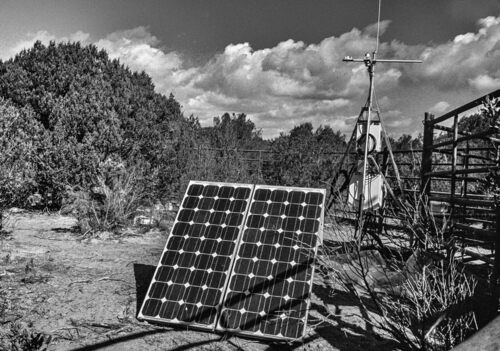
In the well-known Doñana National Park in Spain, scientists have been studying the impacts of climate change on the local nature—including Europe’s largest sand dunes—for some time now, using several research plots for this purpose. Photo by Jan Plesník
Plesník J.: What Biodiversity Conservation Needs from Science (and Vice Versa)
Views on the relationship between science and nature conservation can be quite contradictory. Nature conservation as a distinct human social activity emerged in the 19th century out of emotion and initially focused on romantic wilderness and remarkable wildlife species. Gradually, however, ecological knowledge began to permeate the field, and nature conservation increasingly relied on scientific foundations—a trend confirmed by the founding of the International Union for Conservation of Nature (IUCN) in 1948 and the later emergence of conservation biology as a distinct discipline, whose goal is to provide expert guidance for the practical protection, conservation and management of nature and the landscape. At the beginning of the new millennium, scientists emphasized the need for indisputable evidence, as conservationists often make decisions based on experience or intuition. It has become clear that effective nature conservation cannot act without insights not only from the natural sciences, but also from economics, sociology, psychology, marketing, public relations, and other fields. Consequently, a broader concept of conservation science is gradually gaining ground as an interdisciplinary approach that also utilizes new tools, e.g. citizen science or modern technologies. Ideally, science provides nature conservation with data, evidence, and arguments derived from research, with an emphasis on reliable data and long-term time series. Current conservation planning seeks to identify elements of nature (species, habitats, ecosystem processes) that require special attention and increasingly makes use of new methods, including artificial intelligence. Scientific findings are also applied in assessing threats to biodiversity, developing conservation tools, and making decisions regarding the specific protection, conservation and management of species, habitats, and ecosystems. ■
Strnad M., Libosvár T., Šikula T., Dostál I., Slepica M., Hlaváč V. & Uhlíková J.: Are Ecoducts/Wildlife Overpasses Used by Animals, and Where Are They Actually Located in the Czech Republic?
In the Czech Republic, the road and highway network is expanding, and new residential developments are being built. To facilitate wild animal movement and dispersal and prevent the fragmentation of wild animal populations, ecoducts, also known as wildlife overpasses, green bridges, eco-passages or more generally wildlife crossings, are being constructed as part of the transportation infrastructure. There are 36 ecoducts in operation in the Czech Republic, but their functionality has not yet been systematically monitored—it has not been determined whether and by which animal groups they are used. As part of the TRIPASS project, 24 ecoducts were monitored using camera traps. A total of 150,000 photographs were processed. The most frequently recorded species were the Roe deer Capreolus capreolus (44%), Fallow deer Dama dama (14%), European hare Leous europeus (14%), and Wild boar Sus scrofa (13%). The authors also monitored the occurrence of reptiles at selected ecoducts (the Common slow worms Anguis fragilis and the Sand lizard Lacerta agilis were found there). Ecoducts are also important for small mammals, for whom the highway acts as a barrier. Monitoring of bat occurrence at two new ecoducts indicates minimal use due to the absence of vegetation. In contrast, the 25-year-old Dolní Újezd ecoduct has been used by 13 bat species, which utilized the dense tree vegetation. ■
Gőrner T.: New Additions to the List of Invasive Alien Species of (European) Union Concern
In August 2025, the fourth update to the list of invasive alien species of European Union concern, i.e. invasive alien species with significant negative impact on the natural environment, economy, or human health in the EU (hereinafter referred to as the EU list) took place. By European Commission Implementing Regulation (EU) 2025/1422 other 8 plant species and 18 animal species were added to the existing list. The vast majority of them do not occur in the Czech Republic at all, but also some species quite common across the country can be found on the EU list. The latter include three species of the knotweed (Reynoutria spp.), the American mink (Neogale vison), and the Sika deer (Cervus nippon). The developing the EU list is established by Regulation (EU) No 1143/2014 of the European Parliament and of the Council of 22 October 2014 on the prevention and management of the introduction and spread of invasive alien species. Proposals for the EU list are assessed by the EU Scientific Forum on Invasive Alien Species and then discussed by the EU Invasive Alien Species Committee, where individual Member States are represented. Member States are also required to monitor the occurrence of invasive alien species included into the EU list on their territories; in the Czech Republic through Section 13f of the Act on Nature Conservation and Landscape Protection, as amended later. The task is implemented by the Nature Conservation Agency of the Czech Republic (NCA CR); records of occurrences can be searched in the Nature Conservancy Species Occurrence Finding Data Database. In this context, it is worth mentioning the ongoing project “Mapping and Monitoring of Invasive Alien Species”, implemented in 2023–2029, funded by the Operational Programme “Environment” and led by the NCA CR. The EU Member States are also required, upon timely detection of an occurrence, to take steps to rapidly eradicate the invasive alien species before establishing viable populations there. Currently, the primary method of controlling American minks is culling through hunting. However, the most debated new addition to the EU list has currently been the Sika deer because its occurrence has a demonstrably negative impact on native species. The primary control mechanism will therefore continue to be targeted culling using standard hunting methods. ■
Růžička T. & Nitsch O.: Czechs Support Nature Conservation
The high level of support for nature conservation among Czechs comes as no surprise. This was confirmed by a large-scale public opinion survey conducted as part of the ten-year Prospective LIFE project, co-funded by the European Union. The last similar survey on nature conservation in the Czech Republic took place in 2018. The new survey shows that three-fifths of the population have a positive relationship with nature. A full 66% of people believe that nature conservation should take precedence over other public interests. However, only half of the population believes that nature conservation in the Czech Republic is adequately ensured, and only 41% consider its funding to be sufficient. Czechs spend a lot of time in nature, and most view its contribution to quality of life positively. As many as 89% report that when they are upset or stressed, spending time in nature improves their mood. The vast majority of Czechs (93%) agree with the statement: “Something important would be missing from my life if I couldn’t go outside to enjoy nature.” The vast majority of Czech residents are aware that pollinators play an irreplaceable role in nature. Citizens most often cite environmental pollution as the main cause of the threat to wild plant and animal species in the Czech Republic. Czechs love nature and spend quite a lot of time in it and they perceive it as an important part of their life. The presented public opinion poll also shows how much space for improvement there is in nature conservation outreach to the public. But at the same time, it makes a fairly convincing case that people love nature, respect conservation efforts, and are willing to get involved. ■
Just T.: 120 Years of the Wastewater Treatment Plant in Prague-Bubeneč
Nature conservation and wastewater management are two fields of activities that have long had little direct overlap. Nature conservation has only relatively recently evolved from a traditional focus on species and sites of natural value to a recognition of the comprehensive importance not only of aquatic ecosystems but also of the landscape’s water regime as a whole. The realization that this state of affairs is practically always linked to water quality issues is sufficient to acknowledge the close relationship between the two fields. At the same time, rising water temperatures and minimal flows in watercourses significantly exacerbate the consequences of the absence of treatment. The year 2026 marks the 120th anniversary of the commissioning of the Old Sewage Treatment Plant in Prague-Bubeneč. Globally, it is, in terms of both construction and technology, almost the best-preserved facility of the earliest generation of wastewater treatment plants. From 1897 practically until the start of World War I, a sewer network had been systematically built in Prague. The facility was structurally completed and technologically equipped in 1906, and it was put into operation that same year. The Bubeneč treatment plant was purely mechanical. The biological treatment processes common today were only just beginning to be discovered before World War I. The mechanical treatment provided by the Bubeneč plant was soon considered inadequate after World War I. The new treatment plant was officially put into operation in 1965, and full functionality—including a biological stage based on the activated sludge process—was achieved in 1968. In 1991, the Old Sewage Treatment Plant was officially designated a Cultural Monument. It currently operates under the name Old Wastewater Treatment Plant and offers guided tours of the site to the public. ■
Makal J., Klouček O., Hnízdilová L., Miko L. & Chmelař J.: News from Samarkand: Results of the 20th Meeting of the Conference of the Parties to CITES
In late November and early December 2025, the 20th Meeting of the Conference of the Parties to CITES (Convention on International Trade in Endangered Species of Wild Fauna and Flora) took place in Samarkand, Uzbekistan. The text of the Convention was adopted by representatives of eighty countries on Washington, D.C., on March 2, 1975. Thus, 2025 marked exactly 50 years since the international community began protecting species of fauna and flora through CITES. The 20th meeting of the Conference of the Parties to CITES can undoubtedly be described as a success. A number of amendments were adopted, leading to stricter regulation of trade in endangered wild plant and animal species. At the same time, the adoption of several controversial proposals that would have weakened protection and posed a risk to the species concerned in the wild was successfully prevented. CITES is a significant and effective tool for biodiversity conservation, a fact that has been repeatedly demonstrated over the past half-century of its operation. There continues to be broad consensus on the fundamental idea that international trade in wild animals and plants must be controlled to avoid extinction of some of them. This is another reason why the authors are convinced that CITES has a long future ahead of it. ■
- - - -
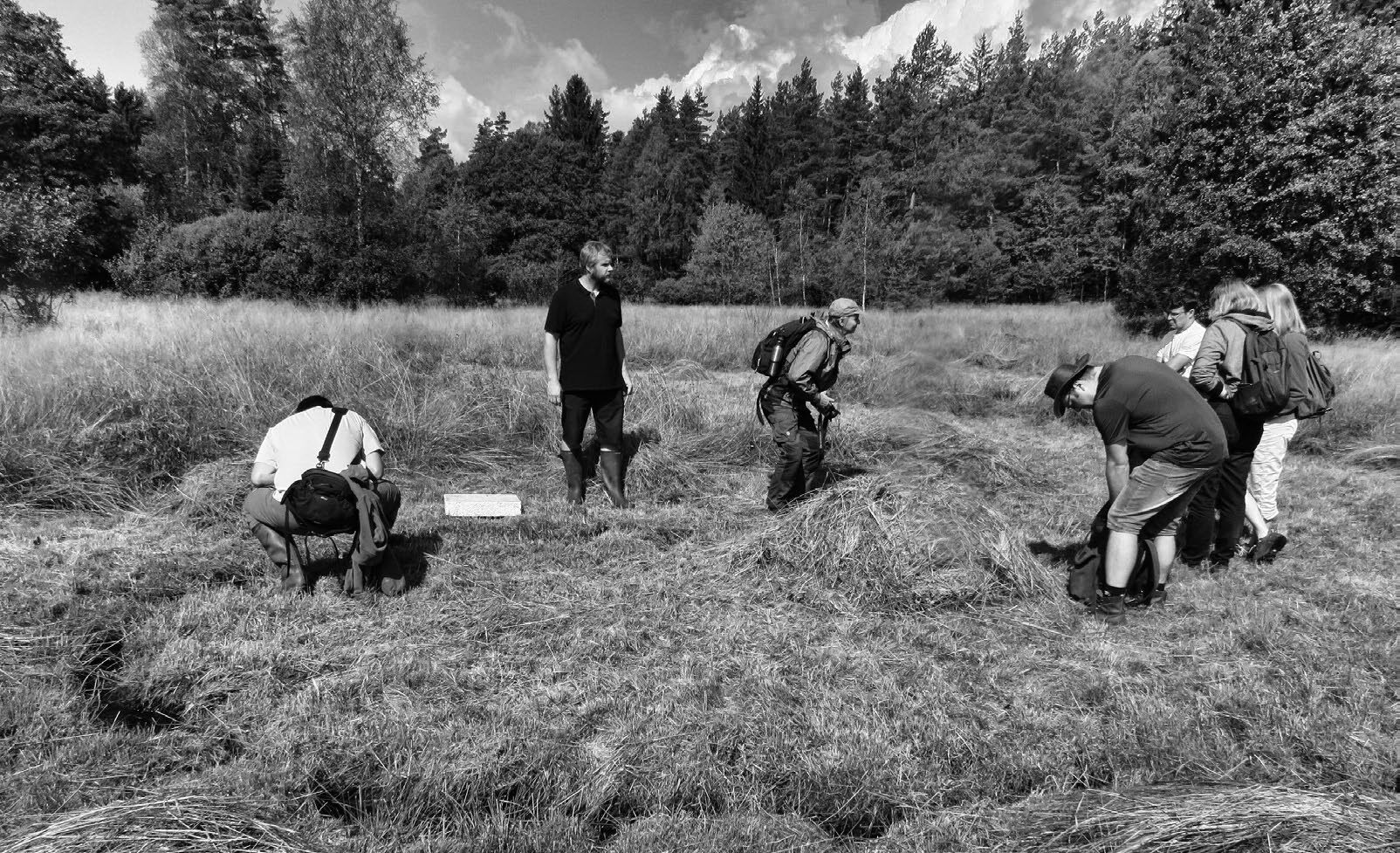
Introductionary photo: Hydrological restoration in the Lužní Potok/Floodplain Brook drainage basin.
Photo by Marek Havlíček