

Ochrana přírody 1/2026 — 26. 2. 2026 — Summary — Tištěná verze článku v pdf
Summary – Ochrana přírody 1/2026
Komaško A.: Fluorite Caves under Mt. Sněžník
At some sites, walls of the unique non-karst (pseudokarst) caves near Mt. Děčínský Sněžník (northern Bohemia) are covered with fluorite crusts. Although the name “fluorite caves” may be misleading it is precisely the occurrence of fluorite in sandstone cavities that makes them unique in the world. Fluorite has been known in the area since the early 20th century, with mining taking place there mainly between 1955 and 1957 and again from 1968 to 1994. During that time, approx. 21 kilometres of tunnels were built and around 50 free caves were discovered there, of which only six are accessible today. Older theories assumed a significant role for slope gravitational movements in the ongoing fluorite mineralization, which would make the deposit very young and unique globally, but nothing similar has been known to date. The fluorite crusts on the cave walls and symmetrical fluorite veins were formed simultaneously, and their shape and disruption correspond to repeated tectonic movements, not just slope slippage. Several phases of tectonic activity can be distinguished: pre-mineralization (opening paths for solutions), syngenetic (formation of veins and crusts), and post-mineralization (crushing, shifts, formation of cavities without fluorite). Uneven and twisted fracture surfaces caused irregular opening of the massif and great variability in the caves´ shapes. The conclusion is that the caves under Mt. Sněžník are primarily of tectonic and fault origin. Due to its uniqueness, the site was declared a Specially Protected Area, namely Natural Monument in 1999 and is now managed by the Cave Administration of the Czech Republic. ■
Vávra M.: Ecological restoration of Branches and Oxbow Lakes in the Central and Eastern Polabí/Elbe River Lowland
Old river branches and oxbow lakes are a significant geomorphological and ecological phenomenon within alluvial floodplains. Long-term stream regulation of the Labe/Elbe River, shortening the flow, and reduction of flood spreads resulted in rapid water runoff from the landscape, loss of natural river dynamics, and gradual degradation of the branches. The fact manifests itself in silting, overgrowth of vegetation, isolation from the main stream, and loss of biodiversity. Nevertheless, the branches and oxbow lakes remain crucial for water retention in the landscape, flood flow attenuation, carbon storage in sediments, and as a refuge for a number of rare species. Therefore, the state-owned company Povodí Labe/Elbe River Basin Management Authority has been implementing comprehensive restoration projects aimed at restoring the ecological and hydrological functions of the branches and the oxbow lakes The selection of sites is based on the degree of degradation, spatial and property rights options, technical feasibility, and availability of funding. Restoration is always preceded by biological and geological surveys so that valuable parts can be preserved and damaged parts can be restored in a targeted manner. The main measures include desludging sediments, building new pools, restoring riparian vegetation, eradicating invasive alien species, and, above all, reconnecting the branches to the main stream, often using stone fords. The measures recovery the migration of fish and other organisms as well as the natural exchange of water. Sediment removal is the most expensive part of the projects, yet it is essential for restoring the original morphology of the river bottom and banks. The Povodí Labe/Elbe River Basin Management Authority, State-owned Enterprise is systematically engaged in the restoration of degraded Labe/Elbe River branches in the central and eastern Polabí Lowland (e.g. Kolín, Pardubice, Opočínek, Doubka), where endangered and even previously extinct wild plant and animal species reappeared shortly after the interventions. An important part of the projects is long-term monitoring of vegetation, invertebrates, amphibians, and fish. The ecological restoration of river branches and oxbow lakes is one of the most effective tools for at least partially restoring natural processes and increasing biodiversity in the heavily disturbed landscape of the Polabí/Elbe River Lowland. ■
Pešout P., Kinský dal Borgo F. & Marada P.: Voluntary Tools for Nature Conservation and Management
The most effective approaches in nature conservation, ecosystem restoration, and landscape management are those involving the direct participation of landowners or managers through property rights or other rights to land. Their decisions are often initiated by stae nature conservancy or NGOs, but increasingly also in the Czech Republic there are more and more landowners, companies, and associations who feel responsible for the state of nature, actively support biodiversity, and strive for healthy ecosystems and landscapes in their surroundings, in their business areas, on their property, or on their farms. The number of purpose-built “private reserves” is also increasing. In connection with the fulfilling the objectives of the European Union´s Nature Restoration Law, it has been becoming increasingly important for the Government to support and take the efforts into account. The preservation of biodiversity and healthy ecosystems is not possible without the active involvement of owners and managers. Although the Czech Republic has ha the legacy of a broken relationship with the land from the communist era, there are a growing number of private initiatives voluntarily contributing to the protection, conservation an management of natural and cultural heritage. The actors use a wide range of voluntary tools, from self-regulation and certification to private agreements and public agreements on management methods applied. Therefore, such tools are becoming increasingly important in developing the National Nature Restoration Plan (NNRP) and fulfilling the objectives of the above EU´s Nature Restoration Law (NRL). An example of a well-developed private initiative is Wildlife Estates certification, which assesses management in terms of supporting biodiversity and ecosystem services beyond legal obligations. Another important phenomenon is privately managed protected areas, in the Czech Republic established mainly by land associations, but increasingly also by other private entities and enlightened and dedicated owners. The third pillar of cooperation is agreements on management methods between State Nature Conservancy authorities and owners or tenants. Stable funding, legislative support, and systematic dialogue between State Nature Conservancy authorities and the private sector are essential for the further development of voluntary instruments across the country. Both the NRL and the NNRP provide a significant opportunity to strengthen and acknowledge this cooperation. ■
Bízková R.: Biodiversity – A Comprehensive Research Topic
The following text on biodiversity research is framed by three conceptual notes – viewing research from the perspective of complexity of solutions, current European challenges, and the concept of the programme of individual sectors for supporting research, technological development, and innovations called the Environment for Life 2. The current complexity of the world requires abandoning the idea of a linear way from basic research to innovation and strengthening a holistic and multidisciplinary approach. Digitalization provides faster interconnection of discoveries, applied research, and practice without diminishing the importance of specialized expertise. The changes are key to addressing major European challenges—climate neutrality, resilience, circularity, and the growing need for self-sufficiency and security. The European Union faces three interconnected planetary crises: climate change, biodiversity loss, and environmental pollution. Despite the expansion of the network of protected areas, the state of biodiversity continues to deteriorate and most habitats are in poor condition. Biodiversity decline and loss have had direct economic impacts and poses a significant macroeconomic and financial risk that has not been yet sufficiently reflected in economic decision-making. In the Czech Republic´s context, the Environment for Life 2 programme plays a key role focusing on both policy-oriented research and the development of the research conditions (policy for research). The role of sectoral research organizations as “concentrators” of knowledge linking the academia, State/Public Administration, and application partners is important. Without systematic holistic and multidisciplinary research, it is not possible to respond effectively to biodiversity loss or to the transformation of the economy towards nature-based processes. Investment in nature conservation must be seen not only as an environmental priority, but also as an economic and security one. ■
Bartoň D., Duras J., Kortan D. & Šmejkal M.: Long-term Monitoring of Asp (Leuciscus aspius) Reproduction: A Model Example of Rheophilic Fish in Degraded Habitat
Long-term monitoring of asp (Leuciscus aspius) reproduction in a tributary of the Švihov Reservoir on the Želivka River shows that natural recruitment of this ecologically important rheophilic species is currently very limited. Although spawning involves thousands of adult individuals each year, most eggs fail to survive due to a combination of poor substrate conditions, intense predation, and, most importantly, hydropeaking, abrupt flow fluctuations linked to the operation of an artificial white-water slalom course. The exceptional conditions observed in 2020 demonstrated that successful natural reproduction is possible, when flow conditions are more stable and hydropeaking is reduced. While technological measures designed to mitigate flow extremes can lower egg losses, they are insufficient as a stand-alone long-term solution. The authors´ results indicate that the most effective approach is to combine hydropeaking mitigation with the restoration of longitudinal river connectivity through weir removal. This would allow spawning habitats to expand spatially and reduce egg exposure to predation. Such measures would support the recovery of natural asp reproduction and contribute more broadly to improving the ecological status of regulated rivers. ■
Uhlíková J., Křápek M., Hlaváč V., Strnad M., Slepica M. & Dostál I.: When Deterrents Do Not Deter – Dead End of Wil Animal Conservation?
In 2022 – 2026, the TRIPASS Project, funded by the Technology Agency of the Czech Republic and implemented by the Nature Conservation Agency of the Czech Republic in cooperation with Transport Research Centre Brno and HBH Projekt Brno Ltd. tested the effectiveness of two types of animal deterrents — the optical-acoustic Deer Deter and the optical-olfactory Hagopur Kombiset in the Vysočina Region aiming at reducing collisions between large mammals and vehicles. Wildlife mortality monitoring was carried out on selected road sections with a total length of 18.6 km, both before and after the installation of the devices. The test results did not demonstrate a statistically significant reduction in the number of collisions. The study confirmed that deterrents based on current principles do not show a long-term effect, and their use without verified effectiveness is unjustified. Thus, it is necessary to reconsider the approach to such measures and not to regard them as an effective tool for addressing the serious issue of wildlife road mortality. ■
Pešout P.: Significant Landscape Elements in the European Union´s Nature Restoration Law
Significant landscape elements have been systematically mapped in the Czech Republic since the mid-1970s. Efforts to respect them in land-use/territorial/physical planning and economic use with the aim of ensuring the ecological stability of the landscape have been ongoing for just as long. Since 1992, when the protection of Significant Landscape Elements (SLE) was incorporated into legislation, namely Act No. 114/1992 Gazette on Nature Conservation an Landscape Protection (ANCLP), as amended later, decisions on intended interventions and the use of these areas have been one of the most extensive agendas of State Nature Conservancy authorities. Nevertheless, there has still been a painful lack of implementing regulations setting out the details of the SLE conservation. The National Nature Restoration Plan of the Czech Republic currently being prepared focuses significantly on landscapes outside Specially Protected Areas. Together with a paradigm shift in the establishing the Territorial System of Ecological Stability (TSES, a national multilevel ecological network sensu stricto) and the implementation of the concept of ecologically significant features in farmland, the institute of SLE provides a reasonable basis for meeting the objectives of the European Union’s Nature Restoration Law. The fact has already been reflected in the Action Plan of the National Biodiversity Conservation Strategy of the Czech Republic. In addition to the above lack of implementing regulations of the ANCLP on the details of defining and protecting SLEs and the methodology for defining the SLES core parts (including the provision of differentiated management), it is necessary, in the interests of ensuring the transparency and predictability of State/Public Administration, to introduce a register of registered SLEs and to display them in the form of special-purpose elements in the Register of Territorial Identification, Addresses, and Real Estate. This step will also require legislative amendment. It is clear that by legislatively anchoring the institution of SLEs together with the TSES in the early 1990s, the authors of the ANCLP were ahead of their time. In connection with the implementation of the EU Nature Restoration Law, it is hoped that now, after more than thirty years, the necessary implementing legislation will be adopted and adequate methodological and data support will be provided for this important tool in nature conservation and landscape protection. ■
Hlaváčová L.: Regulation of Camping and Bivouacking Abroad
In July 2025, Group of Experts set up by Petr Hladík then Minister of the Environment of the Czech Republic presented a proposal for preserving tramping as a specific form of camping in the Kokořínsko – Máchův kraj/Kokořín Region and Mácha´s Country Protected Landscape Area within the existing legal framework, while minimizing its impact on nature. A comparison shows that approaches to regulation, as well as to the practical solution of camping and bivouacking in European countries, vary considerably. Slovakia applies a rather restrictive model based on a ban outside designated areas, which is very similar to the Czech Republic´s model. The German approach is based on similar principles, but on the other hand, there is a relatively extensive network of trekking (bivouacking) sites throughout the country where people with minimal equipment can legally spend the night in nature, including protected areas. The tradition of boofen also offers the opportunity for legal bivouacking in the wild. On the other hand, Denmark has an interesting approach consisting of designating several forest areas where it is possible to camp anywhere provided that certain rules are followed. For the Czech Republic´s conditions, especially for the Kokořínsko – Máchův kraj /Kokořín Region and Mácha´s Country Protected Landscape Area, the German and Danish models of a network of simple campsites, which combine strict protection of selected locations with establishing officially designated places for legal overnight stays, seem to be an interesting comparison. These sites help to concentrate tourism in a specific location that is easy to check. The approach also reduces the risk of visitors damaging other protected sites through wild camping. Above all, however, such sites provide visitors with a legal opportunity to experience a night in nature. ■
Hušek J.: Group of Experts on Tramping in the Kokořínsko-Máchův kraj/Kokořín Region-Mácha´s Country Protected Landscape Area
Tramping is a movement whose history dates back to the late 1910s, roughly coinciding with the establishment of the former Czechoslovakia. The basic attributes of tramping are free wandering and camping in nature. Spontaneously established campsites were often a thorn in the side of landowners, foresters, and various authorities. With the establishment of large-size protected areas in the mid-1950s, tramping became a reality in newly declared Protected Landscape Areas (PLAs), later also in National Parks. It should be emphasized that the law prohibits camping and lighting fires in PLAs outside built-up areas, which are, more or less, obligatory features of tramping in the Czech Republic. Most campsites thus objectively found themselves outside the legal framework. After 2020, this fact became the subject of intense discourse in the media and on social networks. The Kokořínsko – Máchův kraj/Kokořín Region – Mácha´s PLA area became a model area of conflict between tramping and nature conservation. After the decline of tramping in other sandstone areas across the country, the region became a refuge for tramps, which led to an increase in overnight stays and pressure on the area. In 2025, a group of experts was established, consisting of representatives of the State Nature Conservancy, landowners, local authorities, experts, and non-governmental organizations, with the aim of finding a systemic solution. The group documented 138 campsites and assessed their impact on nature and other public interests. Tramping was confirmed as part of the intangible cultural heritage, but at the same time, it was stated that some of the camps are incompatible with nature conservation. Therefore, two legal ways were proposed: the removal of campsites or their legalization under clearly defined conditions with the consent of owners and State Nature Conservancy authorities. The solution is considered to be an open process based on cooperation between key actors and regular evaluation. ■

In Kungming, a city of seven million in southern China, there are currently more than 900 different small public green spaces accessible to the public—pocket parks, parklets or corner parks. Photo by Jan Plesník
Plesník J.: The State and Outlook of the Global Environment: as Seen by UNEP
Truly effective nature protection, conservation and management and, more generally, environment protection and management cannot be achieved without reliable knowledge. Applying a holistic approach it is not just a matter of the constituent elements that both systems consist of. At first glance, the term GEO may suggest a connection with Earth sciences such as geology, geomorphology, or geography. In this case, however, it is an English abbreviation for Global Environment Outlook, which can be loosely translated as the state and outlook of the global environment. It is a multidisciplinary assessment report that has been regularly prepared since 1995 by the United Nations Environment Programme (UNEP), a specialized agency of the United Nations. During Advent, specifically on December 9, 2025, the 7th edition of GEO (GEO-7) was presented during the 7th session of the United Nations Environment Assembly (UNEA), held at UNEP headquarters in the Kenyan capital of Nairobi.
The GEO-7 report is the most comprehensive assessment of the planet as a single interconnected system to date. It identifies four concurrent global crises: climate change, biodiversity loss, pollution, and widespread land degradation, which pose a fundamental threat to human health and the economy. The analysis shows rapid growth in human population, consumption, and greenhouse gas emissions, as well as widespread losses in ecosystem services. At the same time, it offers three scenarios for future development: continuing the current trend will lead to a dramatic deterioration in the state of the planet, while transforming economies, energy, resource management, and food systems or applying whole-of-government and whole-of-society approaches or can provide significant economic benefits, reducing mortality and poverty. The overall macroeconomic annual benefits of transformation are estimated to begin around 2050 and increase to approximately US$20 trillion per year by 2070, and over US$100 trillion per year by 2100, accounting for more than 25 per cent of projected global GDP in 2100. Thus, the key message of GEO-7 is that investing in the health of the planet pays off for all. ■
Zajíček P.: Limanu and Liliecilor – Two Interesting Caves in Eastern Romania
Romania is an extremely diverse country. It has a rich history, diverse wildlife, and a number of unique geological sites. There are many karst areas of various types and sizes. Thousands of caves, abysses, and other karst phenomena are known there. Romania is one of the richest European countries in karst areas and caves, with over 12,000 caves registered, which is five times more than the Czech Republic. Speleology a long tradition there, with Emile Racoviță, the founder of biospeleology, who collaborated with the famous Czech speleologist Karel Absolon, being a significant figure. The eastern region of Dobruja is a picturesque hilly area with numerous limestone islands, also harbouring the Danube Delta and archaeologically significant settlements of the Roman Empire, such as Constanta and Histria. The most remarkable feature is the Movile Cave with endemic troglobitic animals, having been isolated for millions of years there. The Limanu Cave forms a rugged labyrinth over 4,000 m long with rectangular corridors, influenced by geology and human activity; it was used from the Neolithic period to the Roman Empire and remains freely accessible, which threatens its protection. The Liliecilor Cave, about 30 km north of Constanta, is home to bat colonies, archaeological finds, and microscopic fungi; its entrances are less polluted and professionally supervised. Both sites are significant both naturally and culturally and require better protection, conservation, and professional management. ■
- - - -
Úvodní foto:
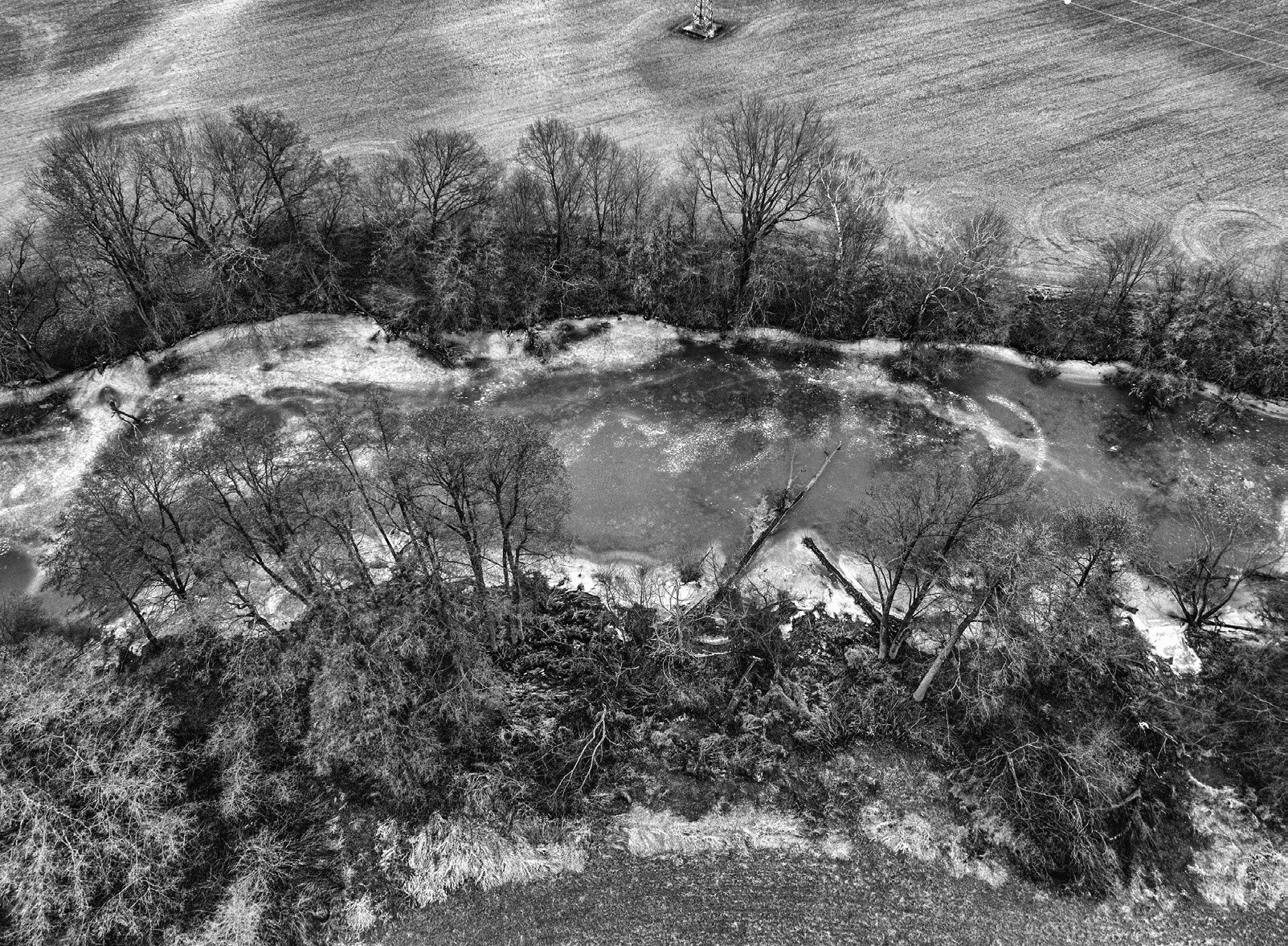
The frozen Labe/Elbe River branch below Opočínek, a quarter of the city of Pardubice (eastern Bohemia) after the winter floods. Photo by Michal Vávra