

Decaying Wood – A World of Wilderness
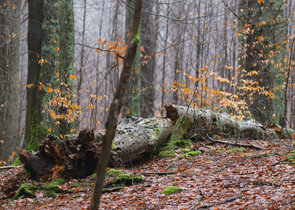
“Mess in the forest! Who has ever seen such a thing, leaving so much wood to rot uselessly!” Such words have been heard in the Šumava/Bohemian Forest Mts./Bohemian Forest Mts. for over thirty years. Fortunately, less and less frequently. Anyone who visits the Šumava/Bohemian Forest Mts. will certainly notice the striking amount of dead wood in the forests, tree rows, on the edges of fields or balks, and in abandoned meadows. Dead wood is primarily produced by nature, but in Specially Protected Areas in the Czech Republic it is also deliberately created by nature conservationists. Wood that has been cut into pieces or possibly debarked, shining in the green of the bilberry bushes, may not seem particularly conservation-oriented, yet it is worth considering why such wood is better than none at all.
Nature Conservation 2025 — 31. 7. 2025 — On Nature in the Czech Republic — Print article in pdf
Editorial 2025
Dear readers, colleagues, friends,
You are getting into your hands the sixth annual special issue of the Ochrana přírody/Nature Conservation Journal. The 80th anniversary of the first issue of the journal is approaching and the world has changed dramatically in that time. Despite efforts to protect and conserve both terrestrial and marine natural ecosystems, there has been enormous damage to them. We have destroyed a third of all rainforests and degraded another one third. The planet’s human population has grown from 2.3 to 8 billion today. Despite the partial successes in nature conservation, the negative trend is clear and raises the question of whether our efforts are worthwhile.
Nature Conservation 2025 — 31. 7. 2025 — Preface — Print article in pdf
Summary of 2023 Issues

Nature Conservation 2024 — 30. 5. 2024 — Články bez rubriky — Print article in pdf
Nature Conservation in Uzbekistan
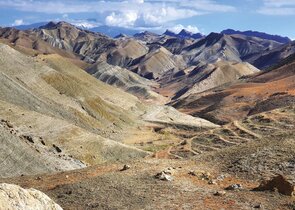
Uzbekistan, a pearl of the Silk Road, is an area of extraordinarily accumulation of well-preserved medieval Islam towns and monuments remembering the then extensive empire controlling considerable parts of Central and Southwest Asia. The current Republic of Uzbekistan boasts from the natural science point of view valuable areas of international importance. The country has legislatively developed nature conservation system aiming particularly at protecting the human environment; nevertheless, it can only in a limited way reduce natural wealth destruction which has been threatened by demands from the rapidly developing most populous Central Asian republics. Therefore, we can visit a UNESCO World Heritage Site as well as to watch one of the world’s biggest environmental disasters ever there.
Nature Conservation 2024 — 30. 5. 2024 — International Nature Conservation — Print article in pdf
CITES Fifty Years Old. Notes on What Was, Is and Will Be


If there are no customers, there will be no illegal wildlife trade.
Jane Goodall interviewed by Lauren Kearney (2016)
Five decades provide a suitable possibility to consider the birthday person’s life up to now and in future. Therefore, on the occasion of the 50th anniversary of the Convention on International Trade in Endangered Species of Wild Fauna and Flora (CITES) we not only remember establishment and mission of the important international hard law but we also try, although with a certain amount of subjectivity, to assess its implementation in the Czech Republic.
Nature Conservation 2024 — 30. 5. 2024 — International Nature Conservation — Print article in pdf
A Hope from Gabon. Protected Areas, Ecosystem Services, and Economic Diversification
The country in a nutshell
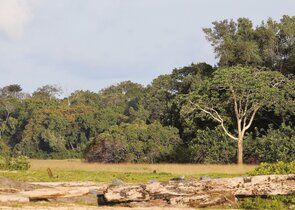
By African standards, Gabon located on the Equator in the Gulf of Guinea is a small country (267,670 km2); on the equator in the Gulf of Guinea (3.5 times the Czech Republic’s territory), it has only around 2.2 million inhabitants. In The capital, Libreville, less than a million people lives, and the total proportion of the urban population is close to 90%. The number of inhabitants is growing by 2.5% annually, female fertility is approx. 4. Roughly, 80% of the country’s territory is covered by primary or secondary rainforest and a smaller part by savannah. Only approx. 1.2% is used as arable land: at the same time, the rainforest coverage has been practically stable (only a 1% decrease in 10 years).
Nature Conservation 2024 — 30. 5. 2024 — International Nature Conservation — Print article in pdf
Nature Conservation Agency of the Czech Republic Contributes to Armenian Biological Diversity Conser

In 2021–2023, the Nature Conservation Agency of the Czech Republic (NCA CR) together with the Finnish Environment Institute SYKE, implemented a two-year project entitled as Strengthened protection and sustainable use of biodiversity in Armenia in line with the European standards funded from the European Union’s Twinning programme. The main project partner and beneficiary of the project outputs was the Ministry of the Environment of Armenia.
Nature Conservation 2024 — 30. 5. 2024 — International Nature Conservation — Print article in pdf
How the War Has Affected Ukrainian Protected Areas

The damage caused to Ukraine’ s nature as a result of the full-scale military invasion of the Russian Federation started on February 24, 2022 has had a pan-European dimension and the consequences of hostilities for biodiversity will be seen across the continent. The network of protected areas in Ukraine is an essential component in preserving Europe’s biodiversity. The network protects mountain ecosystems within the Carpathian and Crimean Mts., key areas for migration and nesting of waterfowl on the coast of the Azov and Black Seas, peat-bogs, natural forests on Polissya, and unique steppe ecosystems on the East and the South of Ukraine. Protected areas are home to many wildlife species and represent different natural habitat types, some of them are unique within Europe including endemic ones.
Nature Conservation 2024 — 30. 5. 2024 — International Nature Conservation — Print article in pdf
Look Back at the Presidency of the Czech Republic in the Council of the European Union
It doesn’t matter where you are coming from.
All that matters is where you are going.
Brian Tracy: The psychology of achievement (2002)
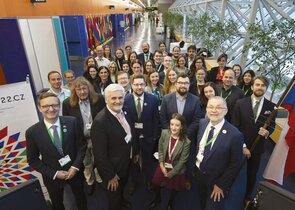
In international agenda related to nature conservation/biological diversity, the second half-year of 2022 was marked by a whole range of actions both on the global or pan-European level and in the European Union. Due to the COVID-19 pandemic, many meetings of Multilateral Environmental Agreements (MEAs), i.e. hard laws, and of some United Nations bodies which should adopt their future direction had to be repeatedly postponed and rescheduled. Therefore, they heavily accumulated in the second half of 2022. The Czech Republic implemented its already second presidency in the Council of the European Union (CZ PRES 2022) just between 1 July and 31 December 2022, thus facing an unprecedented challenge.
Nature Conservation 2024 — 30. 5. 2024 — Nature Conservation Legislation — Print article in pdf
Ten-thousand-year History of a Pool – What Peat Hides in the Březina Nature Reserve in the České Stř
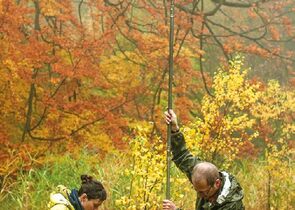
Sediments of water bodies and peatlands harbour archives of the past. Investigation of them may provide information about what past ecosystems looked like. Which changes have natural ecosystems undergone over thousands of years? How have they responded to climate change or shifts in landscape exploitation by humans? Answers to these questions may help setting limitations to site management as well as defining a baseline for the natural ecosystem restoration. They can show us which changes have taken place in a particular area many times in the past and what, on the other hand, is an unprecedented present issue requiring active management. We will show the possible application of palaeoecological research in nature conservation on the example of the Březina Nature Reserve (NR) and Site of European Importance (SEI, pursuant to Act No. 114/1992 Gazette on Nature Conservation and Landscape Protection, as amended later, the term for Site of Community Importance, SCI, later Special Areas of Conservation, SAC, under the European Union’s Habitats Directive), a unique wetland in the České Středohoří/Central Bohemian Uplands. It may be an example for other sites at which sediment elimination often destroys the heritage which may turn out to be a basic natural archive if carefully investigated.
Nature Conservation 2024 — 30. 5. 2024 — Research, Surveys and Data Management — Print article in pdf