

Nature Conservation 2026 — 20. 8. 2026 — Focusing on the Public — Print article in pdf
Network of Houses of Nature in the Czech Republic
In the Czech Republic, communication with, education of and raising awareness among the general public and the target groups (CEPA) has long been one of the main priorities of the State Nature Conservancy. One of the effective CEPA´s forms is the provision of information directly in the field using the visitor infrastructure. Visitor centres are the most expensive facilities to build and operate when it comes to providing information in specific areas. The demand for building visitor centres has been constantly growing.
The State Nature Conservancy authorities want to welcome visitors to the area and promote environmentally friendly forms of tourism, but at the same time they must manage to control individual recreational activities so that excessive visitor numbers do not damage the most valuable parts of Specially Protected Areas. The goal of the Houses of Nature Programme is to establish a network of visitor centres (Houses of Nature) supplemented by smaller Information Centres in tourist-attractive locations within Protected Landscape Areas (PLAs) and significant National Nature Reserves (NNR) and National Nature Monuments (NNM) with high visitor traffic.
Twenty years ago, while drafting the first Operational Program Environment (OPE), funded by the European Union, the Agency for Nature Conservation of the Czech Republic (NCA CR) had proposed including building appropriate visitor infrastructure—including visitor centres—among the programme’s funding priorities. The proposal was approved, thereby opening up the possibility of securing investment funds. In 2009, the NCA CR adopted the House of Nature Programme with a target to establish a visitor centre in selected PLAs (Pešout et al. 2009, 2010). The concept was approved by the Ministry of the Environment of the Czech Republic in the same year.
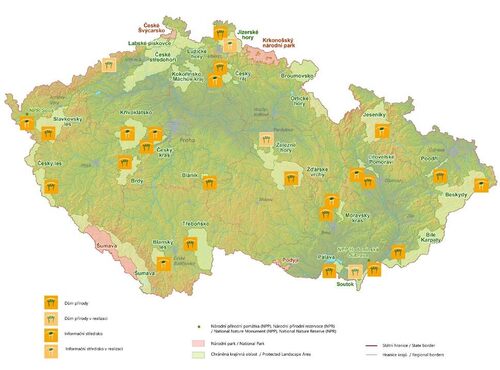
Figure 2. Visitor centres—Houses of Nature —supplemented by smaller Protected Landscape Area (PLA) Information Centres the latter having been incorporated into the Nature Conservation Agency of the Czech Republic´s (NCA CR´s) Houses of Nature Programme. Map © Jana Tomcová
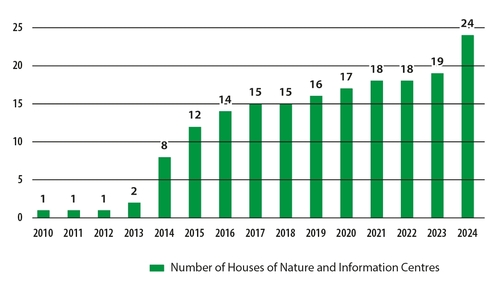
Figure 3. Growth in the number of facilities incorporated into the NCA CR´s Houses of Nature Programme in the individual years. Graph © Tomáš Růžička
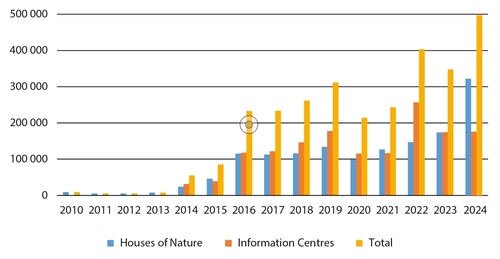
Figure 4. Visitor numbers at Houses of Nature and Information Centres from 2010 to 2024. Graph © Lenka Šoltysová
A Successful PPP Project
From the very beginning, its status as a Public-Private Partnership (PPP) project was crucial for the further Programme´s development. Therefore, the “Unified Architectural Concept, Manual for the Design of NCA CR´s Visitor Centres” (David & Velková 2009, updated by Velková et al. 2019) was developed, and a system for reviewing individual Houses of Nature at the national level was established. With minor additions and modifications, the system remains in use today. The initial inspiration for using the PPP model was primarily capacity- and cost-related. Such an extensive and investment-intensive visitor infrastructure could not be built and subsequently operated by the State Nature Conservancy only. The operation of the facilities must be based primarily on local resources (Pešout et al. 2012). It gradually became clear that another major benefit of the approach to implementing the programme is the long-term involvement of local and regional partners in public engagement and in shaping the entire Houses of Nature Programme.
Location and Design of Houses of Nature
The planning of these facilities is primarily based on a visitor management concept (Obermajer & Růžička 2021), which is developed by the NCA CR in collaboration with municipalities and other local partners and serves as an annex to the Management Plan for the respective Specially Protected Area. The location of Houses of Nature is assessed with regard to the area’s limitations, the accessibility of the structure to visitors, and, above all, the interest of a potential investor in establishing and operating a House of Nature at the given location. In terms of architecture and materials used, buildings must adhere to the above unified concept, whereby the structure must meet the criteria of contemporary architecture using local materials and comply with the criteria for energy-efficient buildings and the use of renewable energy sources. In the case of renovations of historic buildings, the principles of heritage conservation and preservation must be fully respected.
Building most of the Houses of Nature was funded primarily by the OPE, Interreg programme/scheme, and, to a significant extent, by the Houses of Nature Programme partners’ own resources.
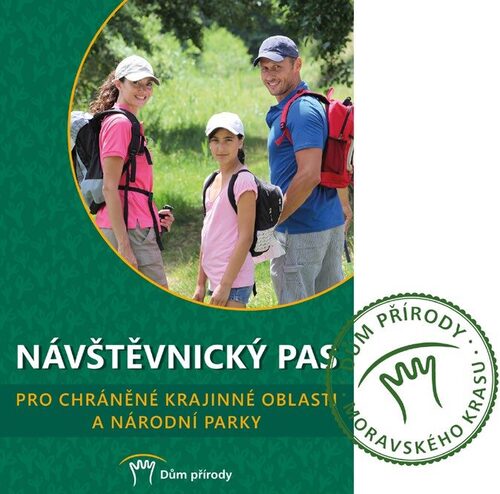
Figure 5. The visitor passport links facilities included in the NCA CR´s Houses of Nature Programme with visitor centres and Information Centres in National Parks in the Czech Republic.
Current Status of the Houses of Nature Programme
The NCA CR´s Houses of Nature Programme has been continuing to expand; only in 2024, five new Houses of Nature were added to the network: the Jizerské hory/Jizera Mountains House of Nature (northern Bohemia), the Bílé Karpaty/White Carpathians Mountains House of Nature (South Moravia, Jongepierová & Říhová 2024), the Český kras/Bohemian Karst House of Nature (Central Bohemia, Hofmeistrová et al. 2024), the Pálava/Pavlov Hills House of Nature (South Moravia, Miklín & Kmet 2024), and the Hodonínské Dúbravy/Hodonín Oak Grove House of Nature (South Moravia, Ambrozek et al. 2024). Thus, the Houses of Nature Programme includes 24 facilities (15 visitor centres, i.e. Houses of Nature and 9 Information Centres) providing services to visitors in 18 PLAs, one NNR, and one NNM (see Figs. 1, 2). The Houses of Nature Programme involves 26 partners acting as investors or operators of visitor centres; most of these are local governments or non-governmental non-profit organizations.
Visitor numbers are on the rise, reaching nearly 0.5 million in 2024 (see Fig. 3). Approx. 2,500 public events were held in 2024, most of which were educational and outreach programmes or guided tours of the permanent exhibits. Each year, 30–50 temporary exhibitions on nature conservation are also installed in the visitor centres, and over 150 field trips are organized.
The visitor centres share a common website to showcase the individual Houses of Nature and Information Centres – www.dumprirody.cz. The site provides comprehensive information about the Houses of Nature Programme and the individual visitor centres, including details on events and programmes. Virtual tours of the exhibits are available online for six of the Houses of Nature.
To promote the centres, each visitor centre has its own informational brochure, a set of postcards, a memory game for children (where applicable), and other small promotional items. The NCA CR also publishes a brochure providing information about the entire network of Houses of Nature in the Czech Republic. A specific guide (mascot) for each House of Nature, which is unique to that centre, is used in promotional activities. In cooperation with National Park administrations, a visitor passport was developed to promote the visitor centres (see Fig. 4).
Each visitor centre collaborates with regional destination management organizations to promote the region effectively. At the national level, there has been a successful partnership with the CzechTourism agency developed to promote guidelines for visitor behaviour in nature and to market Houses of Nature as gateways to Specially Protected Areas.
Each year, the NCA CR organizes meetings with visitor centres operators focused on sharing experiences and providing training in nature conservation and landscape protection and management. The NCA CR evaluates the activities of Houses of Nature and Information Centres annually, including an overview of visitor numbers, programme content, and the operating costs of individual operators. In 2024, the certification of visitor centres began according to parameters agreed upon among the partners of the Houses of Nature Programme. As part of the certification process, criteria are assessed in four areas: compliance with the conditions of the unified architectural concept and operations; staff competence, skills and approach; the quality of programming; and media image. Certification is approved by the House of Nature Programme Steering Committee for four years at a time.
|
Box 1 The House of Nature is a modern visitor centre that:
The House of Nature is a dynamic project built on regional partnerships and resources. It is not only an engaging attractive exhibition that appeals to visitors, but also a venue and a means of actively involving the local community in the conservation, protection and management of the region’s natural and cultural heritage.
|
Further Development of the Houses of Nature Programme
The long-term goal of the Houses of Nature Programme is to establish a visitor centre in each of the PLA managed by the NCA CR, as well as in selected NNRs and NNMs with high visitor attendance/visitorship.
In March 2025, the Ministry of the Environment of the Czech Republic´s Board approved the development plan for the NCA CR’s House of Nature Programme for 2025–2030. According to the plan, five additional facilities are expected to be added during the period. The Jizerské hory/Jizera Mountains PLA Information Centre– Mariánskohorské boudy/Maria Hills Cabins (northern Bohemia), which is currently under construction and funded by the NCA CR, will be completed later in 2025. The NCA CR also plans to build the Jeseníky Mountains House of Nature at the village of Karlova Studánka Spa (Silesia). A full-size architectural competition has already taken place there. The winner is currently developing the project documentation. The Soutok/Confluence House of Nature, funded by the town of Břeclav (South Moravia), is in the final design phase, including the exhibition. The town of Chrudim (eastern Bohemia, the Pardubice region) has also been preparing to build the Železné hory/Iron Mountains House of Nature.
The final facility under the approved plan is the Krušné hory/Ore Mountains House of Nature, currently being developed by the town of Horní Jiřetín (northern Bohemia), which will also provide information on the recently designated National Nature Monument, the Czechoslovak Army Mine/ČSA Quarry (Pešout & Porteš 2024). In other PLAs where there is currently no House od Nature or Information Centre(Broumovsko/Broumov Region, České středohoří/Central Bohemian Uplands, Kokořínsko – Máchův kraj/Kokořín Region-Mácha´s Country, Lužické hory/Lusatian Mountains, and Orlické hory/Eagle Mountains), new partners and financial resources will be sought.
In addition to the annual meeting and exchange of experience among operators of Houses of Nature houses and Information Centres, training opportunities for visitor centre staff will be developed, and providing products from the above network will be supported. By 2030, all Houses of Nature and Information Centres included in the Houses of Nature Programme will undergo evaluation and certification. Starting in 2025, the NCA CR is also preparing to introduce a visitor satisfaction survey, which can be completed anonymously online.
The approved programme´s development plan also includes securing funding for the renovation and maintenance of existing Houses of Nature (especially permanent exhibits) and providing support to their operators.
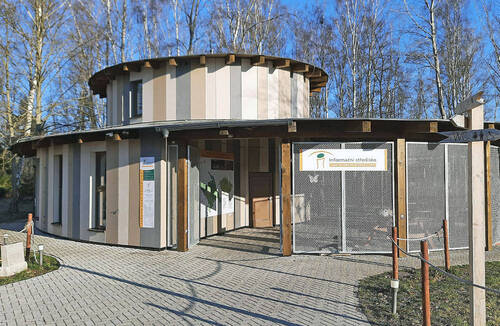
Figure 6. Information Centres are smaller facilities that complement Houses of Nature in attractive sites within Protected Landscape Areas or in small-size Specially Protected Areas. The information centre at the Soos National Nature Reserve (western Bohemia) serves as the gateway to the reserve, featuring a well-known nature trail/educational path, and also as a starting point for further excursions within the Cheb region’s natural heritage. Photo © Archive of the Municipal Museum in town of Františkovy Lázně Spa
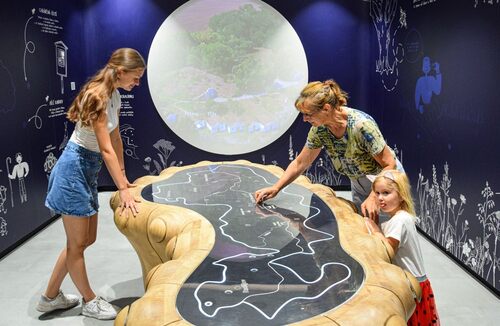
Figure 7. Every House of Nature features a permanent exhibition that introduces visitors to the area’s natural richness and the story of the landscape. At the Bílé Karpaty/White Carpathians Mountains House of Nature (South Moravia), the exhibit (sculptural element) “Caress the Landscape” serves as the central feature in the introductory section at the indoor exhibition. © Jitka Říhová
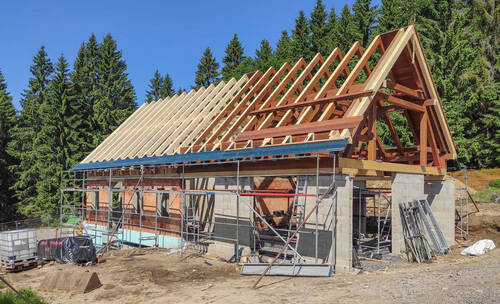
Figure 8. Building the Jizerské hory/Jizera Mountains Protected Landscape Area Information Centre – Mariánskohorské Boudy/Maria Hills Cabins (northern Bohemia) is co-financed by the National Recovery Plan and will open to the public in the spring of 2026. © Daniel Kopecký
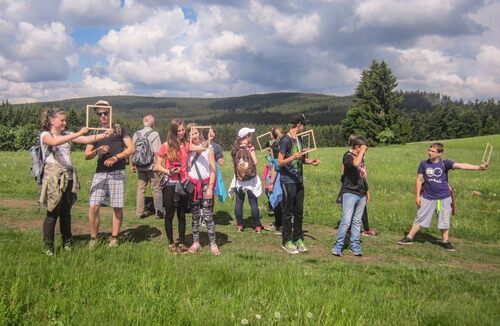
Figure 9. At visitor and information centres, educational programmes specially designed not only for schools are a key part of the main activities. At the Žďárské vrchy Hills House of Nature, visitors can participate in the “Landscape of the Žďárské vrchy” programme. Photo © Archive of the Žďárské vrchy Hills House of Nature.
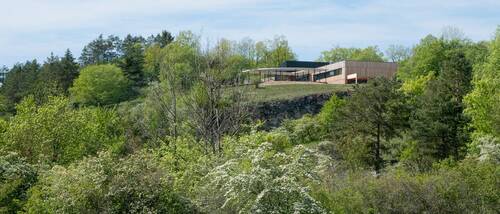
Figure 10. The Český kras/Bohemian Karst Protected Landscape Area Visitor Centre was built in cooperation with the Caves Administration of the Czech Republic near the Koněprusy Caves (Central Bohemia). The freestanding House of Nature of the Český kras/Bohemian Karst, including its exhibits and show caves, was opened to the public in 2024. The building itself meets the standards for very low-energy buildings and fully respects the landscape character/scenery there. © Magdaléna Medková – Aktuálně.cz
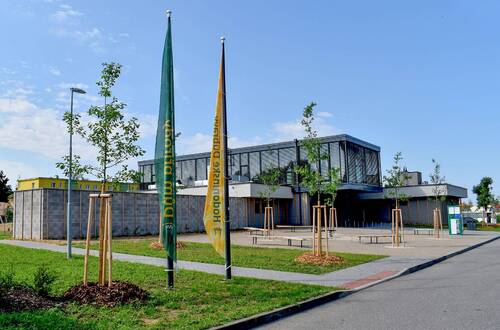
Figure 11. The House of Nature Programme is based on partnerships, as in this case, where the Hodonínská Doubrava/Hodonín Oak Grove House of Nature (South Moravia) is operated by a public institution established by the town of Hodonín, which is also its investor. © Archive of the Hodomínská Doubrava/Hodonín Oak Grove House of Nature in Hodonínské Dúbravy
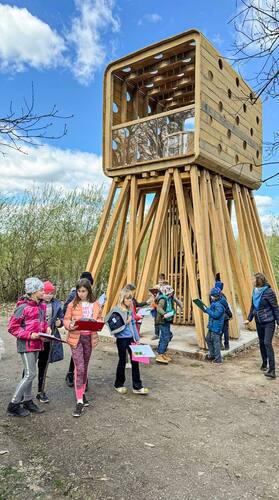
Figure 12. The Houses of Nature also harbour original works of art. The artworks along the visitor trail at the Litovelské Pomoraví/Litovel Morava River Basin House of Nature serve as places to connect with nature and are open to all experiences. In 2023, artist Miloslav Fekar created the Lookout Above the Fishpond, a unique observation tower used for observing wildlife there. © Miloslav Fekar
A Sustainable Project
The many years of operation of the Houses of Nature Programme have confirmed that the decision to use a PPP model was the right one. The operator is always a local partner (local government, nonprofit organization, state-owned enterprise, etc.), which also serves as the primary investor. This allows a significant portion of the investment costs and most of the operating costs to be generated from the partners’ own resources and through the operation of the visitor centres. Thus, the impact on the Czech Republic´s State Budget is significantly lower than if the visitor and Information Centres were invested in and operated by the NCA CR. The NCA CR contributes an average of 20–25% to the operating costs annually. In 2024, the operation of all Houses of Nature was supported by a total of CZK 7.821 million (EUR 312 840), and the operation of Information Centres by CZK 1.856 million (EUR 74 240).
In addition to their contribution to education and the interpretation of the area, visitor centres are appreciated as a resource for local communities and institutions, as a promoter of sustainable tourism, and also as a local employer. The Houses of Nature Programme has contributed to the creation of 41 permanent jobs and 116 part-time (seasonal) positions.
Let us hope that the development plan for the Houses of Nature Programme for the next five years will be implemented at least as successfully as the Programme itself has been so far. In this regard, the authors would like to express their sincere gratitude to the investors and operators of the Houses of Nature and Information Centres—for their annual efforts to provide services to visitors and for their efforts to secure funding for operations. ■
- - - -
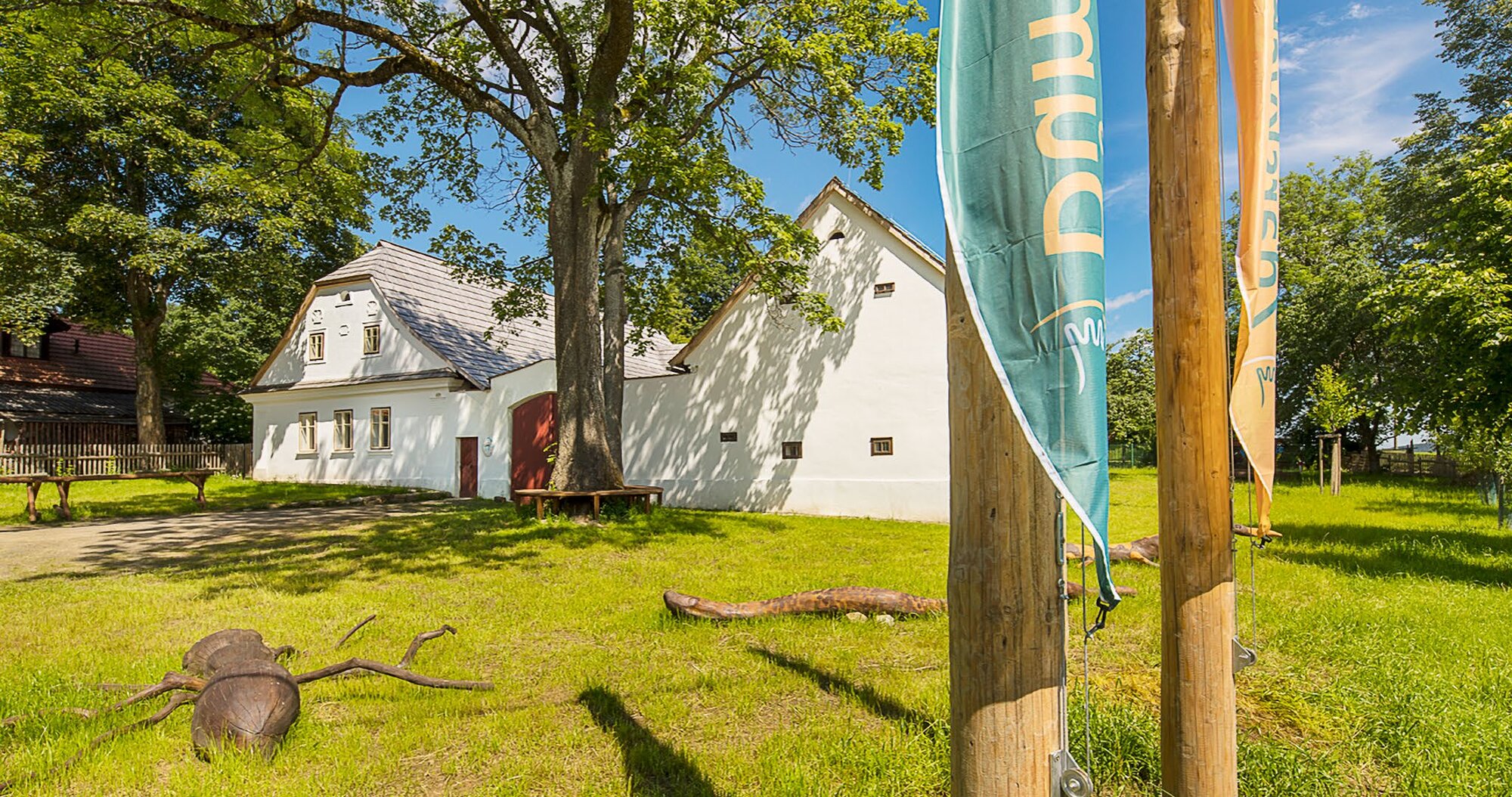
Cover photo: Visitor centres are successfully being developed as unique facilities of civic/public amenities with a specific character, as evidenced by the awards received by some of them. For example, the renovation of a historic building into the Žďárské vrchy Hills House of Nature in a Village Heritage Reserve won the 2020 Vysočina Region Governor’s Award and the Public Choice Award in the Vysočina Region Building of the Year competition. © Ota Nepilý
- - - -