

Nature Conservation 2026 — 20. 8. 2026 — Research, Surveys and Data Management — Print article in pdf
Rearing Ukrainian Brook Lamprey/Vladykov‘s Lamprey Larvae for Restocking its Population in the Račin
The Ukrainian brook lamprey (Eudontomyzon mariae) is a non-parasitic potamodromous lamprey species. Together with the more common European brook lamprey (Lampetra planeri), it is one of only two lamprey species currently found in the Czech Republic. Since its discovery in 1968 it is known from a single site, Račí potok/Crayfish Brook (also called Račinka) near the town of Velké Losiny in the Šumperk region, northern Moravia (Kux 1969). Ukrainian brook lamprey is classified as a critically endangered species in the Czech Republic´ s fauna and protected at both the national and EU levels. Račinka SCI (CZ0713004) was specifically included in the national list of Natura 2000 sites to protect the rare lamprey there. Since 2017 the Nature Conservation Agency of the Czech Republic (NCA CR) has also been implementing a regional action plan (RAP) for the Ukrainian brook lamprey.
The Račinka population had not been particularly large even at the time of its discovery, but survived many years of neglect, and was reconfirmed at the site in 1995. Since then, the population is regularly monitored, although with rather discouraging conclusions. Over time, the river section inhabited by lamprey larvae has become shorter, and the population has been declining. In 2013, when not a single larva was captured, it was even considered to be “below detection limit” (Hanel et Lusk 2013). Fortunately, fears of extinction proved unfounded, and the same year, lampreys were rediscovered in the lowermost section of the Račinka stream (km 0.0–0.8), which had so far been overlooked by ichthyologists. Despite targeted measures implemented in the following years (partial restoration efforts, supporting sediment deposition, transfers for recovery), the situation has remained critical. The lamprey population is affected by a wide range of negative factors/drivers, including inappropriate riverbed modifications, watercourse fragmentation with transverse structures, water pollution, and an assumed high predation level by both aquatic and terrestrial predators (Merta et Křesina 2017). In recent years, also changes in the river’s hydrological regime caused by climate change have played a role. The frequency of flash floods and periods of very low flow rates are increasing, which both have a devastating impact on sediment deposits, which are an essential habitat for lamprey larvae.
Taxonomic Classification and Geographic Origin of the Račinka Population
The taxonomic position of the species is complicated and has not yet been fully clarified. Most authors today, however, tend to believe that the Ukrainian brook lamprey (Eudontomyzon mariae) and the Vladykov’s lamprey (E. vladykovi) are two distinct species with different distribution ranges. The range of the Ukrainian brook lamprey is quite extensive, including rivers in the basins of the Baltic Sea, the Caspian Sea, and the northern part of the Black Sea, whereas the range of Vladykov’s lamprey is relatively small and compact, including watercourses in the upper and middle Danube Basin (Kottelat et Freyhof 2007). Genetic analyses conducted on a large sample of lampreys, among which one individual from Račinka, have clearly demonstrated that the only population inhabiting the Czech Republic does not belong to the species E. mariae (Levin et al. 2016). On the contrary, unpublished recent analyses show a close genetic relationship between the Račínka population and Slovak populations (particularly those from the Rudava, Hron, and Váh rivers), and thus their affiliation with the species E. vladykovi (Šanda in litt.). It is therefore time to start using the name Vladykov’s lamprey when referring to Račinka. Incidentally, renowned ichthyologist Prof. Vadim Vladykov (1898–1986), after whom the lamprey is named, was Ukrainian. He was born and studied in Kharkiv. In his youth, he actively fought against the Bolsheviks, from whom he fled to Prague, where he was employed at Charles University for some time.
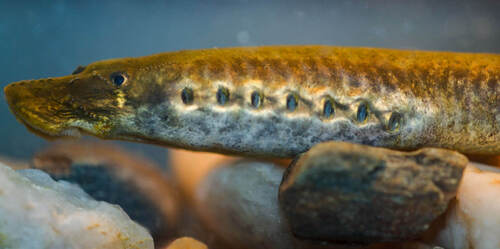
Figure 2. Portrait of one of the captured adult lampreys from the Račinka Brook. Unlike the European brook lamprey, the Vladykov’s lamprey has significantly smaller eyes. © Lukáš Merta
Particularly conservationists periodically claim to question the autochthonous nature of the Račinka lamprey population, due to its high degree of isolation. Besides the existence of many similar cases in our fauna and flora, it should be noted once more that Račinka is located within the range of Vladykov’s lamprey, albeit at its margin. There is one other site of this species in the Morava River basin, Rudava Brook in the Slovak Záhorie region. Historically (in the 19th century), two lamprey species were known to inhabit the Morava River system, European brook lamprey and then a species referred to as Petromyzon fluviatilis. However, since the presence of European brook lamprey in the Morava River basin is ruled out, the other species was probably Vladykov’s lamprey, which at that time was found in the middle and lower sections of the Morava River, between the village of Bludov and the town of Hodonín, and apparently also in many of its tributaries (Lusk et al. 2014). As a result of increasing pollution and widespread regulations, the species disappeared from most waterways, leaving Račinka as its last refuge. Incidentally, the extinction of Vladykov’s lamprey from entire streams and basins due to river regulation and pollution is also known from neighbouring Austria (Ratschan et al. 2021). We therefore propose adhering to the presumption of native origin of Czech Republic´s population until proven otherwise. The burden of proof should rest with the sceptics. This is the only way to avoid endless debates, whose sole result is an undermining of efforts to preserve the species for the Czech Republic´s fauna.
Artificial Spawning and Rearing of Lamprey Larvae from the Račinka Brook
In 2023, the authors, in another conservation project (Křesina et al. 2024), managed to artificially produce spawn of European brook lamprey followed by rearing of the youngest larvae. At a workshop on the conservation of Vladykov’s lamprey in the city of Olomouc, organised by the NCA CR in January 2024, participants agreed that artificial spawning and rearing larvae is one of the last options to save the Račín population from extinction. This measure is also fully in line with the recommendations of the mentioned regional action plan (Merta et Křesina 2016). In early March 2024, the Regional Office issued a decision pursuant to Sections 54 and 56 of the Act on Nature Conservation and Landscape Protection, authorising the capture of up to five adult fish from the Račinka Brook, followed by rearing of the fry and their release into the stream to restock the remaining population. In April 2024, four adults – three females and one male – were caught in the stream, all from a relative short stretch (approx. 200 m) in order to keep natural reproduction possible in the remaining stretches of the stream. The adults were transported to Olomouc and kept there in a 60-litre aquarium with continuous aeration in an unheated room. At the end of April, the adults began to display typical pre-reproductive restlessness. In early May 2024, artificial spawning of the lampreys was therefore carried out using the so-called dry method, i.e. without water. First, the eggs were squeezed out of the females by gently pressing their abdomens, and were then fertilised with the males’ milt. Each female was spawned separately so that their fertility and egg hatchability could be quantified. A total of 6,712 eggs were collected from the three females, with the number of eggs gathered from each female varying considerably (1,564, 1,933, and 3,215, respectively). The eggs were transferred from the spawning tray to larger ones with a water depth of 4.5 cm, where hatching took place. For both rearing of the adults and development of the eggs, water from the Račinka Brook was used, refreshing it regularly. The water in the trays was aerated using standard aquarium equipment, but without filtering. The water was neither treated with chemicals; instead, a few alder cones were added to each tray to serve as a natural fungicide. The eggs were checked twice a day and unfertilised or mouldy eggs were removed mechanically. The first embryonic changes in the eggs had been found a few days after fertilisation, and the larvae had fully hatched within 3 weeks after fertilisation. The hatching rates of the eggs were 23.3%, 34.7%, and 39.6% for the three females, respectively. A total of 2,039 larvae successfully hatched. The mortality rate of developing larvae from hatching until the depletion of their yolk reserves was very low, with an average survival rate of 93.1%. The water temperature during hatching and the early larval stage ranged from 11 to 19 °C (gradually increasing), with day-night differences typically ranging from 2 to 3 °C. Rearing the youngest larvae yielded some interesting ethological observations. For example, they tended to hide en masse in the holes of half-opened alder cones. This would be understandable given their initiated photophobia, but all the larvae in the cones hid only their torsos and tails while their heads stuck out.
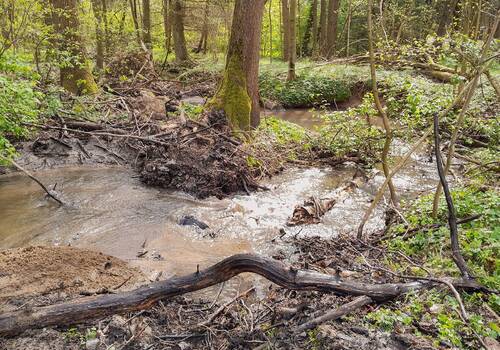
Figure 3. The last morphologically preserved stretch of the Račinka Brook, the only site of the Vladykov’s lamprey in the Czech Republic, is not longer than 300 m. © Lukáš Merta
Table 1. Basic data on artificial spawning and larva rearing of Vladykov’s lamprey from the Račinka Brook, 2024
|
Female no. |
Body length (mm) |
Number of eggs collected (pcs) |
Number of hatched eggs (pcs) |
Hatching rate (%) |
Number of reared larvae (pcs) |
Larval survival rate (%) |
|
1 |
171 |
1,933 |
671 |
34.7 |
638 |
95.1 |
|
2 |
174 |
3,215 |
748 |
23.3 |
692 |
92.5 |
|
3 |
161 |
1,564 |
620 |
39.6 |
568 |
91.6 |
|
|
|
Σ = 6,712 |
Σ = 2,039 |
Ø = 30.4 |
Σ = 1,898 |
Ø = 93.1 |
Release of Larvae into the Račinka Brook and their Subsequent Rearing in Oncubation tanks
Most of the hatched larvae (1,618 individuals) were released into the Račinka Brook just before their yolk reserves were depleted, at the turn of May and June 2024, when they reached 8–9 mm in length. After the necessary acclimatisation (temperature adjustment), the larvae were released into four different stretches of the brook, mostly into the upper parts. Immediately after release, the larvae tried to burrow quickly into the sediment.
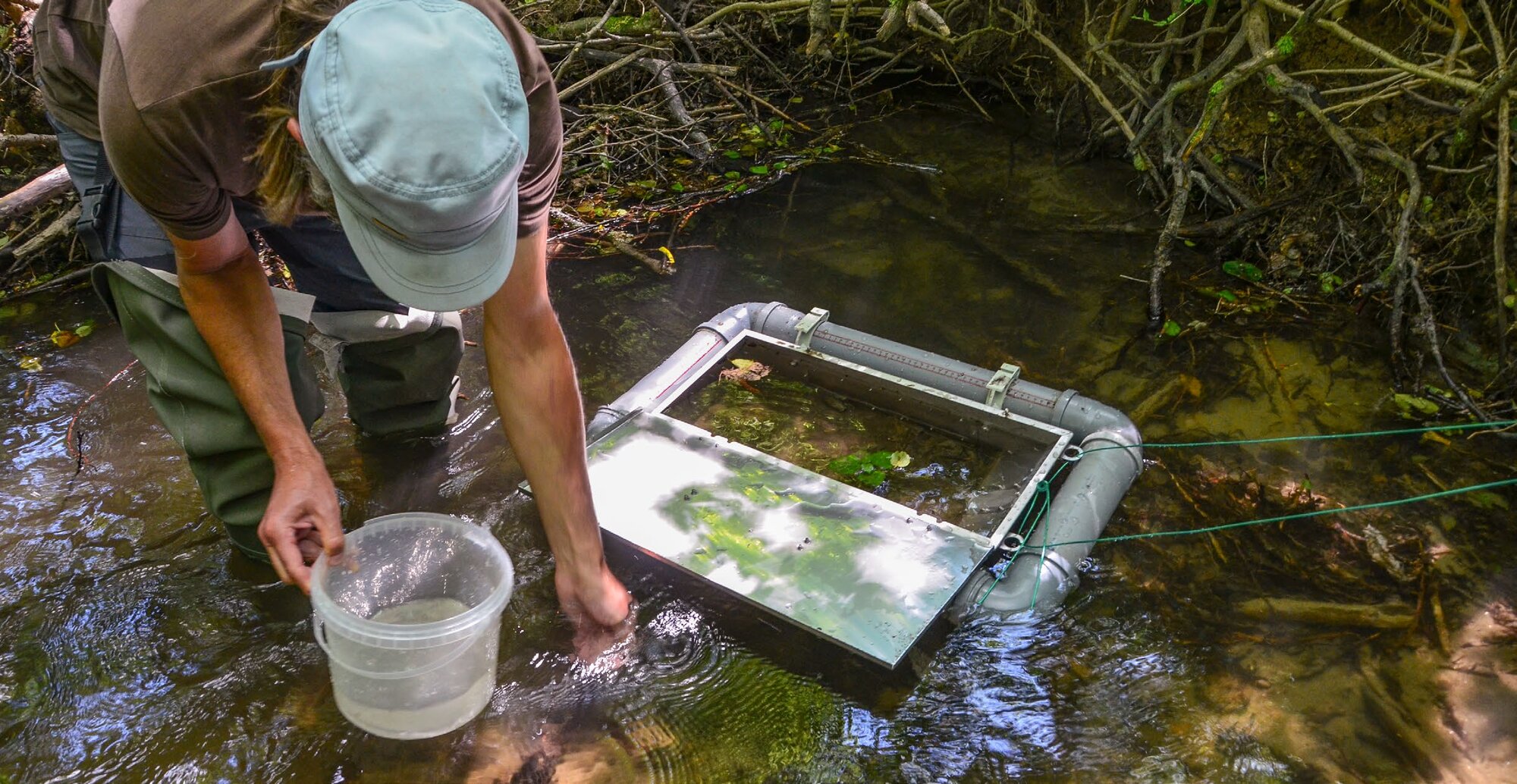
A remaining 280 larvae were transferred to four special floating tanks, originally designed for the incubation of salmonid eggs. The LOSOSA GAMA tanks are made of stainless steel and have perforated sides allowing for inflow of fresh water. The outer section of the tank, which keeps it floating on the water surface, is supported by connected PVC pipes. A 2–3 cm layer of muddy-sandy sediment from the existing deposits was spread over the tanks´ bottom, to which coarse detritus in various decomposition stages was added. Into each tank, 70 larvae were released; the tanks were placed in calmer sections of the streambank and tied to a tree trunk with strong wire. Two incubation tanks were installed in the Račinka Brook, and two more in the nearby Papírenský náhon/ Paper-making Water Race, selected as a potentially suitable site for establishing a new lamprey population. Presence of the tanks was checked every 2 to 3 weeks. During the checks, coarse organic material – primarily tree leaves – was added to the tanks. The original plan was to leave the tanks in both streams until late October, but the weather decided otherwise…
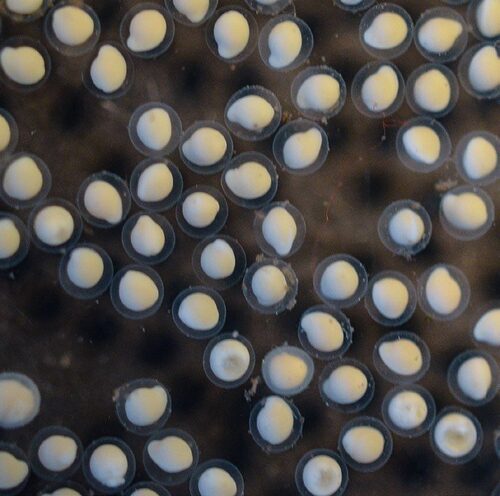
Figure 4. Developing lamprey embryo. The development from fertilisation to hatching did not last more than 3 weeks. © Lukáš Merta
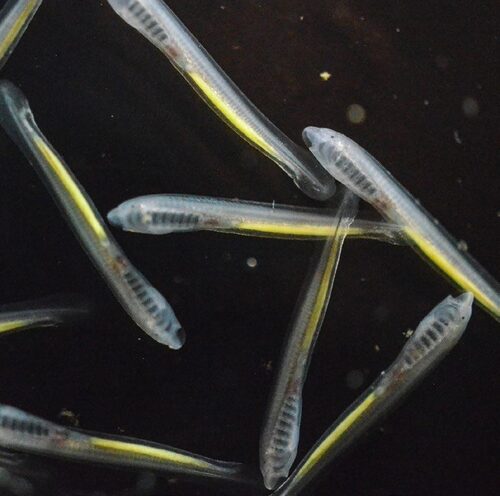
Figure 5. Lamprey hatchlings 8–9 mm in size before release into the Račinka Brook. The elongated yellow structures are undigested yolk reserves, while the red dots behind the gill slits are the heart. © Lukáš Merta
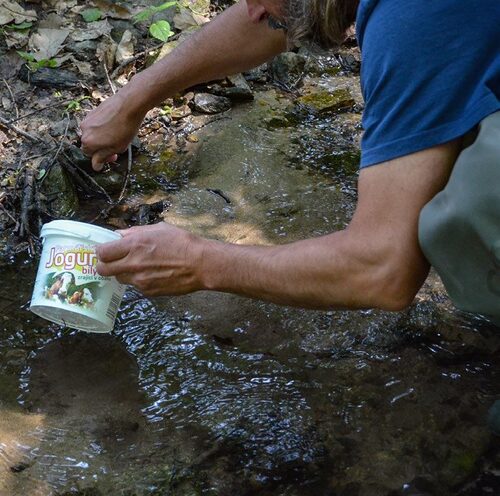
Figure 6. In 2024, a total of 1,898 reared larvae were released into the Račinka stream, most of them already in the spring. They were released into streambank sediments where the water flows slowly. © Jiří Křesina
September Flash Flood on the Račinka Brook and its Impact on Lampreys
Already in the second week of September, it was forecast that the Jeseníky Mountains region would be affected by floods of exceptional intensity. Because of the threat of losing the floating tanks (each costing €1,000) along with the larvae inside, it was decided to remove the tanks, which took place just one day before the flood started. After being counted, the larvae from the tanks were transferred to aquariums, where they were kept until the highwater flow in the Račinka Brook subsided, after which they were released into the river. A total of 123 larvae (39, 41, 34, and 9 individuals, respectively) were reared in the rearing tanks, counting for a survival rate of 43.9%. One tank had clearly been manipulated with (it was found open), which is probably why the number of larvae found there was significantly lower than in the other ones. The larval survival rate was assessed as very good, indicating that the tanks are well-suited for rearing young lamprey in a relatively safe and controlled environment. The larvae in the tanks also showed very good growth, reaching a size of 24–30 mm at the time of release.
The flood hit the Račinka Brook with full force on 14 and 15 September 2024. It is estimated to have reached a level corresponding to a 20- to 50-year flood (exact data are unavailable). The damage to local property was low, but the impact on the lampreys was undoubtedly high. Most of the fine-grained sediments were washed away, particularly from the high-capacity, straight stretches (predominating there), and naturally, the lamprey larvae present were carried away as well. The flow took the material away to unknown places, locally outside the bed on the Račinka Brook banks. A significant decline in the lamprey larva population was confirmed by subsequent monitoring in October 2024, during which only 7 larvae were captured, whereas in April a total of 38 had been caught with a similar fishing effort in the same section. Not surprisingly, the population after the flood lacked particularly younger larval stages (none was caught in the size range up to 10 cm), which are least able to withstand the force of the current. As research has shown, the number of drifting lamprey larvae increases by an order of magnitude even during regular floods, with this year’s individuals strongly predominating (Kirillova et al. 2011). Thus, it is likely that the vast majority of larvae released in spring had not survived the extreme flood, and efforts to restock the population in the Račinka Brook have thus gone to waste. However, the coming years will tell if this is really the case, since this year’s lamprey larvae are caught very rarely during electrofishing operations.
Conclusions
The year 2024 ended with mixed feelings in terms of efforts to save the declining population being close to extinction. Artificial spawning and subsequent larval rearing proved feasible, even without sophisticated technological equipment and facilities. In the case of the Vladykov’s lamprey, this is the first documented successful attempt ever. However, strengthening collapsing populations by introducing reared individuals can only be of real benefit at sites with restored natural conditions suitable for the species. This is unfortunately not the case for the Račinka Brook, which has still been affected by a number of negative factors/drivers. Some of them can be influenced by tailored management interventions, while others, e.g. the changing hydrological regime in the streams, can hardly be reduced. However, if saving the unique Vladykov’s lamprey population in the Račinka Brook is worth the effort, there is no time to waste. Quickly, in particular, the comprehensive morphological restoration of the Račinka Brook riverbed should be urgently initiated wherever it has been still possible. Artificial rearing of lamprey larvae and their introduction for restocking can then be a very effective tool towards the ultimate recovery of the viable population of these remarkable animals.
Acknowledgements
We would like to thank our colleagues for their help and valuable advice (in alphabetical order): Ondřej Dočkal, Alexandr Jeništa, Radek Málek, Clemens Ratschan, Vít Slezák, and Radek Šanda. ■
- - - -
Cover photo: Preparation of a floating tank for rearing this year’s lamprey larvae. The larvae had been released into the tanks in mid-June and kept there until mid-September. Nearly half of them survived and tripled their body length. © Jiří Křesina
- - - -
Literatura:
- Hanel L., Lusk S. (2013): Je mihule ukrajinská ještě součástí naší fauny? Živa 6: 279–281.
- Kirillova E.A., Kirillov P.I., Kucheryavyy A.V., Dmitrii P. (2011): Downstream migration in ammocoetes of the Arctic lamprey Lethenteron camtschaticum in some Kamchatka rivers. J. Ichthyol. 51, 1117–1125.
- Kottelat M., Freyhof J. (2007): Handbook of European freshwater fishes. Kottelat, Cornol and Freyhof, Berlin, 646 pp.
- Křesina J. a kol. (2024): Jak jsem inkuboval ryby: nejen manuál pro inkubaci ryb v mateřském toku. Beleco, 47 pp.
- Kux Z. (1969): Příspěvek k rozšíření mihulovitých (Petromyzonidae) v ČSSR. Čas. Mor. muzea 54: 203–222.
- Lampman, R.T., Maine A.N., Moser M.L., Arakawa H., Neave F.B. (2021): Lamprey aquaculture successes and failures: A path to production for control and conservation. Journal of Great Lakes Research 47: 201–215.
- Levin, B. A., Ermakov, A. S., Ermakov, O. A., Levina, M. A., Sarycheva, O. V. & Sarychev, V. S. (2016): Ukrainian Brook Lamprey Eudontomyzon mariae (Berg): phylogenetic position, genetic diversity, distribution, and some data on biology. Jawless Fishes of the World. Cambridge Scholar Publishing. V. 1. P. 58–82.
- Lusk S., Hanel L., Lusková V., Tomeček J., Valachovič D. (2014): Mihule v povodí Moravy –minulost a současnost. Sborník z konference Říční krajina 10, Brno, 62–67.
- Merta L., Křesina J. (2016): Regionální akční plán pro mihuli ukrajinskou (Eudontomyzon mariae) na Šumpersku. Dep. In: AOPK ČR Praha, 30 pp.
- Merta L., Křesina J. (2017): Mihule ukrajinská (Eudontomyzon mariae) je stále součástí naší fauny: shrnutí poznatků z let 2014–2016. Lampetra 8: 33–43.
- Ratschan C., Jung M., Riehl B., Zauner G. (2021): Wiederansiedelungsversuch von Neunaugen (Eudontomyzon mariae) an der Salzach durch Initialbesatz von Tieren aus dem Inn). Osterreichs Fischerei 74: 51-69.