

Nature Conservation 2026 — 20. 8. 2026 — On Nature in the Czech Republic — Print article in pdf
The Český ráj/Bohemian Paradise Protected Landscape Area Has Been in Existence for 70 years
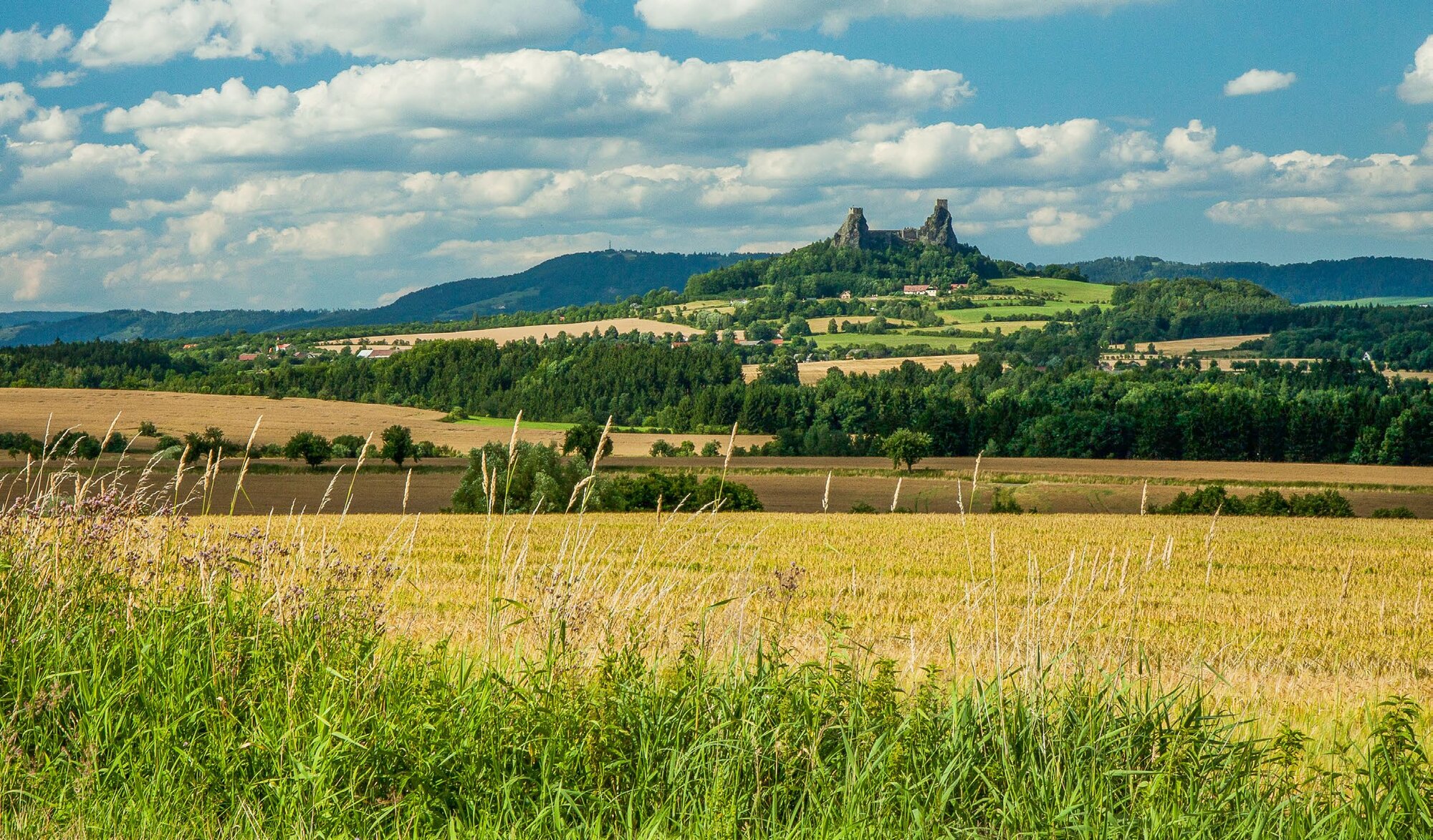
Our predecessors—naturalists, local historians, and members of ornamental societies/ beautification associations and tourism clubs—took an interest in the landscape among the towns of Turnov, Jičín, and Mnichovo Hradiště, nowadays located on the border of Central Bohemia, northern Bohemia and eastern Bohemia, as early as the 19th century. But when did the name “Český ráj/Bohemian Paradise” first appear in connection with the landscape around the Trosky/Ruins Castle? For decades, it has been claimed that the name was coined by 19th-century Prague writers, led by Jan Neruda and Eliška Krásnohorská. They used to go to the spa of Sedmihorky for recreation, and it was there that the name “Český ráj/Bohemian Paradise” was born.
Our predecessors—naturalists, local historians, and members of ornamental societies/ beautification associations and tourism clubs—took an interest in the landscape among the towns of Turnov, Jičín, and Mnichovo Hradiště, nowadays located on the border of Central Bohemia, northern Bohemia and eastern Bohemia, as early as the 19th century. But when did the name “Český ráj/Bohemian Paradise” first appear in connection with the landscape around the Trosky/Ruins Castle? For decades, it has been claimed that the name was coined by 19th-century Prague writers, led by Jan Neruda and Eliška Krásnohorská. They used to go to the spa of Sedmihorky for recreation, and it was there that the name “Český ráj/Bohemian Paradise” was born.
That is not the case; it did not originate there, and neither Neruda nor other Prague writers were its authors. Nor was it Václav Durych the town of Turnov, to whom the National Revival-era relocation of the name “Český ráj/Bohemian Paradise” from the then-German region of Litoměřice (northern Bohemia) to the purely Czech region of Turnov is often attributed. In 2007, architect Karel Čermák published the results of his study on the origin of the name. The oldest evidence of the name’s use is the 1843 poem titled “Kde děwa má/Where is My Girl?” by Václav Jaromír Pick, a native of the village of Svijanský Újezd (Čermák 2007). In it, he writes about “a rose in the Český ráj/Bohemian Paradise” in his home region of Turnov, and the text clearly shows great inspiration from Tyl’s song “Kde domov můj/Where is my home?”, later becoming anthem of Czechoslovakia and the Czech Republic. Eighteen years later, Václav Sedláček published the poem “U Jizery/Near the Jizera River,” in which the author refers to Pick and explicitly names the region around the Jizera River, Turnov, Trosky/Ruins Castle, and Kozákov Ridge as the Český ráj/Bohemian Paradise—later the territory of a Protected Landscape Area (PLA, Čermák 2007). It had been not until 1886 that the above Václav Durych published his travel sketchbook “From the Český ráj/Bohemian Paradise” with a map and illustrations by A. Nejedlý, and “Český ráj/Bohemian Paradise” as a designation for the Turnov region entered the broader public consciousness (Čermák 2007).
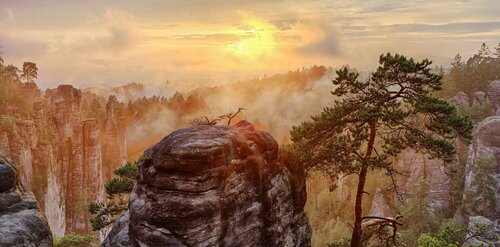
Figure 2. The Prachovské skály/Prachov Rocks. © Vladimír Šoltys
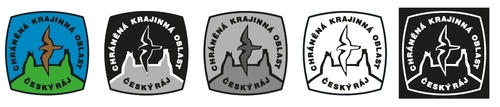
| How the Český ráj/Bohemian Paradise Protected Landscape Area Logo Was Created |
|
The idea to create a logo for the Český ráj Protected Landscape Area originated in the mid-1970s at the Regional Centre for State Monument Preservation and Nature Conservation in the city of Pardubice. The project was undertaken by forester Jaroslav Macák, botanist Vlastizdar Vágenknecht, zoologist Petr Rybář from the Department of Nature Conservation, and Miroslav Pojkar—at the time the only employee of the Protected Landscape Area Administration—together with heritage conservation advocate Hana Raková-Kočová. It was clear that it had to feature the familiar silhouette of the Trosky/Ruins Castle (Proceedings: 50 Years of the Český ráj/Bohemian Paradise Protected Landscape Area, 2005). There were several options for what to add to Trosky—the outlines of rocks and summit pines, the silhouette of an eagle owl, an antlion pit, fern leaves, or orchids. The Peregrine falcon (Falco peregrinus), which would have seemed ideal, had already gone extinct in the Český ráj/Bohemian Paradise at that time. Rybář therefore proposed a universal falcon-like bird instead of the peregrine, and there was consensus on this. The emblem was designed by the academic painter Jan Hlína from the town of Heřmanův Městec. The simple design and professional execution ruled out any potential reproduction issues later on (Proceedings: 50 Years of the Ćeský ráj/Bohemian Paradise Protected Landscape Area, 2005). It can be easily enlarged or reduced, and options include full colour, single-colour outline, grayscale, and negative versions. The emblem was approved and commended by the Committee of the Czech Fine Arts Fund based in the city of Hradec Králové. Half a century of existence has proven the logos quality, and fortunately, it has not suffered the later graphic devaluation that has befallen other original emblems of large-size Specially Protected Areas, i.e. PLAs and National Parks. In recent years, the universal falcon-like bird can be declared a true falcon, and Petr Rybář’s idea can be described as visionary. The Peregrine falcon has returned back and has been once again nesting at the castle of Trosky/Ruins. |
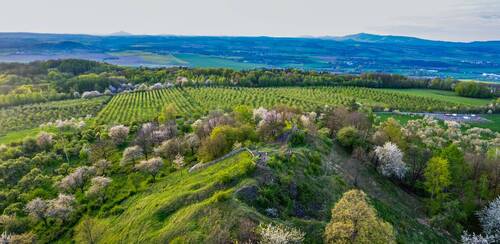
Figure 3. On Mužský Hill black locust (Robinia pseudoacacia) self-seedlings were successfully eradicated and non-forest habitat has been maintained by goat grazing. © Jiří Šťastný
|
The Green-winged orchid (Acamptis morio) used to be a relatively common orchid in the Czech Republic´s countryside, but today it is rarely seen there. In the Český ráj/Bohemian Paradise, it is known from two sites only. At one site, the number of plants has increased from seven to twenty-six over the course of seven years showing that even small populations can gradually grow and become more stable. The Autumn dwarf gentian (Gentianella amarella) is a biennial plant that blooms in late summer and autumn. In unfavourable years, it can survive in the soil as a seed bank and reappear when conditions are right. In the Český ráj/Bohemian Paradise, it is known from only a single site, where over 14,000 individuals have been recorded.
The Early coralroot (Corallorhiza trifida) is an inconspicuous, leafless orchid whose non-green stems grow from forest litter. It obtains nutrients through symbiotic fungi connected to tree roots. In the Český ráj/Bohemian Paradise, it was found after thirteen years in the Bučiny/Beech Forest u Rakous Nature Reserve, where botanists counted 85 individuals. Its presence indicates the well-preserved habitat of the local forests.
The European yellow lady’s slipper (Cypripedium calceolus) is an orchid with a strikingly shaped flower. The lower labellum resembles a hollow pouch that acts as a trap for insects. The insect can only exit the flower through a narrow slit, thereby transferring pollen on its body. In the Český ráj/Bohemian Paradise, the orchid grows at only a single site in the Maloskalsko region.
Jan Višinský |
Nature Conservation in the Bohemian Paradise for Nearly a Century
The year 2025 marks the 70th anniversary of the designation of the Český ráj/Bohemian Paradise PLA. Moreover, the first protected areas in the region were established even before the PLA’s official designation. The Prachovské skály/Prachov Rocks Nature Reserve has been in existence since 1933, and twenty years later, the Na Hranicích/At the Border Nature Reserve was designated near the town of Turnov. Discussions about the need to protect the entire landscape began as early as the First Republic, i.e. in Czechoslovakia 1918-1938. Shortly after World War II, the Mnichovo Hradiště District National Committee approached the then Ministry of Education and National Enlightenment with a request to ensure the protection of the wider area around the village of Mužský with a number of archaeological sites. In 1947, the renowned physician Jiří Šolc was appointed as the District of Turnov Nature Conservationist, a person in charge of nature conservation in the respective district (Pelc 2025). It was he who advocated for the then Ministry of Culture to designate the Český ráj/Bohemian PLA in 1955. Tgus, the Český ráj/Bohemian Paradise became the first PLA in Czechoslovakia. This occurred a year before the adoption of the Nature Conservation Act. Covering an area of 92 km2, the rock towns of Hruboskalsko, Příhrazské skály/Příhrazy Rocks, and Apolena, the valleys of Žehrovka Rivulet and Jordánka Brook below the village of Trosky/Ruins, Trosky/Ruins Castle itself, the Plakánek Valley, the Žehrovské lesy/Žehrov Forests, and the largest fishpond in the region, Žabakor, came under joint protection. In addition to these natural monuments, cultural monuments also became part of the PLA – the castles of Kost/Bone, Valečov and Trosky/Ruins, the chateau of Hrubá Skála and later Vesec u Sobotky and Mužský Village Heritage Reserves.
Nevertheless, the PLA´s protection regime was weak (Pelc 2025). Despite the declared protection, the floodplain of the Libuňka Brook—the main watercourse of the area between the Trosky/Ruins Castle and the Kozákov Ridge—was drained in the 1960s. By straightening and regulating its course, the Libuňka Brook was shortened by up to a quarter in some sections, and e.g. in the vicinity of the village of Ktová, it has since flowed over a cascade of concrete weirs. As elsewhere, meadows were ploughed and drained, waterlogged habitats were destroyed, and the cultivation of Norway spruce and pine monocultures continued in the forests. The Český ráj/Bohemian Paradise PLA Administration was not established as an institution until 1969 and had no authority. Its voice was merely advisory to the National Committees within the PLA´s territory at that time (Pelc 2025) and was often ignored. What was successfully protected back then may not be entirely obvious today. Virtually nothing is known anymore about the grand plan to build a large-scale recreational centre on the meadows near the Věžák Fishpond. At the time, the PLA Administration managed to prevent the construction and preserve the most picturesque of the Český ráj/Bohemian Paradise valleys beneath the Trosky/Ruins Castle.
Practical nature conservation often relied on volunteer activities. The PLA Administration built two nature trails/educational paths—one in the Hruboskalsko area and another along the fishponds in the Podtrosecké údolí/Bellow Trosky Castle Valley. Following the example of the Krkonoše/Giant Mountains information centres, two were established in the Český ráj/Bohemian Paradise in the 1980s—one by adapting a historic gazebo in the arboretum at Bukovina near the village of Hrubá Skála, and the other in a newly built structure near the Věžák Fishpond. The information centre at Věžák Fishpond was a significant venue where exhibitions and meetings were held in collaboration with the editorial staff of the popular Mladý svět/Young World magazine. On the other hand, the design of the Věžák Information Centre is typical of the prefabricated structures of that era and, even at the time of its construction, contradicted what we now refer to as landscape scenery/character protection. The third location designated for communication with, education of and raising awareness among the general public was an exhibition space with a lecture hall in the PLA Administration building in the town of Turnov.
It was not until after 1989, with the introduction of new legislation, that a fundamental change took place—not only for the Český ráj/Bohemian Paradise. Thanks to Act No. 114/1992 Gazette on Nature Conservation and Landscape Protection the administrations of PLAs and National Parks gained decision-making authority performing Public/State Administration within their territories; management plans began to emerge as conceptual documents for the Specially Protected Areas including PLAs; and, last but not least, subvention programmes/subsidiary schemes were introduced, along with the funding needed to implement measures for nature conservation and landscape protection. As a result, more targeted and effective management could begin in the 1990s, and a number of Natural Monuments and Nature Reserves were designated.
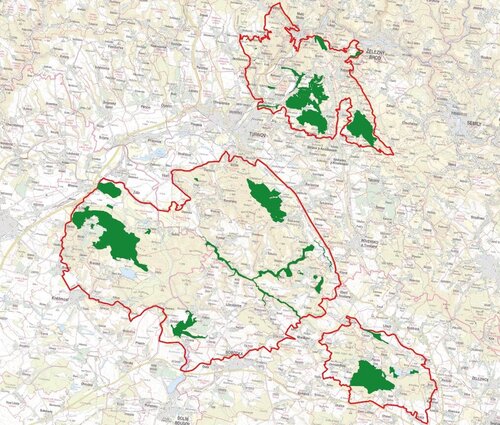
Map 1. The Český ráj/Bohemian Paradise Protected Landscape Area in 2025 and its 25 small-size Specially Protected Areas. Map © Ondřej Tomášek
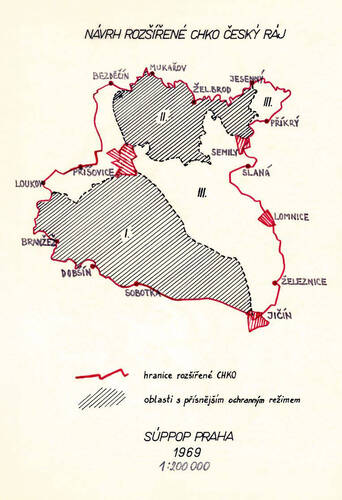
Map 2. Proposed enlargement of the Český ráj/Bohemian Paradise Protected Landscape Area from 1969. © NCA CR Archive
Enlargement of the Protected Landscape Area
Discussions about enlarging the PLA began shortly after its designation. The plan was to extend protection to the entire landscape from the town of Železný Brod to the town of Jičín. The proposed new boundaries from the 1960s were ambitious; the area was several times larger than the existing PLA and included other natural and landscape features of the Český ráj/Bohemian Paradise. The proposal was revised over the course of a decade, with interest in the expansion declining and then increasing intermittently. It was not until after 2000 that a scaled-down version consisting of two separate parts was submitted for discussion. It seemed acceptable because it excluded the entire wide valley between the Kozákov Ridge and the Trosky/Ruins Castle, through which the transport link between the towns of Jičín and Turnov, and the cities of Hradec Králové and Liberec, runs. Even the proposal was drastically reduced during the deliberations. The main reasons were objections from the municipalities of Mírová pod Kozákovem and Mladějov, as well as difficulties to incorporate the Hrdoňovice sandpit into the PLA. The final agreed-upon form divided the PLA into three separate parts. The historic section from 1955 is supplemented to the south by the Sobotka area, featuring picturesque villages, Humprecht Castle, and the Kostec forests, extending all the way to Komárovský rybník Fishpond near the village of Branžež. A separate eastern segment encompasses the landscape of the Prachovské skály/Prachov Rocks and wetland meadows in the Javorka River basin. The northern segment consists of part of the Maloskalsko region with the southern slopes of the Kozákov Ridge. Therefore, the PLA nowadays includes the monumental Suché skály/Dry Rocks and Vranovský hřeben/Vranov Ridge rock formations, Frýdštejn Castle, the massive Jizera River Canyon between the towns of Turnov and Malá Skála—along with the Bučiny/Beech Forest u Rakous and Na hranicích/At the Border Nature Reserves—as well as the Klokočské skály/Klokoč Rocks and Betlémské skály/Nativity Scene Rocks, the Besedické skály/Besedice Rocks, and the Měsíční údolí/Moon Valley on the Kozákov Ridge. In this form, in October 2002, the then-Czech government declared the expanded Český ráj/Bohemian Paradise Protected Landscape Area covering just under 182 km². The lack of territorial integrity, and in particular the highly fragmented border in the northern section, has soon proved to be a weakness in protecting the landscape as a whole, and this remains the case to this day.
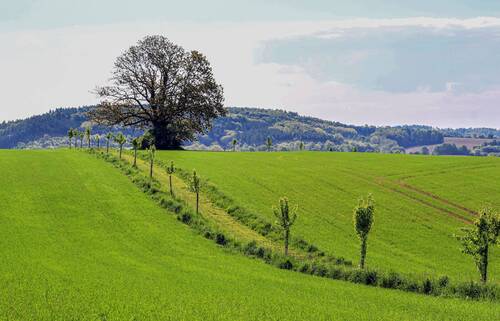
Figure 4. A new path lined with fruit trees leading from the village of Rytířova Lhota to the village of Libošovice. © Lukáš Bílek
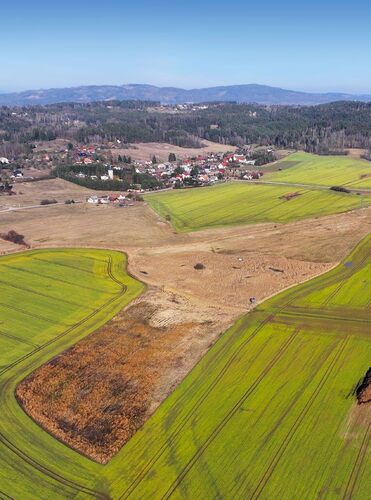
Figure 5. A system of new pools in farmland near the village of Zámostí.Blata. © Jiří Klápště
(Not Only) the Successes and Challenges of Nature Conservation and Landscape Protection in the Český ráj/Bohemian Paradise
As stated in 2002 Regulation of the Government of the Czech Republic, the area designated for protection is “a vast area with a harmoniously shaped landscape, sandstone relief, and rock formations, featuring a significant proportion of natural forest and permanent grassland ecosystems, numerous fishponds, streams, and cultural monuments that contribute to the characteristic landscape scenery.” The PLA´s mission is “to preserve and restore its natural environment, particularly ecosystems, wild animals and wild plants, and to maintain the typical landscape scenery/character while developing an ecologically optimal system for the use of the landscape and its natural resources.” Fulfilling this mission is the task of the Český ráj/Bohemian Paradise Protected Landscape Area Administration. Over the past 70 years, 25 small-size Specially Protected Areas have been designated in the categories of Nature Reserves, Nature Monuments, and National Nature Monuments. Some of them were “inherited” through the PLA enlargement.
In connection with landscape restoration in recent years, a large part of the effort has been directed toward Zone III in the open countryside. Field paths and tree-lined avenues are being restored. Since 2019, the number of trees in the avenues has increased by nearly 2,500. Volcanic peaks are undergoing another significant transformation. Their appearance is changing, returning to the historic deforested form seen in period postcards. The Trosky/Ruins, the village of Vyskeř, and Mužský Hill, once overgrown with black locust (Robinia pseudoacacia) self-seedlings, have gradually been cleared and are now used for grazing. This creates patches of distinct conditions amidst the sandstone landscape, serving as “stepping stones” that enable the wild plant and animal dispersal between isolated sites. In recent years, some forty wetland areas have also been restored or newly established in the Český ráj/Bohemian Paradise. A major task for the coming years is to attempt to restore the Libuňka Brook, which was canalised sixty years ago. A significant challenge in PLA staff´s nearly daily activities is the pressure caused by urbanization on the open landscape and construction in general. Fortunately, nearly all municipalities within the PLA already have approved land-use/territorial/physical plans, so landscape protection can be addressed conceptually, and some requirements for its protection can largely be incorporated into the plans. A major asset is the existence of a high-quality “preventive assessment of the PLA’s landscape scenery/character.” The degree of success in protecting the landscape scenery/character is similar to that in other PLAs. The open landscape is more or less being successfully protected, but the situation is not as successful when it comes to the appearance of human settlements. The mantra of the gabled roof is not all-powerful. And so, high-quality architecture that is both contemporary and reflective of the rural architecture of the Český ráj/Bohemian Paradise (as opposed to the nearby Jizerské hory/Jizeraa Mountains) is few and far between.
The former threat to the Český ráj/Bohemian Paradise posed by the high-capacity four-lane I/35 highway has been moved almost entirely outside the PLA. This may seem like good news for Libuňka Brook; just twenty years ago, there were plans for a corridor that would have completely destroyed it. Unfortunately, the current proposed highway´s route, despite all efforts to find a more environmentally friendly solution, will impact the Český ráj/Bohemian Paradise landscape just as severely. It is uncertain whether a more generous solution for the Český ráj/Bohemian Paradise can be found. Time will tell if our society is mature enough to protect and cherish its “paradise” regardless of the PLA´s administrative boundaries. There is no substitute for the Český ráj/Bohemian Paradise waiting elsewhere.
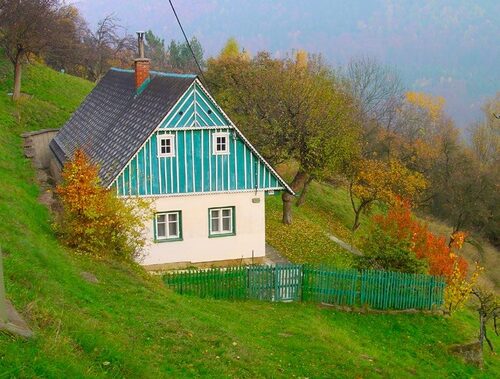
Figure 6. Many historic cottages have been preserved thanks to the of their owners using them as weekend-houses, such as this one in Záborčí, a quarter of the village of Malá Skála. © Lukáš Bílek
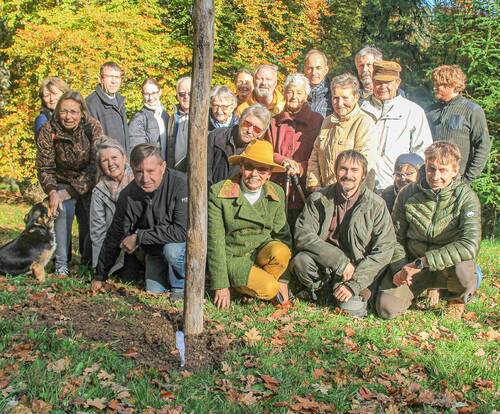
Figure 7. A commemoration of Karel Čapek’s century-old column, featuring the planting of his maple tree in the arboretum at Bukovina near the village of Hrubá Skála, took place on Arbor Day. Among the participants were Zdeněk Vacek, Director of the Karel Čapek Memorial; Ondřej Pecháček, Forest Manager for the Forests of the Czech Republic, State Enterprise in the town of Hořice, along with Jan Drahotský, the Hruboskalsko District Forester; Alena Pospíšilová, the retired librarian from Sobotka; Ondřej Havrda, Mayor of the home village of Karlovice, and Jaroslav Černý, Mayor of the neighbouring village of Dobšín; and Jiří Hušek, Director of the Nature Conservation Agency of the Czech Republic´s Liberec Regional Office. © Lukáš Bílek
The Český ráj/Bohemian Paradise Cannot Be Protected Without People
Contributing to communication with, education of and raising awareness of nature conservation and landscape protection among the general public is part of the PLA Administration’s activities. Caring for visitors is an important task that has been fulfilled with varying degrees of success throughout the PLA’s existence. The original two nature trails/educational paths have been renovated over time. In 2005, a sensory forest nature trail/educational path at Sedmihorky Spa—pioneering for its time—was added; in the same year, the historic gazebo at Bukovina was sensitively restored. Although a number of other nature trails/educational paths were added ten years in 2015, it seems that the time has come to reconsider the overloading of the landscape with signs, even if placed in good faith. Their moral obsolescence is progressing just as quickly as the aging of the material. The unattractive information centre building near the Věžák Fishpond has been still awaiting a new design. In recent years, CEPA (communication, education and public awareness) in the Český ráj/Bohemian Paradise has been provided by the Český ráj/Bohemian Paradise House of Nature at the village of Dolánky near Turnov and the Bukovina Information Centre through their operators. The PLA Administration closely cooperates with them. The Český ráj/Bohemian Paradise has developed a Concept for Working with the Visiting Public, and it is up to all tourism stakeholders in the region to decide whether they will cooperate in its implementation. The Český ráj/Bohemian Paradise is not merely a backdrop of rock formations for vacations, day trips, races, and entertainment. Helping both local residents and visitors understand the fragility and uniqueness of the local landscape is no easy task, but it is one of the ways to protect it.
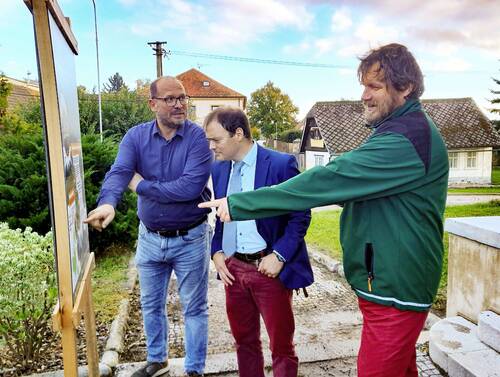
Figure 8. The October 2025 opening of the exhibition in the town of Sobotka was inaugurated by (from left) Mayor Lubor Jenček and Kostec estate manager Francesco Kinský dal Borgo, together with Lukáš Bílek, Head of the Český ráj/Bohemian Paradise Protected Landscape Area Administration. © NCA CR Archive
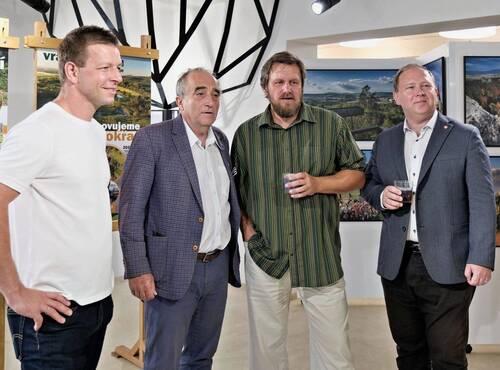
Figure 9. The opening of the exhibition in the town of Turnov was attended by František Pelc, Director of the Nature Conservation agency of the Czech Republic and Lukáš Bílek, Head of the Český ráj/Bohemian Paradise Protected Landscape Area Administration (both center), along with Deputy Governor of the Liberec Region Jiří Klápště (left) and Turnov Deputy Mayor Jan Lochman. © NCA CR Archive
The 2025 Year’s Český ráj/Bohemian Paradise Anniversary
To mark the 70th anniversary of the Český ráj/Bohemian Paradise Protected Landscape Area, the Administration has organized an exhibition on its history and present. It does not showcase the beauty of Český ráj, but rather highlights the work that has been done. It highlights what has been achieved in nature conservation and landscape protection among the towns of Jičín, Sobotka, Mnichovo Hradiště, Turnov, and Železný Brod. It also shows what has not gone as planned. The exhibition began its journey through the Český ráj/Bohemian Paradise in late spring 2025 in the town of Jičín at the Valdická brána/Valdice Gate, continued in Turnov, moved to the Mnichovo Hradiště Castle after the summer holidays, and made its autumn stop at the town of Sobotka. Each opening was a remarkable gathering of people who have a close connection to the Český ráj/Bohemian Paradise.
The celebrations continue through the fall 2025, and the 70th anniversary of the Český ráj/Bohemian Paradise PLA is not the only anniversary in 2025. One of the original nature trails/educational paths, the one in the Podtrosecké údolí/ Bellow Trosky Castle Valley, is turning 45 in 2025, and so it received a new look on St. Wenceslas Day. Also in 2025, a sad anniversary marks 25 years since the fall of the Semtín Linden Memorial/Veteran Tree, which did not survive the May storm of 2000. Famous Czech writer Karel Čapek had already written about this most significant tree in the Český ráj/Bohemian Paradise of all time. With it, a series of anniversaries comes to an end. In his text “A Piece of Land,” he professes his love for the Český ráj/Bohemian Paradise. He wrote it in 1925—exactly a hundred years ago. The Nature Conservation Agency of the Czech Republic, Forest of the Czech Republic, State Enterprise, and the Karel Čapek Memorial commemorated this on an October afternoon 2025 at the Bukovina Arboretum by planting a sapling from Čapek’s Tatarian maple (Acer tataricum), which has been growing for nearly 90 years in the garden of Čapek’s Strž summer villa in Central Bohemia. ■
- - - -
Cover photo: The Český ráj/Bohemian Paradise landscape with the Trosky/Ruins Castle and the Kozákov Ridge. © Jiří Klápště
- - - -
Literature:
- 50 let CHKO Český ráj – Sborník referátů z mezinárodní konference, Státní oblastní archiv v Litoměřicích – Státní okresní archiv v Semilech, 2005, Semily
- Čermák K.: Český ráj – pohledy do zašlých časů, 2007, Jilemnice
Pelc F.: 70 let CHKO Český ráj, Ekolist, 2025