

Nature Conservation 2026 — 20. 8. 2026 — Nature and Landscape Management — Print article in pdf
Nemanický potok/Nemanice Brook Floodplain Site of European Importance/Special Area of Conservation –
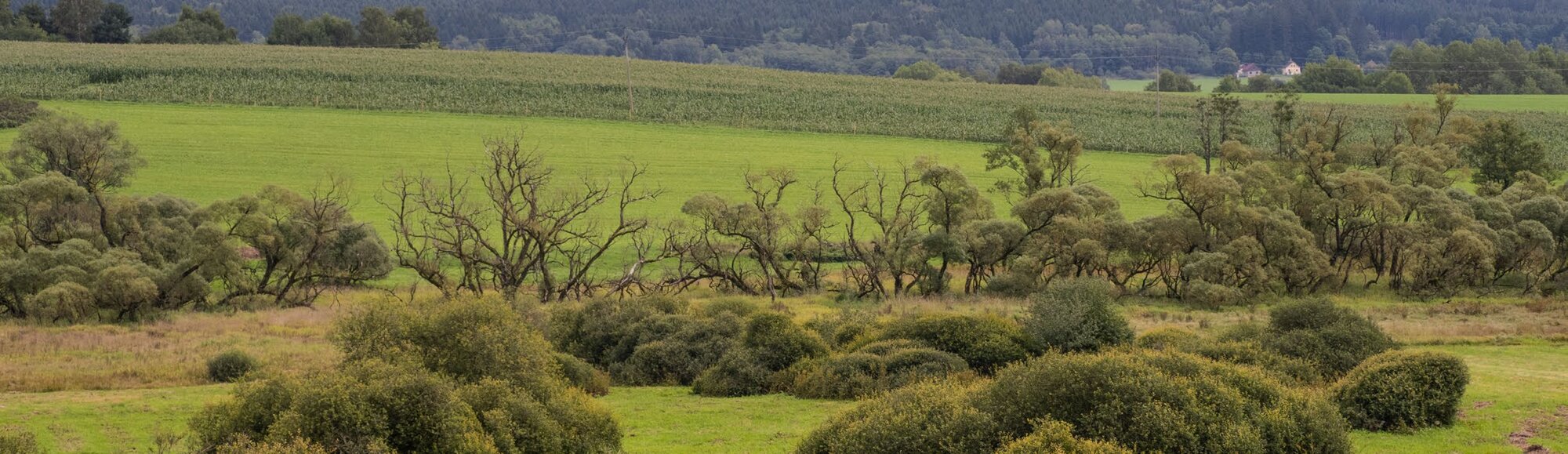
In May 2024, a public-law agreement was formally signed between the Nature Conservation Agency of the Czech Republic (NCA CR) and the majority landowner Štěpán Bečvář on cooperation in the management of one of the most valuable areas within Český les Mts. Protected Landscape Area, namely Nemanický potok/Nemanice Brook Floodplain Site of European Importance (SEI, western Bohemia). Pursuant to Act No. 114/1992 on Nature Conservation and Landscape Protection, as amended later, SEI is the term for Site of Community Importance, SCI, later Special Area of Conservation, SAC, under the European Union’s Habitats Directive). The Niva Nemanický potok/Nemanice Brook Floodplain SEI has official label as CZ0324026.
This extensive area, covering nearly 700 hectares, is exceptional both in its size and its biological diversity. The diverse mosaic of predominantly wetland ecosystems also includes the remains of abandoned human settlements. The area has been preserved largely due to its location near the Austrian border during the time of the Iron Curtain. A high groundwater table and poor accessibility have made it unattractive for modern forms of agriculture.
These challenging conditions also make it difficult to establish appropriate management today. Initial tentative efforts on the most valuable areas have developed into extensive cooperation with the landowner, culminating in the signing of a comprehensive public-law agreement between him and the NCA CR.
A jewel of the Český les Mts.
The Nemanický potok/Nemanice Brook Floodplain is located in the southern part of the Český les Mts. Protected Landscape Area (PLA), in the border region around the village of Nemanice. The backbone of the area is the Nemanický potok/Nemanice Brook, which rises near the village of Závist and drains into the Danube. The area comprises nearly 700 ha of well-preserved wetlands.
This type of habitat, combined with a mosaic of diverse meadow ecosystems and scattered solitary shrubby willows and alder stands, creates ideal conditions for a wide range of wild animal and plant species. The area is particularly well known for certain bird species, for which the Nemanický potok/Nemanice Brook Floodplain provides ideal nesting conditions due to the presence of habitats at different successional stages. Birds find not only a variety of nesting opportunities there, but also a diverse food supply. The presence of the Nemanický potok/Nemanice Brook also ensures year-round access to water, even during dry periods.
The species-rich avifauna, therefore, attracts considerable attention from birdwatchers. During 2025 bird survey, 58 species were recorded within the area. In addition to common species, several conservation-significant species were recorded (see Tab. 1), attesting to the importance of this site. Regular breeding species include the Common rosefinch (Carpodacus erythrinus), Barred warbler (Sylvia nisoria), White-spotted bluethroat (Luscinia svecica cyanecula), Common crane (Grus grus), Corncrake (Crex crex), and the Common snipe (Gallinago gallinago).
|
Ochranářsky významný |
Červený seznamu ptáků podle IUCN |
Vyhláška |
Směrnice Rady č. 2009/147/ES |
|
Common snipe |
EN |
EN |
BD IIA, IIIB |
|
Common stonechat |
VU |
EN |
|
|
Whinchat |
|
EN |
|
|
Black woodpecker |
|
|
BD I |
|
Common rosefinch (Carpodacus erythrinus) |
VU |
EN |
BD I |
|
Corncrake |
VU |
SEN |
BD I |
|
Common crane |
CR |
CR |
|
|
Sparrowhawk |
VU |
SEN |
|
|
Common raven |
|
EN |
|
|
Barred warbler |
VU |
SEN |
BD I |
|
Eurasian skylark |
|
|
BD IIB |
|
White-spotted bluethroat (Luscinia svecica cyanecula) |
EN |
SEN |
BD I |
|
Corn bunting |
VU |
CR |
|
|
Common starling |
|
|
BD IIB |
|
Red-backed shrike |
NT |
EN |
BD I |
|
Barn swallow |
NT |
EN |
|
|
Grey heron |
NT |
|
|
|
Carrion crow |
NT |
|
|
|
Grey-headed woodpecker (Picus canus) |
VU |
|
BD I |
The floodplain also provides a long-term, stable and promising habitat for the Eurasian beaver (Castor fiber). Given the extent of the area, conflicts with human activities are minimal; however, there remains a potential risk of adverse impacts on valuable plant communities.
The Nemanický potok/Nemanice Brook Floodplain is also highly valuable from a botanical perspective. The most valuable are the communities of aquatic macrophytes in the Nemanický potok/Nemanice Brook. The occurrence of the Alternate water-milfoil (Myriophyllum alterniflorum) and Alpine pondweed (Potamogeton alpinus) is noteworthy. Other species are also abundant, such as water-starworts (Callitriche spp.).
Equally valuable are the numerous non-calcareous moss-rich fens, Cirsium meadows, and oligotrophic tall-sedge beds, with species such as the Bogbean (Menyanthes trifoliata), Marsh cinquefoil (Comarum palustre), Broad-leaved marsh orchid (Dactylorhiza majalis), and Early marsh orchid (Dactylorhiza incarnata). Extensive stands of meadowsweet-dominated tall-herb vegetation are also present, complemented by several reedbeds.
Relatively little is known about the occurrence of invertebrates in this area. The first systematic survey, focused on day-active Lepidoptera, was carried out in 2019 and 2020 (Fric 2019). A total of 36 species were recorded, of which the most notable is the Six-spot burnet (Zygaena trifolii). This moisture-dependent burnet moth was once distributed in scattered populations across the Czech Republic, before undergoing a dramatic decline over most of its distribution range. Today, it survives only at a few isolated sites in Bohemia, Moravia, and parts of the Beskydy/Beskids Mountains. Therefore. thr wet meadow areas of the Český les Mts. are some of the last sites in the Czech Republic where there has still been hope for a more substantial occurrence of this species.
Another notable inhabitant of the area is the ant species Formica picea. This rare member of the Czech myrmecofauna is considered to be highly resistant to low winter temperatures and at the same time tolerant of nest inundation, both of which are key traits for the successful colonisation of new (including climatically unfavourable) sites.
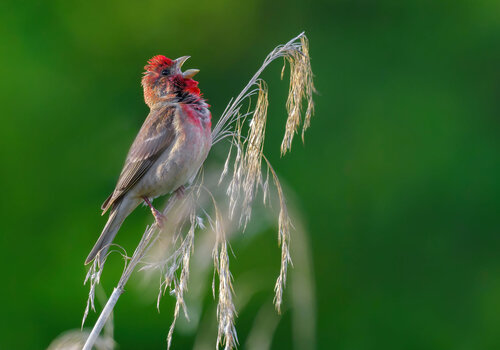
Figure 2. Male common rosefinch (Carpodacus erythrinus), the flagship species of Nemanický potok/Nemanice Brook Floodplain. © Václav Bystřický
A look into the past
The entire non-forest area in the vicinity of the village of Nemanice covers just under 1,000 ha (Fig. 2). This region receives very high precipitation, with an annual total of around 800 mm. A substantial amount of water drains through the area, originating in the higher parts of theČeský les Mts., including the entire western, windward side of the Haltrava Ridge.
Most of the currently farmed land was previously drained as part of so-called “compensatory reclamation” and converted into arable land. Following the fall of the Communist regime in 1989, the area was largely converted back to grassland; however, the altered hydrological regime has persisted there.
Despite its higher elevation (500–667 m a. s. l.), the area remains agriculturally attractive due to the year-round abundance of precipitation. Intensive biomass production, including maize cultivation, is particularly attractive. Thus, there is ongoing pressure to expand arable land and to increase soil fertility through the application of farmyard manure and digestate. Over the long term, this is likely to lead to nutrient accumulation/eutrophication in the Nemanický potok/Nemanice Brook Floodplain, through which all water from the area drains.
The Nemanický potok/Nemanice Brook Floodplain itself was fortunately spared the agricultural experiments of the second half of the 20th century. A high degree of waterlogging, the presence of a strictly guarded state border, and difficult accessibility had instead led to a complete absence of management. This situation persisted for a long time, even after the political changes of 1989. By the time the Český les Mts. PLA was established, the area was already beginning to be affected by advancing succession.
Given the size of the area, its difficult accessibility and the high groundwater table, initial management efforts were very tentative. There were even proposals to fence the entire area and allow it to be grazed by large herbivores. At the time, however, such approaches were still too innovative and could not be implemented.
Gradually, the most valuable areas began to be mown using traditional conservation methods, i.e. brushcutting and the removal of biomass onto tarpaulins to firm ground, followed by its transport off-site. This made it possible to safeguard some valuable habitats; however, managing the area as a whole remained technically and financially unfeasible. A turning point came only with the transfer of formerly state-owned land into the hands of a private farmer.
In 2016, restoration management was carried out over an area of 14.01 ha under the Landscape Management Restoration Programme, consisting of the reintroduction of mowing on long-abandoned land combined with the partial removal of encroaching self-seeded woody plant vegetation. To ensure long-term sustainability, agricultural land blocks were subsequently delineated on these areas, and appropriate agri-environment-climate scheme (AECS) options were applied – specifically, the wet and peat meadow option.
The landowner also invested in suitable lightweight machinery, enabling low-impact mowing of wet meadows (Fig. 3). Raking and removal of the biomass remain manual. Given the extent of the mown areas – approximately 70 ha managed in this way – the process is organisationally demanding.
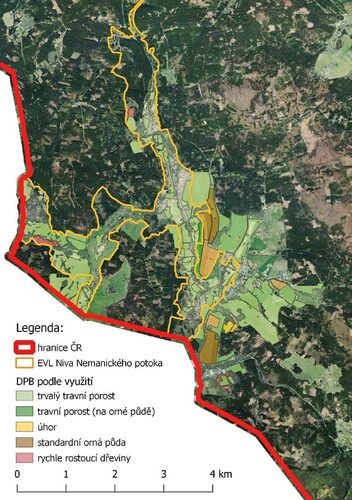
Figure 3. Map of the delineated study area showing the relevant agricultural land blocks. Base map: orthophoto © Czech Office for Surveying, Mapping and Cadastre, layer “Land Parcel Units” © Ministry of Agriculture of the Czech Republic, Nature Conservation Agency of the Czech Republic 2023
Differentiated management supports biodiversity
The natural value of the Nemanický potok/Nemanice Brook Floodplain lies in the diversity of its habitats. A high degree of habitat heterogeneity, combined with the presence of habitats at various successional stages, supports a rich species diversity (Fig. 4). Maintaining the diversity depends on the careful design of management measures that consider the requirements of individual conservation-significant species. These include e.g. appropriately timed removal of encroaching self-seeded woody vegetation, mosaic mowing, restrictions on agricultural activities in selected areas, and the protection of dense scrub and reedbeds.
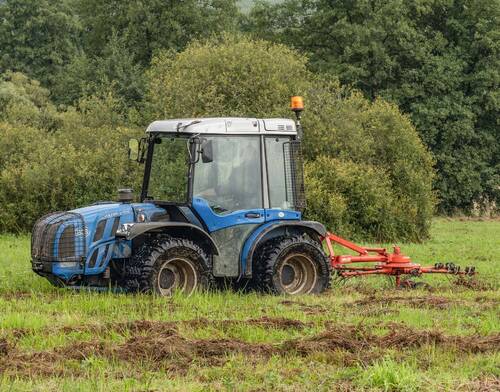
Figure 4. Example of a specialised small tractor with low-pressure tyres. © Václav Bystřický
Close cooperation between the farmer and State Nature Conservancy authorities is essential to ensure the successful breeding of meadow bird species. A typical example is the protection of the corncrake’s (Crex crex) nesting sites, whose nests are most often destroyed by early mowing and heavy machinery. For this reason, annual monitoring is carried out in the Nemanický potok/Nemanice Brook Floodplain to determine the precise locations of all territorial individuals and to implement appropriate agri-environment measures to protect them. Most commonly, this involves enrolling selected agricultural land parcels in the “Corncrake Protection” scheme, which requires that the first cut is carried out no earlier than 15 August.
A positive outcome is not only the protection of the corncrake itself, but also of other conservation-significant bird species nesting on the ground and in grasslands. These measures thus also benefit species such as the Common quail (Coturnix coturnix), Corn bunting (Emberiza calandra), and Whinchat (Saxicola rubetra). Several other conservation-significant bird species also breed regularly on the relevant land blocks, including the Common rosefinch, Barred warbler, White-spotted bluethroat, Common crane and the Common snipe. All these species benefit from appropriately implemented management.
Nature conservation does not end at the reserve boundary
Cooperation with the farmer does not end with the management of the Nemanický potok/Nemanice Brook Floodplain SCI/SAC. The site does not exist in isolation, and surrounding land uses exert a secondary influence on the floodplain. Based on long-term discussions, the distribution of arable land has been optimised, with grassland established on plots adjoining the floodplain and on the steeper parts of fields. In exchange, the landowner was allowed to plough new areas in locations of low conservation value.
Grass buffer strips were established at interfaces/ecotons with arable land. Their purpose is to reduce the impacts of eutrophication: they are not fertilised; instead, biomass is intensively harvested to remove nutrients. Maize cultivation has been reduced and partly replaced by other crops.
At the same time, a study funded by the Landscape Management Programme was conducted in 2021–2023 to assess the extent to which the floodplain is affected by surrounding agricultural management and to evaluate the effectiveness of the proposed measures. For this purpose, several soil sampling pits were established in the field, where changes in selected soil indicators and water quality are being monitored (e.g. mineral nitrogen content, total nitrogen content, and soil pH).
However, cooperation with the landowner does not end with these steps. Two orchards of local fruit tree varieties have been established under the Landscape Management Programme, and several small ponds/pools for amphibians have been created there. Project documentation is currently being prepared for the restoration of the hydrological regime in a drained area within the wider site. Encroaching self-seeded woody vegetation has already been partially reduced, and regular mowing has been introduced again under the AECS “Wet and peat meadows” option.
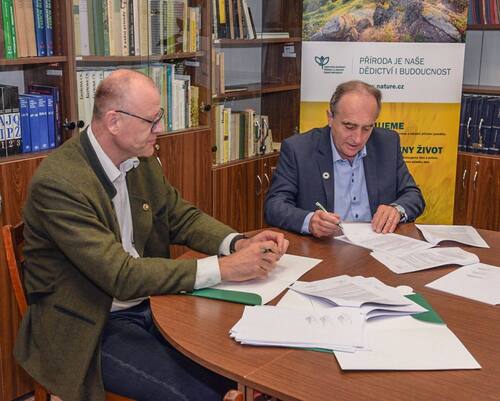
Figure 5. Official signing of a public-law contract between the Nature Conservation Agency of the Czech Republic, represented by František Pelc, and the landowner Štěpán Bečvář. © Daniela Hlinková
The long-term, extensive cooperation between the NCA CR and Štěpán Bečvář was formally sealed in the spring of 2025 by the signing of a comprehensive public-law contract (Fig. 5). ■
- - - -
Cover photo: A typical view of the Nemanický potok/Nemanice Brook Floodplain. The landscape mosaic is essential for a range of bird species. © Václav Bystřický
- - - -
Literatura:
Faltýnek Fric Z. (2019): Závěrečná zpráva. Navrhovaná PP Nemanická niva – inventarizační průzkum denních motýlů. – Ms. [Závěr. zpráva; depon. in: AOPK ČR, RP SCHKO Český les, Přimda].