

Nature Conservation 2026 — 20. 8. 2026 — Nature and Landscape Management — Print article in pdf
Fire Prevention in the České Švýcarsko/Bohemian Switzerland National Park: Avoiding Throwing the Bab
The fire that struck České Švýcarsko/Bohemian Switzerland National Park (northern Bohemia) in the summer of 2022 had spread across an area of approximately ten square kilometres. In the aftermath of the fire, a wide range of societal and professional questions emerged concerning the extent to which similar events can be prevented in the future without compromising the fundamental purpose and mission of National Parks.
Public debate on this issue in the Czech Republic was highly emotional and often polarised. Looking back at statements made by some respondents interviewed by various mass media outlets, viewers, listeners and readers frequently received the message that the problem is caused by the very nature of National Parks as areas where, across most of their territory, nature is allowed to develop through its own processes with minimal human interference. This interpretation was often accompanied by broader calls for changes in the way such areas should be managed.
A wide range of opinions could therefore be heard in public discourse, some of them rather extreme. Broadly interpreted, the demands put forward included e.g. calls for National Park forests to be brought into a condition in which they would be essentially non-flammable across their entire area, for drastic reductions in the amount of decaying wood, and for forest complexes to be fragmented by a dense network of roads suitable for heavy fire-fighting equipment.
As of the editorial deadline for this issue of the journal, many of these ideas have still been reflected in proposed amendments to Act on Nature Conservation and Landscape Protection being debated in the Chamber of Deputies of the Parliament of the Czech Republic. The proposed changes concerned even the country’s most strictly Specially Protected Areas.
Fire prevention legislation does not distinguish between ordinary commercial/production forests and Specially Protected Areas such as National Parks. However, the experience of a large-scale fire under extreme weather conditions and in exceptionally challenging rocky terrain inevitably led the České Švýcarsko/Bohemian Switzerland National Park Administration (NPA) to seek solutions that would significantly reduce the risk of a similar event recurring while preserving the fundamental purpose of the National Park.
Over the course of three years, the NPA developed a comprehensive set of measures which, as an integrated system, combine practical interventions within the National Park, monitoring its territory, preparedness and technological equipment of field staff, cooperation with third parties, and public outreach.
One of the first preventive measures implemented by the NPA after the fire involved the felling of standing dead trees and the removal of the woody material from the vicinity of human settlements and other important infrastructure. To ensure that these interventions remained proportionate, the NPA commissioned the Institute of Forest Ecosystem Research (IFER) to prepare a study defining the minimum intervention parameters required for specific sites so that the measures would effectively reduce fire risk while remaining as sensitive as possible to the natural habitats.
Although the areas involved were not unusually large in terms of their extent, the number of sites was considerable and, given often difficult terrain and weather conditions during the year, some of the logging operations initiated in 2023 could only be completed in 2024. The next step involves planting woody plant species in the cleared areas that are expected to help suppress the spread of fire in the future. These are primarily beeches and oaks. Such artificial forest regeneration is now relatively exceptional within the National Park and is carried out mainly in the immediate vicinity of human settlements and buildings.
An important milestone in the development of the broader system of measures was the establishment of a Fire Prevention Officer position within the NPA. The establishing the new post was made possible through an increase in officially allocated staff positions approved by the Ministry of the Environment of the Czech Republic, and the position was filled in the second half of 2023. The responsibilities of the Fire Prevention Officer include identifying potential sources of fire risk, proposing and implementing measures to reduce those risks, and coordinating cooperation with other partners, particularly the Fire Rescue Service of the Czech Republic (FRS CR) and volunteer fire brigades.
The newly appointed Fire Prevention Officer was then able to build upon the measures already adopted by the NPA. Alongside the above-mentioned IFER study, which had already been underway at the time, efforts also focused on improving access to water for fire-fighting in terrain naturally poor in water resources. The most feasible solution appeared to be the placement of smaller water reservoirs at locations selected in consultation with the FRS CR. Such reservoirs cannot be used to combat large-scale fires, but they may prove highly useful during the initial stages of a fire.
At present, the National Park includes 13 smaller reservoirs with a capacity of 1,000 litres each, three large-capacity water tanks holding 50,000 litres each, and, since 2025, two additional large-capacity tanks with volumes of 70,000 and 100,000 litres, respectively. One permanent reservoir with a capacity of 70,000 litres has also been restored: a former swimming pool carved into the sandstone massif near the Na Tokáni Hunting Lodges in the second half of the 19th century.
Large-capacity water tanks also deserve attention because they were developed by a local company based in the city of Děčín according to specifications provided by fire fighters. This represents a relatively uncommon solution that is now available to forest owners at an acceptable cost. The technology also inspired the municipality of Hřensko, which purchased its own 50,000-litre tank and installed it in the settlement of Mezná. During the major fire in 2022, fire fighters had been forced to withdraw from the area partly because of a lack of water for fire-fighting.
The České Švýcarsko/Bohemian Switzerland National Park has experienced a relatively long history of fires. Since its establishment in 2000, more than 80 fires have occurred there, with the vast majority caused by human negligence, namely failure to comply with the rules governing visits to the National Park. Even when a fire was reported by others rather than detected directly by National Park staff, park employees were usually among the first to reach the scene thanks to their detailed knowledge of the area. Even during fire suppression operations, National Park staff consistently provided indispensable support to the responding fire brigades.
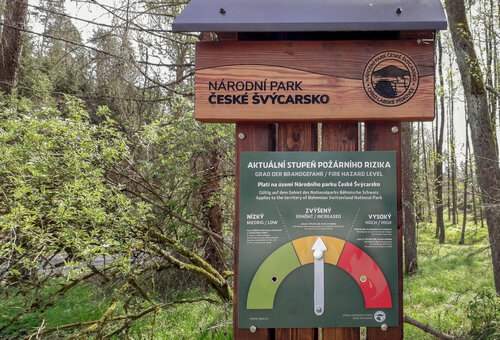
Figure 2. Visitor access to the České Švýcarsko/Bohemian Switzerland National Park is restricted depending on the declared level of fire risk. The vast majority of fires in the National Park are caused by failure to comply with the rules for visiting protected areas. © Tomáš Salov
For this reason, the NPA considers it important that field staff in particular are equipped at least with basic gear enabling them to contain newly detected fires or even extinguish them using their own resources. During the summer season, their service vehicles are routinely equipped with backpack water tanks holding 25 litres of water, together with canisters for refilling.
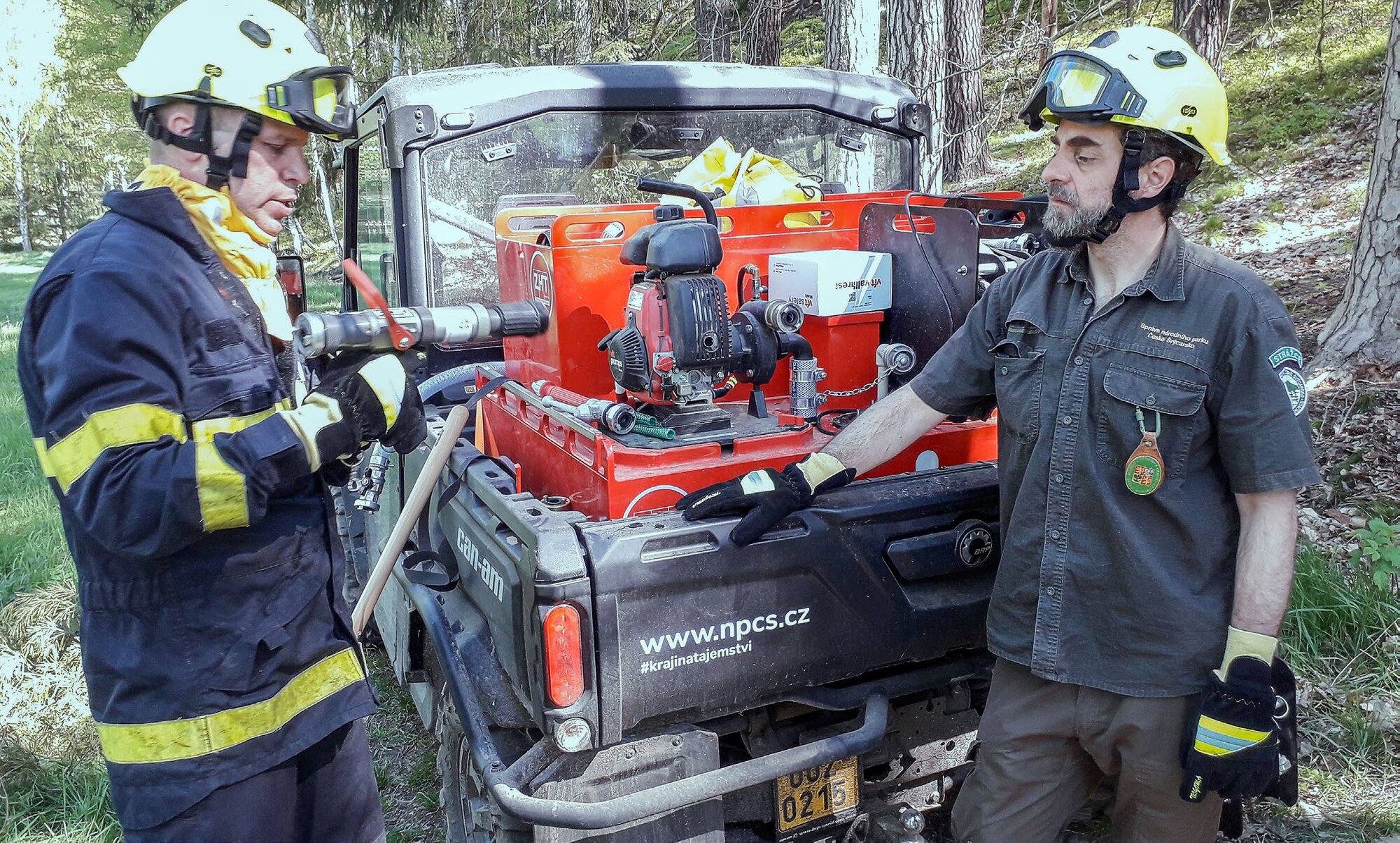
The capabilities of field staff were further significantly enhanced by the addition to the vehicle fleet of an all-terrain vehicle equipped with a fire-fighting unit. In addition to a 300-litre water tank, pumps and hoses, it is equipped with a range of specialised attachments suitable for extinguishing different types of fires, as well as other equipment, including protective gear. Its compact dimensions, which allow it to reach fires even in difficult terrain, is the greatest advantage. It has already been deployed successfully on several occasions, including during a fire affecting approximately two hectares on Koliště Hill in September 2023.
In the following year, field staff were also equipped with a drone fitted with a thermal imaging camera to facilitate the identification of hot spots in difficult terrain. The drone is used primarily to provide operational support for responding fire brigades.
Operating the newly acquired equipment definitely places far greater demands on staff; they must be trained and acquire practical skills in the use of fire-fighting equipment. In the case of drones, it is not sufficient merely to know how to fly them; numerous additional requirements must also be met, including passing pilot certification examinations. Therefore, maintaining proficiency in operating the equipment therefore causes a considerable increase in workload.
Once a fire has started, early detection and accurate localisation are absolutely crucial. Questions as to whether the 2022 fire could have been detected and reported earlier were widely debated in the region. The incident was reported at around 07.00 a.m. Subsequent analysis of infrared satellite imagery later showed that the forest had already been burning around midnight, giving the blaze several hours to spread. This finding may unintentionally have fuelled assumptions that the fire had already been known about and that reporting it had for some reason been delayed. In reality, however, continuous real-time monitoring of the area from orbit has not been yet possible.
Ensuring rapid and reliable fire detection in terrain as complex and rocky as that of České Švýcarsko/Bohemian Switzerland National Park is far from straightforward. During periods of elevated fire risk, the NPA regularly addresses this challenge through monitoring patrols, usually composed of carefully instructed staff members. The task of these patrols is to climb designated vantage points at dawn and dusk and check whether smoke is rising from any part of the forest. If smoke is detected, the patrols attempt to determine its location and source in cooperation with one another. If there is any suspicion of a fire, they alert the fire brigades. This highly staff-intensive activity has, at times, also been outsourced by the NPA to external contractors.
In 2025, the NPA has been operating a genuinely powerful tool for the early detection of potential fires: two drone stations installed in the field. These consist of “drone ports” equipped with independent power systems and high-capacity internet connections, from which drones can take off and land autonomously. Operators control them remotely from a computer workstation and, once airborne, can switch between images from a standard camera and infrared footage. Unlike human patrols, drone operators can bring the aircraft closer to the locations where smoke is rising and assess the situation more accurately. The systems are highly sophisticated and require considerable expertise to operate, while also placing substantial demands on work organisation, including the need for on-call duty arrangements. In addition to routine monitoring flights, operators must also be capable of deploying the drones rapidly whenever suspicion of an emergency arises outside scheduled monitoring periods.
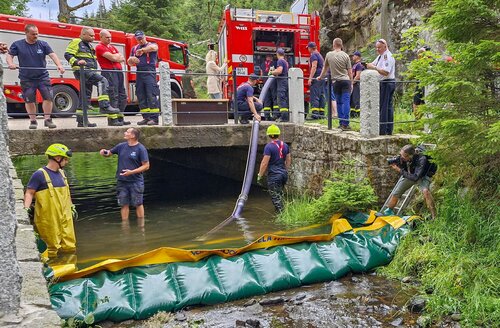
Figure 3. Cooperation with fire brigades is a key component of preventing large-scale fires. In the landscape naturally poor in water resources, creative solutions are often required. The image shows a custom-designed flow-retention barrier for small watercourses. © Tomáš Salov
National Park staff themselves do not actually extinguish fires. The response to the large-scale fire brought large numbers of fire fighters to the area from various parts of the Czech Republic and, to a lesser extent, from neighbouring Saxony, aside from the aerial fire-fighting operations carried out with international assistance. For fire fighters operating in the field, the greatest challenge was the difficulty of navigating the terrain and their unfamiliarity with the area – almost literally a stumbling block. As a result, National Park staff had to guide fire fighters to specific locations within the affected area. The extraordinary and virtually continuous involvement of the National Park staff during the fire received only limited public recognition.
Preparedness for emergency situation in the extremely rugged natural environment of the National Park can only be achieved through gradually becoming familiar with the terrain. Therefore, the NPA provides maximum support for the organisation of fire brigade exercises. Nevertheless, it is important that such exercises are planned for periods less sensitive for nature conservation; the tourist season and days on which exceptionally high visitor numbers can be expected must also be taken into account.
Volunteer fire brigades from municipalities surrounding the National Park are actively encouraged to carry out familiarisation drives using their vehicles and equipment. Using their specific equipment, this allows them to verify in practice the passability of roads and the accessibility of particular sites within the Specially Protected Area.
Debate over whether the road network had been sufficiently passable during the large-scale fire resulted in several practical measures. Following consultations with the FRS CR, the network of roads designated for emergency response units was slightly expanded. Consultations with fire fighters are conducted on an ongoing basis. Cooperation with the FRS CR now also takes place within the Council of the České Švýcarsko/Bohemian Switzerland National Park, to which a representative of the Service has been appointed.
For the entire road network, including roads not primarily intended for emergency response units, internal guidelines established inspection/checking intervals within which fallen trees, or trees posing an immediate risk of falling, are removed where necessary. Finally, the roads were categorised according to the types of vehicles capable of using them. The categorisation is available both to the FRS CR and to volunteer fire brigades, including through a specially developed application for smartphones, tablets and computers. The application includes a wide range of practical information for managing operations within the České Švýcarsko/Bohemian Switzerland National Park. In addition to road categories, fire fighters can view water sources, recommended routes intended to prevent delays where vehicles cannot pass one another, locations suitable for parking equipment, turning points for large vehicles, and similar operational information.
Preparedness for the outbreak of fire and for fire suppression is very important in the landscape prone to drying out. The ideal situation, however, is one in which no fire occurs at all. Natural causes of fire are very rare in the České Švýcarsko/Bohemian Switzerland National Park. In practice, lightning is almost the only possible natural cause; all others can be linked to human activity. Statistics show that, where the origin could be identified, the most common sources of fires were campfires, smoking, and the use of fireworks. For this reason, preventive measures must also be directed towards visitors. Since January 1, 2024, the NPA has also been acting as the State/Public Administration Authority in Forestry for the National Park. It has therefore introduced, through a general administrative measure, a dynamic system regulating visitor access to forests according to the level of fire-risk warning issued by the Czech Hydrometeorological Institute (CHMI).
In practice, this means that if no warning is issued by the CHMI, visitors to the České Švýcarsko/Bohemian Switzerland National Park are subject only to the standard rules, including the generally known prohibitions on smoking and the use of open flames. They may move freely wherever access is permitted. If the CHMI issues a warning due to a low level of fire risk, night-time access to the National Park is automatically restricted. The NPA’s experience shows that many fires were caused in connection with illegal overnight stays in the National Park, during which visitors also lit campfires. When a warning is issued because of a high level of fire risk, the night-time access restriction is supplemented by limiting movement within the National Park exclusively to marked hiking trails/visitor paths. The purpose of this measure is to reduce to the absolute minimum the area within which a fire could potentially start.
Visitors are informed about the applicable rules via fire-risk indicators installed at 48 entry points to the National Park. The rules currently in force are also communicated through social media, the media, and the Park’s website.
The public is informed throughout the year about the need to comply with the rules, including those concerning the lighting of fires and smoking, through a variety of media channels and information platforms, regardless of the season or the current severity of drought conditions. Media communication is typically prompted by information about newly acquired equipment, reports on fire brigade exercises, discoveries of illegal fire sites by National Park rangers – which are particularly frequent in forests outside the National Park within the Labské pískovce/Elbe Sandstones Protected Landscape Area (PLA) – or summaries of the results of joint patrols carried out by rangers and the police.
Joint patrols by police officers and National Park rangers are carried out several times during the year. They are organised in response to peak visitor periods, during which breaches of the rules governing visits to protected areas also occur more frequently. Naturally, illegal behaviour by some visitors is addressed on an ongoing basis. The activities of the National Park ranger service was further strengthened in 2023, when the number of professional rangers increased from seven to ten. In supervising the area, they are also significantly assisted by volunteer rangers, of whom approximately ten are active in the region. The area under supervision includes not only the 80 km2 of the České Švýcarsko/Bohemian Switzerland National Park itself, but also a further 240 km2 of the Labské pískovce/Elbe Sandstones PLA.
Following the fire in the summer of 2022, the introduction of preventive measures had been initially based on preliminary analyses of the causes of the fire and its spread, and later also on assessments and comments provided by the FRS CR and municipalities in the České Švýcarsko/Bohemian Switzerland region. Over time, it proved possible to approach the issue more systematically. Fire prevention and measures aimed at maintaining the accessibility of the National Park for emergency response services are now incorporated into the Principles of Management for the České Švýcarsko/Bohemian Switzerland National Park for 2025–2041. These entered into force on January1, 2025 through a decision of the Ministry of the Environment of the Czech Republic. Importantly, this took place based on broad consensus within the Council of the České Švýcarsko/Bohemian Switzerland National Park, which adopted the document unanimously, with the support of all members present, including more than half of the municipal representatives and a representative of the FRS CR.
The Principles of Management for the České Švýcarsko/Bohemian Switzerland National Park also include a proposal to prepare a Fire Suppression Study for the Park. During June 2025, the study was gradually presented to representatives of municipalities, fire brigades, and members of the National Park Council. It provides a solid foundation for the further development of fire prevention measures in a broader context, as it includes recommendations not only for the National Park Administration, but also for third parties, including surrounding municipalities and property owners in the vicinity of forests. Effective protection against the outbreak and possible spread of fire requires coordinated cooperation among all stakeholders.
Preventive measures against the outbreak and spread of fire in natural habitats are now implemented within the České Švýcarsko/Bohemian Switzerland National Park at an unprecedented level, far exceeding any legal requirements. It is important to recognise, however, that these are locally focused measures implemented by only a single forest owner. Fire risks should not be viewed as affecting only Specially Protected Areas. If the risks associated with fires in natural environments are to be minimised, effective prevention depends on broad cooperation and on all parties being adequately prepared and equipped, within the scope of their respective responsibilities and competences, to respond should a fire occur. ■
- - - -
Cover photo: České Švýcarsko/Bohemian Switzerland National Park Administration has significantly improved its firefighting capacity; however, operating the equipment places high demands on staff. © Tomáš Salov