

Nature Conservation 2026 — 20. 8. 2026 — Články bez rubriky — Print article in pdf
Summary of 2025 Issues

On Nature in the Czech Republic
Mikuláš I., Volf V., Volf O. & Tejrovský V.: New Special Protection Area – the Western Krušné hory/Ore Mountains
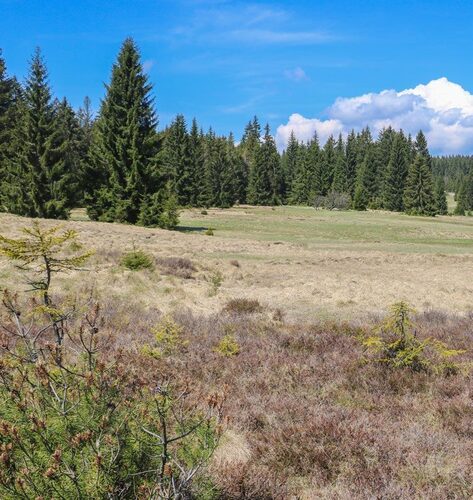
As of 1 January, 2025, the 42nd Bird Area (pursuant to Act No. 114/1992 Gazette on Nature Conservation and Landscape Protection, as amended later, the term for Special Protection Area, SPA under the European Union´s Birds Directive) in the Czech Republic has been declared in the extremely valuable Krušné hory/Ore Mountains western edge, which has long been neglected in terms of bird conservation. The Western Krušné hory/Ore Mountains Bird Area focuses on the protection and conservation of two bird species, namely the Black grouse (Lyrurus tetrix) and the Boreal Owl (Aegolius funereus), also known as the Tengmalm´s owl. The inclusion of the site in the EU Natura 2000 network aims to substantially strengthen the protection of their habitats and ensure the long-term stability of their populations. The new Bird Area is naturally linked to two existing ones in the Krušné hory/Ore Mts.: the Eastern Krušné hory/Ore Mts. and the Novodomské Peat-bog - Kovářská. These were also designated primarily to protect the Black grouse, one of the most endangered bird species in Central Europe. Extending the territorial protection in this direction is a significant step towards the Black Grouse´s preservation and will also contribute to the conservation of the unique Krušné hory/Ore Mts. nature.
Pešout P. & Koukal S.: The Soutok/Morava and Dyje/Thaya Rivers Confluence Protected Landscape Area Declared
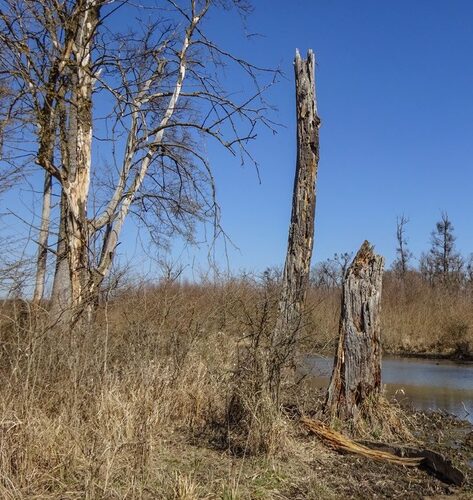
By Decree of the Government of the Czech Republic approved 15 January 2025, the Soutok/ Morava and Dyje/Thaya Rivers Confluence Protected Landscape Area (PLA) located in South Moravia was declared the 27th Protected Landscape Area in the Czech Republic. The floodplain landscape in the area of the confluence of the Morava and Dyje/Thaya Rivers has been proposed for protection since the middle of the last century. Since then, the area has been negatively affected by intensive farming and dramatic changes in the water regime due to water management. In spite of this, it has still been harbouring a unique landscape with a concentrated extraordinary natural and cultural heritage, which has led to its inclusion on many prestigious European and world lists in recent decades. The Soutok/Morava and Dyje/Thaya Rivers Confluence PLA consists of a complex of floodplain forests, meadows and a dense network of watercourses, dead and disused, permanent and periodically flowing channels, canals and pools. The confluence is a valuable example of wild animal communities associated with the large river floodplain. Displaying 676 documented saproxylic beetle species, the Soutok/Morava and Dyje/Thaya Rivers Confluence PLA is one of the most important areas in the whole of Central Europe in this respect. Almost half of the butterfly species (1,670) known from the whole Czech Republic´s territory have been recorded there. The rich spider fauna is mainly related to the hrúdy (native tops of sand dunes the vicinity of which was step-by-step infilled with deposits made by floods). The area is also a hotspot for dragonflies (52 species). Unique fish communities have developed there, and the area is extremely valuable also for amphibians. In total, 249 bird species are known from the floodplain landscape. Therefore, the Soutok/Morava and Dyje/Thaya Rivers Confluence PLA protects a unique floodplain landscape with an unusually high biodiversity.

Horal D.: Birds of Prey of the Floodplain Landscape at the Soutok/Morava and Dyje/Thaya Rivers Confluence
The Soutok/Morava and Dyje/Thaya Rivers Confluence Protected Landscape Area (PLA) situated in South Moravia is one of the Czech Repubic´s most important areas for birds of prey at least in Central Europe. The nesting sites and the place of large numerical concentrations of two eagle species and both of kite species (Milvus spp.) occurring in the Czech Republic have attracted the attention of ornithologists, birdwatchers and raptor fans for almost a hundred years. The first findings about birds of prey in this area were published by the founding fathers of South Moravian ornithology as early as in the 1940s. At least ten species of birds of prey regularly nest in the Soutok/ Morava and Dyje/Thaya Rivers Confluence PLA, three more species reproduce in its immediate surroundings so that they would at least occasionally breed in the PLA itself (the Western marsh harrier Circus aeruginosus, the Montagu´s harrier Circus pygargus and the Saker falcon Falco cherrug). Eight species occur regularly on the flyway or during the winter, and four species are either only historically recorded or have occurred recently but literally exceptionally there. From the point of view of raptor protection and conservation, it is important that most of the area is located in the hunting grounds owned and managed by the Forests of the Czech Republic, state enterprise, namely by the Židlochovice Forest Enterprise. The fact reduces the possibility of conflict with game management and hunting because it focuses on the keeping hoofed game, not small game. Thus, there is no direct persecution of raptors (shooting, poisoning), as we know from other, mainly hunting grounds in farmland.
Vébrová D. & Härtel H.: 25 Years of Forest Development in the České Švýcarsko/Bohemian Switzerland National Park (Northern Bohemia)
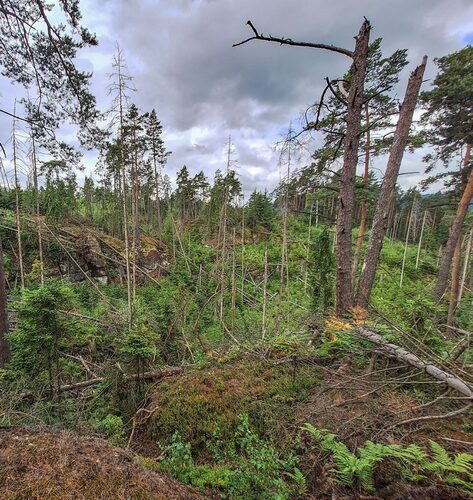
Sandstone rock areas are generally considered to be very dynamic in natural development. After 25 years of the České Švýcarsko/Bohemian Switzerland National Park’s existence, even regular visitors can see the relatively sudden and extensive changes in forest ecosystems. From a natural science perspective, the processes have resulted in a higher proportion of natural forest features, e.g. dead wood, succession and regeneration stages, spatial diversity of the forest, and the decline in mature and compact Norway spruce (Picea abies) stands, which were previously so typical of České Švýcarsko/Bohemian Switzerland. Direct human intervention, which was preferred in the National Park´s early days, has had only a minor impact on the transformation of the forest. The interventionist approach to forest management in the first 15 years of the National Park’s existence was chosen with the aim of locally accelerating the transformation of the species composition in originally cultivated/commercial spruce stands in secondary habitats, promoting age and spatial diversity, and removing the invasively spreading Eastern white pine (Pinus strobus). Since the climatically extreme year of 2017, disturbance events have become more prevalent, triggering droughts, wind breakages, and increasing European spruce bark beetle (Ips typographus) outbreaks, the latter affecting almost the entire National Park´s territory between 2018 and 2022 and killing almost all adult spruce trees there. At the same time as the European spruce bark beetle plague came to an end, another disturbance event occurred in July 2022 - a large wildfire damaging an area of 1,060 hectares in the town of Hřensko and its part of Mezní Louky area and intensively altered all forms and stages of the forest through which it passed. The unaffected natural processes, which completely prevailed over human interventions, are a significant approximation and, to a large extent, the meeting the National Park´s long-term goal.
Luka V.: Wings above the Rock Towns: The Story of the Eagle Owl and the Peregrine Falcon in the Český ráj/Bohemian Paradise Region
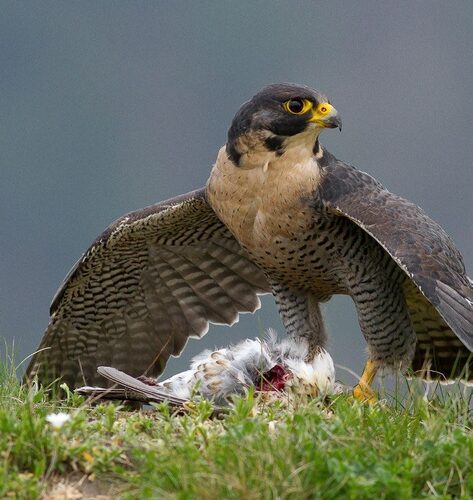
The Eagle owl (Bubo bubo) and the Peregrine falcon or Peregrine (Falco peregrinus) – two powerful predators that symbolize the wildness and resilience of nature in the Český ráj/Bohemian Paradise region. In the past, both species had faced intense pressure from humans. Legal protection adopted in the 1920s had a positive effect on increasing the number of peregrines in the above region until the early 1950s. Both species thus found themselves on the brink of extinction, and peregrines did not nest in Český ráj/Bohemian Paradise for several decades. Over time, however, thanks to targeted conservation efforts, the situation has changed. Strict legislative measures, bans on harmful chemical substances, and targeted conservation programmes have helped both species to recover. Therefore, the first nesting of the Peregrine falcon in recent times was documented in 2001, after more than 35 years. Today, both the Eagle owl and the Peregrine falcon have stable populations in the Český ráj/Bohemian Paradise, numbering in the low tens. The PLA Administration monitors both species annually. Falcons are observed as early as February, when they perform courtship flights, indicating their efforts to occupy nesting sites. Nesting itself is then confirmed when the young are fed, when the flight activity of both parents reaches its peak and the nest is relatively easy to spot. Eagle owl´s territories are identified during the winter months, especially in February, when their vocal activity peaks during mating and territorial defense. Unlike falcons, however, we have to rely solely on vocalizations, and due to their nocturnal activity, Eagle owl´s nests are not easy to be found even during the spring months and when the young are fledging.
Višinský J.: Scree Forests near the Town of Turnov – a New Nature Reserve in the heart of Český ráj/Bohemian Paradise
In 2025, a new Nature Reserve called Scree Forests near Turnov was declared in the Český ráj/Bohemian Paradise region. Moroever, protection of the site did not begin with the declaration of the Nature Reserve, but the first significant step was taken in 2002, when it was included in Zone II of the extended Český ráj/Bohemian Paradise Protected Landscape Area. Two years later, it became part of a Site of European Importance (SEI, pursuant to Act No. 114/1992 on Nature Conservation and Landscape Protection, as amended later, the term for Site of Community Importance, SCI, later Special Area of Conservation, SAC, under the European Union’s Habitats Directive). The reserve covers an area of approx. 7.3 hectares, with a buffer zone covering an additional 5.6 hectares. It is located on the rugged slopes of the Jizera River Valley in the cadastral areas of Turnov, Bukovina u Turnova, and Bělá u Turnova. The dominant features of the area are scree slopes and rock outcrops formed by calcareous sandstones. The forest stands consist mainly of Sycamore (Acer pseudoplatanus), linden (Tilia spp.), and European or Common ash (Fraxinus excelsior) trees, while the herbaceous layer includes, inter alia, the Perennial honesty (Lunaria rediviva), Nine-leaved toothtwort (Dentaria enneaphyllos) and the Martagon lily (Lilium martagon). One of the unique geomorphological features found in the area is the Dolánecký vodopád Waterfall, also known as the Myšina Waterfall. It was formed as a suspended waterfall on a rocky defile of sandy marlstone, which was shaped by the lateral erosion of the Jizera River in the valley´s lower part. Originally reaching a height of up to 18 meters, today it measures approx. 12 meters, as erosion processes and frost weathering in waterlogged rocks are gradually reducing its profile. Although the area has been now protected by stricter regulations, it remains open to the public. Visitors can explore diverse habitats ranging from scree slopes to wet springs and rock faces, and experience nature that has retained its natural character.
Mareš J., Bruthans J. & Filippi M.: Bohemian Paradise – a Natural Geological Laboratory of Global Significance
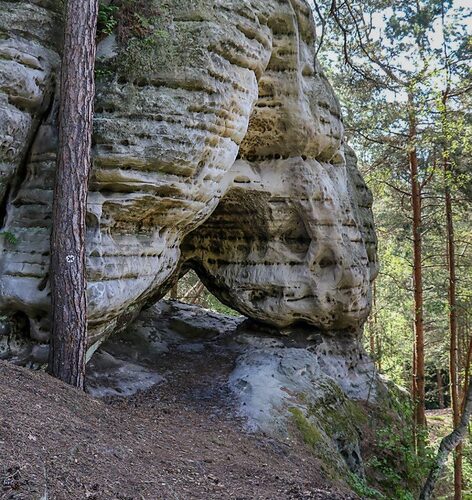
From a geological point of view, the Český ráj/Bohemian Paradise region is an exceptionally interesting and significant area, where rocks of various origins and compositions are concentrated in a small area. That is why we can see sandstone rock formations, volcanic remnants, and even well-developed karst formations there. In addition, there are many interesting and beautiful minerals to be found there. Thanks to its exceptional geological diversity, Český ráj/Bohemian Paradise was included into the European Geoparks Network in 2005 and has been part of the UNESCO Global Geoparks Network since 2015. More than 200 geological and mineralogical sites can be found there within a relatively small area. The famous explorer and naturalist Alexander von Humboldt even called Trosky Hill with its castle ruins the eighth wonder of the world. A significant part of Český ráj/Bohemian Paradise is made up of Hrubá Skála block sandstone. In the vicinity of the village of Troskovice, there is a special type of this sandstone, known as locked sand, which has no cement between the grains, giving it specific properties. The karst in the Turnov area suggests that karst channels may also form in other areas of the Bohemian Cretaceous Basin where calcareous sandstones occur, which would make it the largest karst area in the country. The presentation of the discoveries described above has led to a significant shift in knowledge in the field of sandstone area studies, confirming the importance and renown of the Český ráj/Bohemian Paradise.
Šafář J. & Havira M.: Špičák is Not Just about Caves
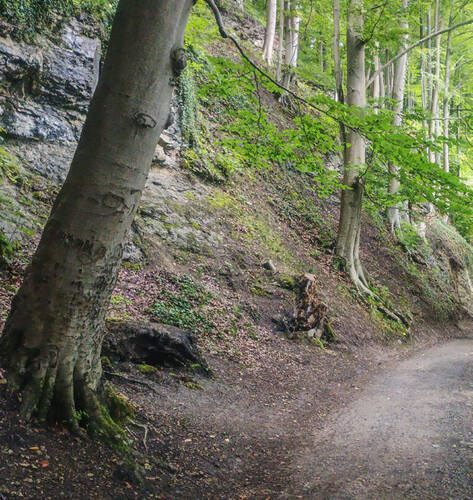
The landscape north of the town of Jeseník (northern Moravia) offers a large number of low, wooded hills. But only one between the villages of Písečná and Supíkovice hides a number of treasures. Across the Na Špičáku National Nature Monument (NNM), a rocky ridge approximately 260 m long stretches from the north-northeast to the south-southwest, with its highest point, Mt. Velký Špičák, reaching an altitude of 516 m a.s.l. In the gentler terrain below the rocky ridge, flowering beech forests of the Mercuriali perennis-Fagetum association predominate, with the main tree species being the European beech (Fagus sylvatica), Norway maple (Acer pseudoplatanus), Sycamore maple (Acer platanoides), and the Small-leaved lime (Tilia cordata). The tree layer on the steeper slopes is complemented by tree species typical of scree forests, such as the Large-leaved lime (Tilia platyphyllos) and Wych elm (Ulmus glabra). The shrub layer includes the Alpine rose (Rosa pendulina) and several specimens of the Common juniper (Juniperus communis). The highly endangered European yew (Taxus baccata), which occurs across the described stands, deserves a separate discussion. According to a survey conducted in 2023, 258 specimens taller than one meter were recorded there. If local sources of reproductive material are to be used for its further spread or return to the Jeseníky Mts. forests, this is the optimal option. In 2021, the local stands were therefore recognized as a source of reproductive material. Yew trees of all ages are represented there, from seedlings and young trees to individuals around 200 years old. The most significant wild animal group in the Na Špičáku NNM is bats. The area is also included in the European Union´s Natura 2000 network as a Site of European Importance (SEI, pursuant to Act No. 114/1992 on Nature Conservation and Landscape Protection, as amended later, the term for Site of Community Importance, SCI, later Special Area of Conservation, SAC, under the European Union’s Habitats Directive) with the Lesser horseshoe bat (Rhinolophus hipposideros) as the subject of protection.
Nature & Landscape Management
Straková M., Jongepierová I., Raab S., Musil Z., Gluzová D., Doležalová P., Čížek M., Vítovcová K., Kadaš D. & Bauer P.: Current Availability of Regional and Species-enriched Mixtures in the Czech Republic
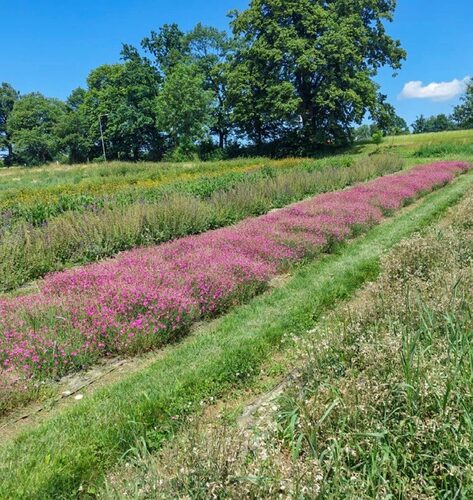
The importance of regional mixtures (RM) and species enriched mixtures (SEM) continues to increase as biodiversity in the landscape has been steadily declining in the Czech Republic. Although seed availability remains a problem, not only is the number of areas where RS or DOS can be obtained increasing, but there are also more and more competent enthusiasts striving for the sustainable availability of mixtures. Mixtures are gradually being developed, whether in collaboration with a regionally competent NGO, research institute or seed company. The greatest challenges in obtaining regional or species-enriched mixtures are mainly the lack of knowledge about collecting and growing a diverse range of plants in nurseries, sharing of experience, time and physical demands, registration of seed by the Central Institute for Supervising and Testing in Agriculture (CISTA), ensuring seed purity for registration and machine sowing, and ensuring seed germination, care of the nurseries including machine harvesting, sufficient number of dedicated staff, economic creation of a mixture composition that is both affordable and of high quality, lack of space for seed drying, storage and handling, high cost of mechanization for seed care, harvesting and cleaning, and lack of native Czech varieties in grass species.
Neuwirthová H.: Evaluation of the Action Plan/Recovery Programme for the Bohemian Early Gentian
The Action Plan/Recovery Programme for the Bohemian Early Gentian (Gentianella praecox subsp. bohemica) was approved by the Ministry of the Environment of the Czech Republic in 2011. Its implementation has been going on long enough to assess the results achieved by the joint efforts of the whole implementation team. The number of people involved in the Action Plan/Recovery Programme is higher compared to most other Action Plans/Recovery Programmes carried out in the country. This is due to the fact that the Bohemian early gentian‘s distribution range extends over six regions, i.e. sub-national administrative units in the Czech Republic. Habitat management is the basis of the whole Action Plan/Recovery Programme and a number of other measures contributes to ensuring or improving the management at the sites. Most of the proposed measures have been partially or fully implemented. It is already clear that the long-term objectives of maintaining or improving the number and size of populations will not be achieved in their current form. The past period has been significantly affected by several extremely dry years, a relatively new phenomenon that will definitely have to be taken into account in the future. However, it is very likely that, especially without systematic monitoring and follow-up management, the status of the vascular plant´s populations in the Czech Republic would be significantly more pessimistic. For the Bohemian early gentian, the Action Plan/Recovery Programme is an appropriate tool, as agreed by the entire implementation team, including the Ministry of the Environment of the Czech Republic.
Vrška T.: Fewer Trees More Trees for Everyone
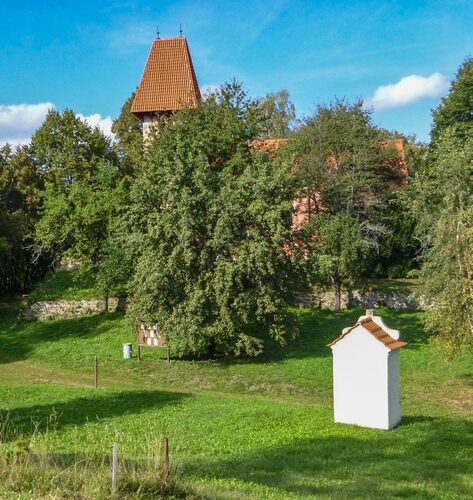
In connection with the declaration of the Soutok/ Morava and Dyje/Thaya Rivers Confluence Protected Landscape Area (PLA), South Moravia, it will be necessary to define management methods graded according to nature conservation zones, particularly in forests as the most extensive ecosystem occurring there. In Zone III and partly in Zone II, one of the future management models may also be that of value-added increment oak management, which may replace the current clearcutting oak management. The model will not reduce the yield from forest management for the Forests of the Czech Republic, state enterprise (the manager of the majority of the forests in the new PLA). At the same time, it can enhance the diversity of the environment and provide better conditions for supporting the biodiversity for which the Soutok// Morava and Dyje/Thaya Rivers Confluence PLA was designated. The Pedunculate oak or English oak (Quercus robur) is the most important commercial/production tree species of the South Moravian floodplains and it also is a woody plant species supporting a very specific biodiversity, especially if the oaks are solitary or marginal individuals. The model is not a groundbreaking discovery, it has been applied for a long time, most notably in France, and can be used as a model on many estates. The transition to the value increment model is slow, and there is no point in experimenting with it in stands older than 80 years - the trees will invariably produce a lot of excrescences from the tree trunk because, due to their higher density per unit area, they have small, narrow, elongated crowns and cannot overcome the stress caused by opening the canopy. On the other hand, it can be safely implemented in all existing stands under 50 years of age, while a more cautious approach should be taken in stands 50-80 years of age with regard to the production of excrescences by the stem. Today, in the South Moravian floodplains, the oak clear-cut/main felling stands are harvested that were established by the Liechtenstein foresters. None of today’s protagonists of the change in forest management will live to see the outcome of the transformation, but it has been known that this model works elsewhere and we need not fear an experiment with an unknown end.
Sychra J., Bojková J. & Janáč M.: Does Building Pools Contribute to Biodiversity Conservation in Farmland?
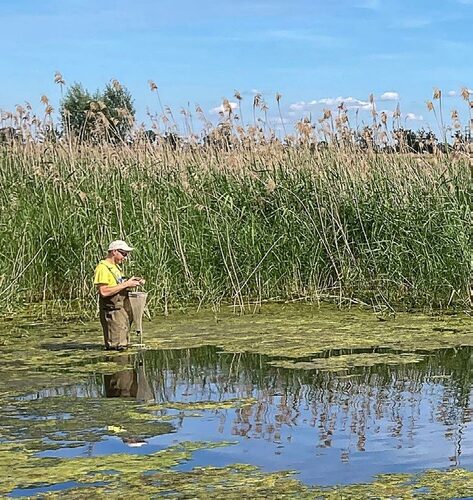
Solving problems of wetland loss and degradation has currently been almost exclusively limited to the construction of new pools, ponds and reservoirs. This is a specific Czech way of approaching the aquatic habitat restoration. In the neighbouring countries, there has never been such a boom in building new pools as in the Czech Republic. According to the standard elaborated by the Nature Conservation Agency of the Czech Republic, man-made/artificial pools are supposed to fulfil the objectives of promoting nature conservation, especially strengthening and enhancing biological diversity. Research on wetlands in the agricultural landscape conducted by the authors is carried out in South Moravia where dredging of pools and reservoirs is a huge phenomenon. Between 2009 and 2023, more than 600 new small water bodies were built there, including more than 490 pools at a total cost of CZK 1.36 billion (EUR 54 million). In terms of investments in aquatic ecosystems, projects for the construction of pools, i.e. water bodies without outlet facilities, were the most common, together with the construction of water reservoirs with outlets (effectively fishponds). The problem arises especially when pools are planned and built on valuable habitats. A survey of more than 120 sites across South Moravia has shown that new pools face a number of difficulties, the most pressing of which are poor, sometimes appalling, water quality, lack of management resulting in rapid reed growth and early colonisation by fish, particularly invasive alien ones. If we want to help bring back water and with it wetland habitats and their biodiversity, change should start with a different set of rules aimed at better practice, in particular taking into account the current character of the sites, allowing the establishing dry habitats and pools with outlets in case of polluted water or overpopulated invasive alien fish, and, above all, clear support for other types of ecosystem restoration fully respecting the needs of the particular site.
Härtel H., Pergl J., Perglová I. & Bauer P.: Non-native and Invasive Alien Species Management Strategy at the Regional Level: An Example from České Švýcarsko/Bohemian Switzerland
Invasive alien species are one of main threats to biodiversity worldwide. While at the global level, efforts to eradicate or at least control some invasive alien species may seem difficult or even impossible, at the regional (= sub-national) to local level, their management can be very effective. A differentiated approach to both the selection of invasive alien species and the space and time in which eradication/control may (or may not) be effective is proving to be a key factor. Just such an approach has been chosen for the new Non-native and Invasive Alien Plant Species Management Strategy in the České Švýcarsko/Bohemian Switzerland National Park and the Labské pískovce/Elbe Sandstones Protected Landscape Area 2025-2041 (hereinafter the Strategy), which can also serve as a methodological inspiration for other Specially Protected Areas in the Czech Republic. The Strategy defines priority objectives, which are to inform and involve the public and other target groups, to improve or maintain the current status of the sites of extraordinary value from a point of view of nature conservation and ensure their permanent monitoring and management, to prevent the 2022 fire site from becoming a centre of plant invasions in the České Švýcarsko/Bohemian Switzerland National Park (NP) for selected species, to ensure monitoring and management at key sites for further invasive alien species spreading (especially along watercourses). The strategy is a comprehensive matrix combining 4 types of sites in terms of management objectives, approx. 50 invasive species and a range of 5 levels of management intensity. The most important species concerned are the Tree of heaven, also known as the Ailanthus tree (Ailanthus altissima), Giant hogweed (Heracleum mantegazzianum), pokeweeds (Phytolacca spp.), Wild black cherry (Prunus serotina), Eastern white pine (Pinus strobus) and the Narrow-leaved ragwort (Senecio inaequidens). The Strategy should be regarded as a starting point only, which must be followed by the preparation of an action plan specifying the necessary procedures and measures as well as the detailed responsibilities of NP´s individual units or staff.
Kosejk J. & Truhlárská P.: The Territorial System of Ecological Stability Plans in Protected Landscape Areas: A Step towards Better Nature Conservation
The Nature Conservation Agency of the Czech Republic (NCA CR) has been updating the Territorial System of Ecological Stability (TSES, a multilevel ecological network) plans for a long time. In 2021-2023, it implemented a project called ‘TSES plan in Protected Landscape Areas’, the output of which was the preparation of the current TSES plan for 20 Protected Landscape Areas (PLAs) managed by the NCA CR. Currently, the NCA CR is preparing an update of the TSES plan for the remaining 5 PLAs under its management and for the proposed Krušné hory/Ore Mountains PLA. The basic methodological basis was the updated Methodology for the TSES delineation (Ministry of the Environment of the Czech Republic 2017), with more emphasis on the specific biological aspects of the area under consideration, namely a greater inclusion of selected natural habitats. The main principle of the TSES delineation was taking into account the current state of the landscape. The biogeographical representativeness principle, i.e. that potential natural ecosystems on more than 95% of the Czech Republic´s territory are forest ecosystems, and therefore that representative biocentres (= core areas of the ecological network) must be mostly forest ones, was not applied there. The division into natural and anthropogenic TSES was not used, too. During the procedure, special emphasis was placed on grassland, woodland and aquatic ecosystems. These sites are often more valuable and harbour higher biodiversity than compact forest cover. It is therefore desirable to preserve the diversity and mosaic nature of these TSES components and to favour regular mowing over afforestation. As a result, the TSES plans for individual PLAs are used as a basis for the preparation of territorial/land-use planning documentation, TSES projects, the implementation of comprehensive land management, forest management plans and water management plans.
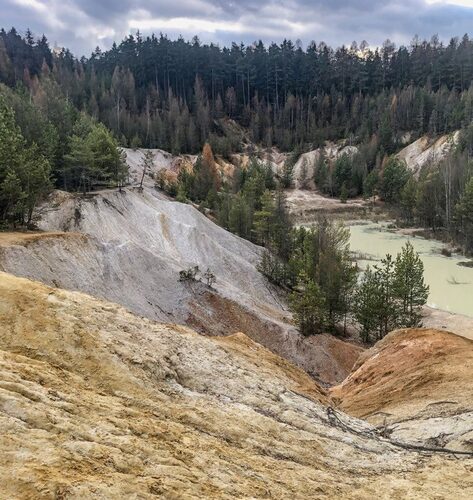
Dušek M., Bureš P., Hromádka R. & Bogdan V.: Biological Surveillance on Transport Construction Sites
Infrastructure and transport constructions in the countryside (and not only there) usually pose a major impact on nature and the landscape. The negative impacts can be reduced to a large extent by a complex of mitigation and compensation measures. However, all measures must be implemented correctly, including often crucial details, which is unfortunately not a given. A large part of the measures is ordered by State Nature Conservancy authorities under exemptions from the protection conditions for Specially Protected Species, but they may also result from the conditions of the EIA binding opinion and other permits. Fortunately, a condition requiring the developer to carry out biological surveillance has therefore become a standard part of the relevant permits. This is important because it ensures that all conditions are complied with and fulfilled throughout the construction process. Therefore, the primary task of the bio-surveillance is to carry out an environmental risk analysis. In addition, it is necessary to monitor compliance with deadlines (e.g. for tree felling, soil clearance or alteration and relocation of watercourses), the construction and maintenance of temporary migration barriers, the implementation of certain construction works such as watercourse alterations and, last but not least, the felling of trees and their compensatory planting. In addition, the biological surveillance carries out rescue wild plant and animal transfers and continuously monitors the entire construction. In the future, it is essential that bio-surveillance becomes a standard feature of all large-scale construction projects, both during the design and operational phases. It is necessary to convince all actors, including contractors, through the individual cases in practice that early and preventive treatment of all environmental conditions will simplify and speed up their activities. Such an approach will reduce serious conflicts during construction and raise the profile of the State Nature Conservancy in the sector.
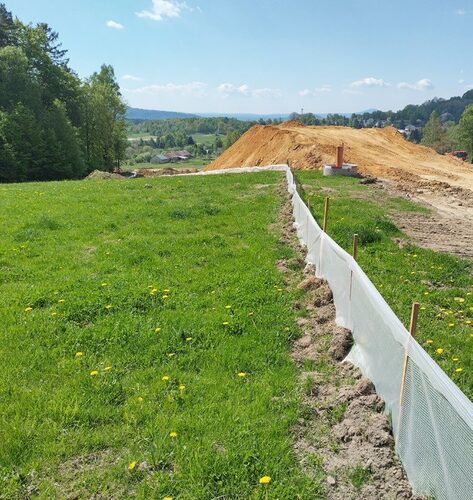
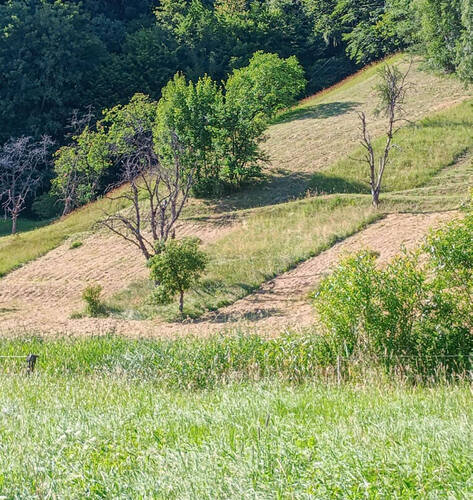
Višinský J.: The Český ráj/Bohemian Paradise Region and Its Meadows
The Český ráj/Bohemian Paradise is a cultural landscape that has been shaped by human activity over centuries. An integral part of its appearance are diverse meadows that originated as secondary treeless areas and have been maintained for generations by mowing and extensive grazing. It is precisely the continuity of this farming having been given the landscape its distinctive character/scenery. Above the Věžák Fishpond, the Kosin family monument has been still standing today, commemorating more than three centuries of continuous farming by one peasant family on the “Na Budách” farmstead in the village of Krčkovice. Within the Český ráj/Bohemian Paradise Protected Landscape Area, several Specially Protected Areas can be identified where meadow habitats are most prevalent and at the same time in their most preserved form. Three areas located in PLA´s different parts were selected as an example. The Podtrosecká údolí Valleys in the central part represent a complex of wetland and peat meadows. The Oborská luka Meadows in the eastern part are connected to a system of fishponds and represent traditional wet meadows. The Podloučky Meadows in the northern part preserve a mosaic of xerothermic grasslands and flower-rich beech forests. Together, they provide a representative picture of the variability in and ecological value of meadow habitats in the Český ráj/Bohemian Paradise.
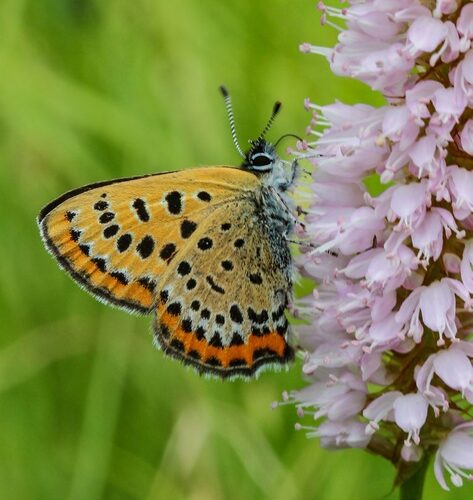
Konvička M., Peškařová T., Fric Z., Tájek P. & Konvičková H.: The Violet Copper Butterfly Extinct, Relocated, and Globally Warmed
Two decades ago, the Violet copper butterfly (Lycanea helle) – a small, neat diurnal butterfly that became extinct in the Czech Republic in the early 1950s – was reintroduced into the country’s fauna. The transfer of part of its population from the Austrian Türnitz Alps was not a classic reintroduction of an extinct species. Today, the originally Alpine violet copper butterflies inhabit the peat meadows of the Šumava/Bohemian Forest Mts. National Park, in the headwaters of the Teplá Vltava River. They share these habitats with cold-loving butterflies such as the Bog fritillary (Proclossiana eunomia), Moorland clouded yellow (Colias palaeno), and the Cranberry blue (Plebejus optilete). Because the Violet copper butterfly os considered to be a glacial relict, several research teams have attempted to model the development of European populations under conditions of climate change. The results are not surprising. The Central European lowlands, including those where the original populations had lived in the Czech Republic and where the butterfly long ago lost its suitable habitats, will cease to be habitable for it in a warmer climate. Dry summers lead to the drying up of meadow wetlands and a visible decline in the Common bistort, also known as the Snakeweed (Bistorta major). On the contrary, suitable conditions will remain in the Czech Republic´s border mountains. The Šumava/Bohemian Forest Mts., Krušné hory/Ore Mountains, Slavkovský les/Slavkov Forest, and Krkonoše/Giant Mountains are all at least 300 m higher than the Westerwald or Ardennes and will remain suitable for the Violet copper butterfly even in radical global warming scenarios. The fact led authors to a heretical idea: to transfer population samples of the Violet copper butterfly from Western European genetic lines, which are unlikely to survive the current warming, to other mountain ranges in the Czech Republic, thus creating a genetic reserve for them. The first candidates for such a transfer are butterflies from the Westerwald and Ardennes mountain ranges.
Kadlecová G., Kounek F., Voslářová E. & Večerek V.: Eurasian Beaver (Castor fiber) in the Wild Animal Rescue and Rehabilitation Centres in the Czech Republic
Wild animal rescue and rehabilitation centres help endangered Eurasian beavers (Castor fiber) by caring for injured individuals. Between 2010 and 2024, the number of beavers admitted to the centres in the Czech Republic increased, with the highest number recorded in the Plzeň/Pilsen Region. The most common reasons for admission were beavers falling into holes in the ground or being hit by vehicles. Nearly half of the beavers were successfully returned into the wild after treatment. However, 37 out of the 120 beavers admitted either died or had to be euthanized, mainly due to collisions with vehicles or injuries from being bitten by other beavers or animals. Data from wild animal rescue and rehabilitation centres can help identify risk factors affecting beavers in the wild and may also be used to improve welfare during treatment in these facilities.
Research, Surveys and Data Management
Blättler L. & Daněk J.: From Landscape Functions through Ecosystem Service to Nature´s Contribution to People
In the State Nature Conservation and Landscape Protection Programme of the Czech Republic for 2020-2025 ecosystem services (ES) are considered as one of the cross-cutting objectives and tools. Specifically, ES assessment and its integration into decision-making in ecosystem management including their use should be carried out. Not only in the Czech Republic, but also abroad, the ES concept is part of key strategic documents. In the Czech Republic, a national-wide ES mapping and assessment have been conducted (see Ochrana přírody/Nature Conservation Journal 4/2014). In order to use the ES assessment in nature conservation practice, the IP LIFE One Nature and the follow-up project Prospective LIFE are working on the development and testing of a methodology for this purpose. At the academic level, ES are a dynamically developing field. In recent years, more than 6,000 scientific papers have been published on ES per year. The main objective of the ES concept has therefore been to ‚green economics‘. In the IP LIFE One Nature project, the IPBES classification of ES is used; the authors focus on the positive contributions of nature to people there, which to this end they called „nature‘s contribution´s to people“.
Peksa O. & Pecháčková S.: Are Power Lines the Hope for Heathland?
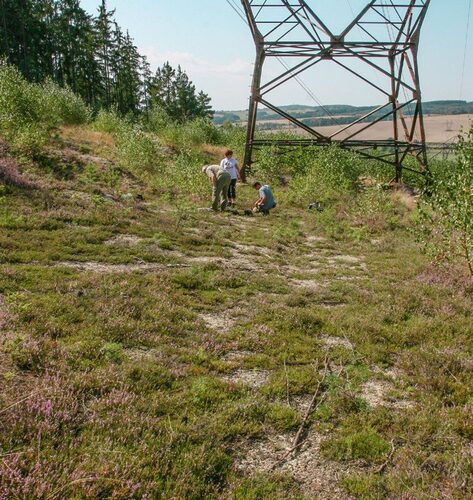
One of the traditional and biologically very valuable habitats - heathland – has been disappearing from the Czech Republic´s landscape. Recent research has shown, in line with pan-European one, the nature of the changes that these oligotrophic habitats are undergoing. Heather and lichens are virtually disappearing everywhere and shrubs, herbs and grasses, or tree seedlings, are coming in. Heliophytes (mainly heather, herbs and lichens) are declining and the species composition in mosses is also changing. Non-woodland heaths are rapidly turning into grassland, while changes in woodland heaths are generally smaller in scale. The total number of species from the Red List of Threatened Species of the Czech Republic found in heaths is declining significantly. Degradation of heathland is very rapid and is not primarily caused by global change, but primarily by lack of management. Most of the sites that have survived display a very small area, which, together with their unfavourable location, prevents the use of traditional management methods such as grazing, burning or large-scale turfing. Areas under power lines could offer hope for heathland, but only if they are managed in an appropriate way. The current often applied massive milling is more of a threat to them.
Zejdová L., Musil Z., Patočka Z., Klimánek M., Hustáková K., Koutecký B., Rožnovský J. & Litschmann T.: Monitoring Population Dynamics in the Endemic Moravian Alpine Bells and Microclimate in the Macocha/Stepmother Abyss
The Moravian Alpine Bells (Cortusa matthioli subsp. moravica) is a glacial relict occurring at only one site in the Czech Republic, namely on the northeastern wall of the Macocha/Stepmother Abyss in the Moravský kras/Moravian Karst Protected Landscape Area in the Vývěry Punkvy/Punkva River Springs National Nature Reserve (South Moravia). The long-term existence of the mountain species is made possible by the cool and moist microclimate within the abyss connected to the cave system on the Punkva River. The site itself is only accessible by climbing equipment in extremely difficult terrain, so for a long time no accurate data were available to enable repeated monitoring and tracking of the population dynamics in the plant species. When comparing the data from the census of Moravian Alpine bells clumps, a general trend of decrease in the total number of plants can be seen. In the last monitoring from the rope in 2024, only 48 Moravian Alpine bells´ individuals were found there. The Moravian Alpine bells´ population is only stable in the optimal conditions of the upper level and one group from the middle level, where any decline in clumps is compensated by vegetative reproduction; very rarely there also is reproduction by seeds. In the lower level, there is a steady, slightly decreasing trend. Plants are surviving at their limits there, which is reflected in reduced fitness, low growth and low flowering frequency; some of which are attacked by fungal pathogens. Habitat limiting factors at the lower levels are mainly the amount of light, the lack of suitable terraces with deeper topsoil and drought, which in this case is probably related to increasing average temperature and decreasing humidity rather than the amount of rainfall there.
Antonín V., Lepšová A., Matějka K. & Zíbarová L.: Fungi - Macromycetes of Floodplain Forests at the Confluence of the Morava and Dyje/Thaya Rivers
The floodplain forests at the confluence of the Morava and Dyje/Thaya Rivers (South Moravia) are one of the most important complexes of semi-natural floodplain forests and floodplain meadows in the Czech Republic. The area is known for occurrence of very rare fungi species, which are often found only there across the whole Czech Republic. The species composition of fungi communities in the floodplain forests provides a certain standard against which findings from other areas of floodplain forests along lowland rivers are compared: the Litovelské Pomoraví/Litovel Morava River Basin, remnants of floodplain forests in the Polabí/Elbe River Basin and the Poodří/Odra River Basin. In the context of the efforts to declare the area of the confluence of the Dyje/Thaya and Morava Rivers as a Protected Landscape Area, project entitled “Monitoring of biodiversity and ecological changes of floodplain forests and meadows in the area of the confluence of the Dyje/Thaya and Morava Rovers” was implemented in 2021-2023, financially supported by the Forests of the Czech Republic, state enterprise. The current list of all fungi (macromycetes) historically found there includes a total of 952 taxa. Of these, 179 taxa are ectomycorrhizal and 225 saprotrophic, which are associated with dead vegetation, soil humus or small woody debris. The most common species are lignicolous, preferring decaying wood and wounded trees, with 541 species. Lignicolous species account for 56.8% of all the recorded species. In terms of fungal conservation, 152 of the species found there are included in the Red List of Threatened Species of the Czech Republic, thus reaching 14% of the total number. Of the indicator species for the softwood floodplain forests, 26 fungal species (83.9%) were found at the Confluence and 46 species (95.8%) were recorded in the hardwood floodplain forests there. All the results confirm the high quality of the local vegetation and the fact that the floodplain forests in particular are extremely valuable sites from a mycological point of view.
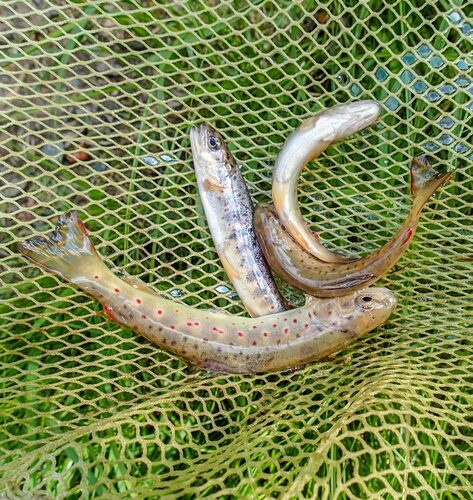
Marešová E., Halačka K., Vetešník L. & Mendel J.: Genetic analysis of the Brown Trout in the Brdy Highlands Protected Landscape Area or Are the Brdy Highlands All Very Much the Same?
The aim of the study was to assess the genetic status of the Brown Trout (Salmo trutta morpha fario) populations in the Brdy Highlands Protected Landscape Area (Central Bohemia) and to identify fragments of its original or otherwise unique populations. The population parameters found demonstrated their successful genetic status and did not confirm either the historical population declines or the dangerous level of inbreeding. Statistical analyses divided the 13 populations into six groups, which correspond to the history of fishery management at the Brdy Highlands sites. The unique position of three populations in the Pilský, Pstruhový and Obecnický Brooks, which are genetically homogeneous and represent three unique sources of Brown trout´s genetic variability in the Brdy PLA, was clearly demonstrated. At the same time, they enhance the unique gene pool of the Brown trout in the Czech Republic. Their homogeneity is probably due to population isolation and the historical and current absence of intensive fisheries management. The different genetic profile of the populations should be taken into account in future manipulations and intended fish stock transfers.
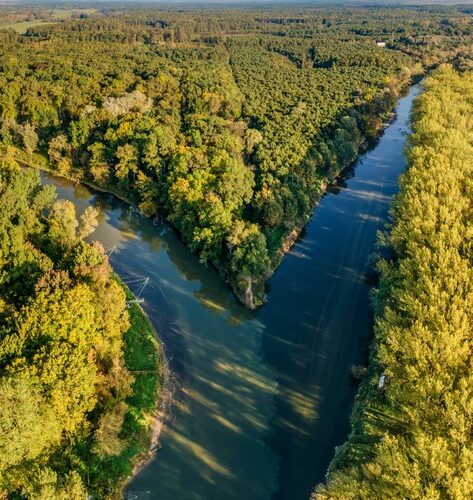
Salašová A., Dohnalová B., Lacina D. & Kohoutková K.: Landscape Character/Scenery Values in the Soutok/ Morava and Dyje/Thaya Rivers Confluence and Recommendations for Their Conservation
The landscape at the confluence of the Morava and Dyje/Thaya Rivers (South Moravia) is unique in many respects. In 1996, it was inscribed on the UNESCO World Heritage List under the name of the Lednice-Valtice Cultural Landscape. The area is characterised by a high concentration of natural, cultural, historical and aesthetic values, many of which are of European or global importance. The natural values of the Soutok/ Morava and Dyje/Thaya Rivers Confluence Protected Landscape Area have been largely caused by the interaction of natural processes and human activities. Historical types of forest, pasture and meadow management and Liechtenstein water management and landscaping have created a number of rare habitats there. If they are to be preserved in the future, it will be necessary to strengthen close cooperation between the State Nature Conservancy authorities and the landowners and resource managers and to seek for management measures that are sustainable from an environmental and economic point of view. The protection of the cultural and historical characteristics of the unique area and its cultural and aesthetic values will need to be harmonised with the development of the municipalities there. The protection of the area´s landscape character/scenery has not yet been fully incorporated into the land-use/territorial plans of all municipalities, and is notably absent from some documentation. With regard to the expected changes and development plans of the municipalities (e.g. development of renewable energy sources) it shall be necessary to update the land-use/territorial plans in this respect. In the case of the Lednice-Valtice Landscape Monument Zone, there is a noticeable lack of a conservation plan, which would further specify the protection of the cultural and historical features and values of the area.
Jakubínský J., Donoval J., Štěrbová L. & Pechanec V.: Assessment of Ecostabilizing Floodplain Function in the Czech Republic
The article provides an overview of the key outputs of the “Functional floodplain” project, focused on the assessment of the floodplain ecosystem functions. The main result of the project is a methodological procedure, based on which it is possible to express the magnitude of the human activities impacts in the landscape, which directly or indirectly affect the performance of the basic functions in a specific selected floodplain ecosystem. In the case of intensive land utilization, it is therefore possible to determine whether the given floodplain ecosystem has been still performing certain functions supporting the ecological stability of the area. In practice, the result is useful especially in nature conservation and landscape protection, when making decisions (planning) on the development of areas within floodplains (as Significant Landscape Elements pursuant to Act No. 114/1992 Gazette on Nature Conservation and Landscape Protection, as amended later), or when designing ecosystem restoration actions at degraded sites. The application of the methodology into practice is facilitated by a supporting tool - a web map application displaying the degree of performance of selected ecosystem functions in floodplains at the national level, including the resulting eco-stabilization function and the extended layer of the currently defined floodplains along the main rivers in the Czech Republic.
Müllerová J. & Forejt M.: New Assessment of Memorial/Veteran Trees in the České středohoří/Central Bohemian Uplands Protected Landscape Area
In 2023-2024, a dendrological assessment of 125 declared Memorial/Veteran Trees (162 individuals) in the České středohoří/Central Bohemian Uplands Protected Landscape Area (northern Bohemia) was carried out. The current documentation was revised and a management plan for the next 10 years was developed. The project outputs also include a possible software for planning and structure of tree inspections. Trees were visually assessed from the ground between July 2023 and April 2024. Each individual was visited twice in the field: once in leafed and once in leafless condition. For each tree, 63 parameters were evaluated and recorded. Some trees are outstanding in landscape terms and shape the character of the site, others provide cultural messages at vanished human settlement sites. The Memorial/Veteran Trees often are trees of exceptional size and of high dendrological value, or they may be trees of significant habitat value. The characteristic should be taken into account when setting the planting target. The trees are divided into five categories, which are further refined by sub-categories. The level of significance is then further qualitatively rated on a five-point scale. Of the 162 trees evaluated, 122 are deciduous (75%) and 40 are coniferous (25%). The representation of rowans or mountain-ashes (Sorbus spp.) among the Memorial/Veteran trees (1 wild service tree Sorbus torminalis, 7 service trees Sorbus domestica evaluated) can be considered exceptional in the Czech Republic. The famous common medlar (Mespilus germanica) tree at the village of Miřejovice is the only Memorial/Veteran Tree of this species in the Czech Republic and probably also the smallest one in the country.
Vrba P, Čížek L., Faltýnek Fric Z., Filippov P., Spitzer L. & Konvička M.: Has the European Spruce Bark Beetle Outbreak Revived the Czech Commercial Forests?
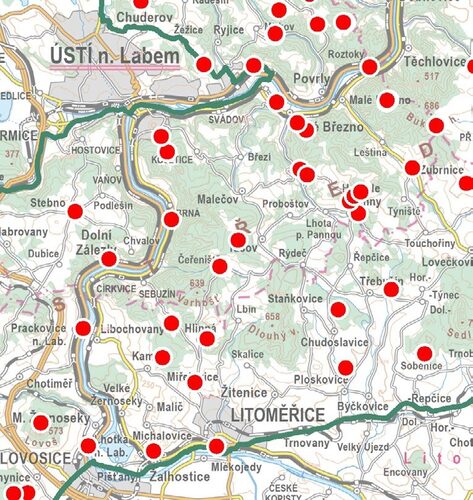
In the Czech Republic, as well as in the whole of Central Europe, there have been unprecedented outbreaks of the European spruce bark beetle (Ips typographus) in the last 20 years, followed by widespread dieback of Norway spruce (Picea abies) plantations (especially) in low elevation areas. The outbreak development has changed the vegetation cover of large sections in the landscape. Thanks to the saving of other tree species during salvage cutting, formations remotely resembling a “savannah” with scattered trees and shrubs have appeared there. Richly flowering herbs, typical of forest clearings, have dramatically increased the nectar supply. Dead wood, which is a scarce resource in commercial forests, was found in unprecedented quantities at some sites. In 2021, the research was conducted in three areas located in different stages of the outbreak, namely in the Nízký Jeseník/Low Jeseník Mts. (northern Moravia/southern Silesia), Křižanovská vrchovina/Křižanov Highlands (the Českomoravská vrchovina/Bohemian-Moravina Highlands) and Lišovský práh Hilly Area (South Bohemia). Four groups of organisms were monitored in all areas - vascular plants, diurnal butterflies, moths and saproxylic beetles. Surprisingly rich communities were found in all monitored groups. The total number of species found is approx. one third of the diurnal butterflies and moths, one eighth of the saproxylic beetles and one tenth of the vascular plants known from the whole Czech Republic. Red-listed species were also found in all the groups. It turns out that the outbreak has spectacularly returned to the Czech Republic´s landscape two phenomena that were historically and prehistorically quite common there – groves/open forests and the associated abundant supply of sun-exposed dead wood. Moreover, the grove or open forest regeneration is only temporary. Most of the areas disturbed by the outbreak will be reforested sooner or later. Nevertheless, some lessons can be learnt from the European spruce bark beetle outbreak that may contribute to the recovery of subsequent stands.
Hošek J., Kebrle D., Hošková J., Kodet V., Karlík P. & Tenčík A.: Biodiversity in a Commercial Forest: Easy and Quickly?
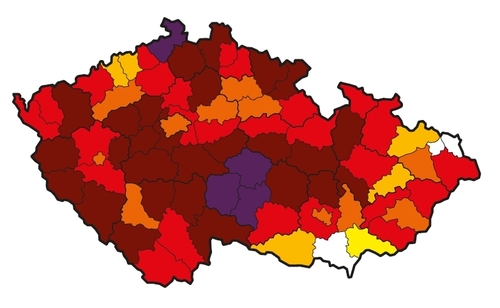
The article deals with the structure of commercial forests in the Czech Republic and its relationship to biodiversity. The introductory section describes the specific conditions of the temperate forest biome in Central Europe in its geohistorical developmental context. It then analyses the diversity of factors/drivers and complexity of interactions that contribute to the final state of forest biota (living part of an ecosystem), emphasizing the importance of including various spatial and temporal scales in which individual phenomena are studied and interpreted. The significance of various stages in forest development, in the process of natural or economically moderated development, for different biota groups is consequently discussed. The main topic is the presentation of the possibilities of using forest structure indices, which summarize the state of a larger number of structural variables in a single quantitative characteristic. One such index is the FSI (Forest Structure Index, sensu Storch et al. 2018), which has been tested in a modified form on data from the authors´ own multitaxon survey as well as on data from the National Forest Inventory to assess forest structure in Specially Protected Areas in the Czech Republic. In summary, such tools are well suited for assessing the forest habitat quality from the perspective of diverse taxa, comparing different areas, monitoring developments over time, and informing nature-friendly forest management policies and the formulation of instruments to support them.
Večerík Z., Kizek K., Vašíček M., Líznarová E., Kotasová &Adámková M.: Slovácké lúky/Moravian Slovakia Meadows as a Model Site for Invertebrate Diversity Protection and Conservation
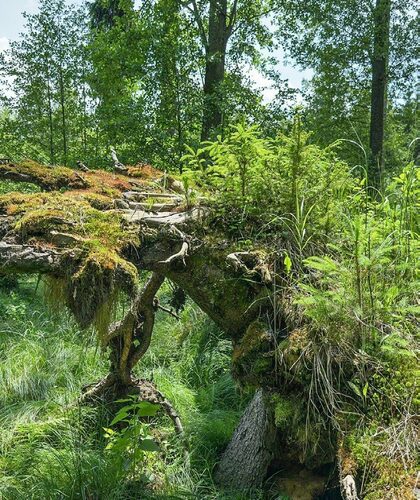
Slovácké lúky/Moravian Slovakia Meadows, part of the Soutok/Confluence, namely Morava and Dyje/Thaya Rivers Confluence newly designated Protected Landscape Area in South Moravia, represents an exceptionally valuable site for the conservation of terrestrial invertebrates in lowland Central Europe. A full-season entomological monitoring, conducted in 2024, recorded 821 species in total, including many threatened, stenotopic, and ecologically specialized taxa associated with a wide range of habitats. The findings evidence the presence of wetland, halophilous, and steppe-associated species co-occurring at a single locality, reflecting extraordinary habitat heterogeneity, microclimatic variation, and long-term ecological continuity. Particularly important is the presence of species dependent on open, early-successional and transitional habitats, which are increasingly rare in modern landscapes. Thus, the entomofauna of Slovácké lúky/Moravian Slovakia Meadows confirms the site’s conservation value and provides a strong foundation for future protection, conservation, restoration, and monitoring.
Pech P., Spitzer L., Konvičková H. & Konvička M.: Why Does the Dusky Large Blue Avoid Large Meadows?
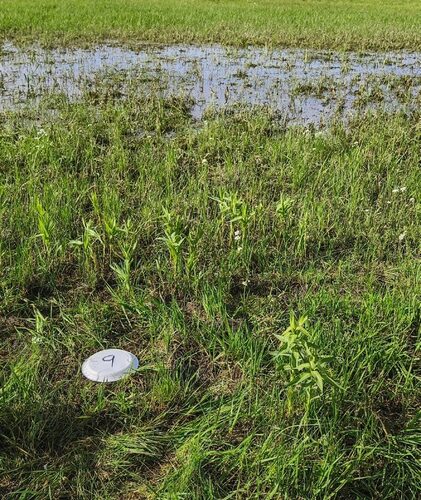
The Dusky large blue (Phengaris nausithous), a species protected by the European Union´s legislation (Annex II of the EU Habitats Directive) and obligate myrmecophilous inhabitant of wet meadows, is one of the most widespread blue butterflies in the Czech Republic, despite its specialized lifestyle. It can be found everywhere except in the warmest lowlands and highest mountain areas, with wetland meadows harbouring the characteristic herb Great burnet (Sanguisorba officinalis) being a necessary but not sufficient condition for its occurrence. Entomologists have long believed that any species of the widespread ant genus Myrmica is sufficient for the development of blue butterflies of the genus Phengaris. Later, while searching for the causes of the mysterious extinction of the Large blue butterfly (P. arion) in Britain, a close link was found between individual blue butterfly species and individual ant species, which in turn were linked to specific microclimates. Blue butterflies are usually linked to the most abundant species or species of the genus Myrmica, which are predominantly found in their preferred habitat. The Dusky large blue, which is classified as near threatened (NT) on the Czech Republic´s Red List, shares its association with the Great burnet with another species of the same genus, the Scarce large blue butterfly (P. teleius), which is considered to be endangered (EN) in the Czech Republic. The differences in their preferences stem from their requirements for the quality of their host plant. The Scarce large blue butterfly prefers lower, younger great burnet plants growing in loose grassland, while the Dusky large blue prefers taller, more robust plants that have already flowered in denser vegetation. The two species also differ in their host ants – for the Dusky large blue, it is predominantly the Common red ant (M. rubra), and to a lesser extent the Common elbowed red ant and Woodland red ant (M. scabrinodis, M. ruginodis). The Scarce large blue butterfly, on the other hand, uses a wide range of ants (including species used by the Dusky large blue), in proportion to their occurrence in a particular location.
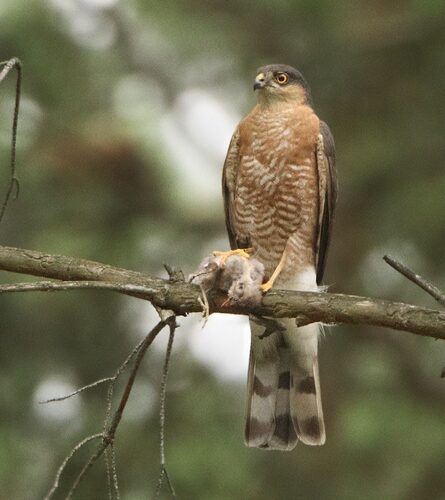
Boháč O.: How is the Eurasian Sparrowhawk Doing in Central Moravia and the Nízký Jeseník/Low Jeseníky Mountains?
Eurasian sparrowhawk (Accipiter nisus) monitoring takes place throughout the year, beginning with the search for its nests from September to March, followed by checking occupied nesting sites from the end of April, which ends in early August with the last young fledged. The aim of the monitoring is to observe nesting site fidelity, habitat requirements/selection, nesting site protection, and to study food sources at sites where the raptor processes its prey. Thanks to ringing, which identifies adult birds and the subsequent dispersal of young birds, the exact number of young birds in the nest, the sex ratio, and the possible presence of trichomoniasis during ringing have been found. Monitoring and local research show how a seemingly common and widespread species of bird of prey in the Czech Republic can become a rare nesting species in parts of the country, with considerable problems affecting its nesting success. Sparrowhawks have lost more than 90% of their nesting habitat in the Hornomoravský úval/Upper Morava River Valley (central Moravia) and Nízký Jeseník/Low Jeseník Mts. (northern Moravia an Silesia). Some pairs are adapting to the reduced size of suitable nesting habitats, while others are attempting to nest in more “risky” pine or deciduous tree stands, where predation is significantly higher. The Eurasian sparrowhawk continues to be threatened by ongoing logging during the nesting season and consequently, by continued loss of suitable nesting habitats.
Kupka J.: The Importance of Agricultural Structures in Velký Roudný Hill for the Survival of an Endemic Snail
Cochlodina cerata opaviensis is a critically endangered endemic subspecies of the Odra and Moravice River basins. Until recently, it was considered a strictly forest species bound to natural scree forests. However, the latest research in Velký Roudný Hill has revealed viable populations on agricultural as balks (stone walls) created by the historical farming practices of the German-speaking population, which was displaced after 1945. The finding expands existing knowledge about the ecology of the species and demonstrates the importance of historical landscape structures for the conservation of critically endangered endemics. The protection of Cochlodina cerata opaviensis should now also include targeted management of these historical structures.
Nature Conservation Legislation
Jelínková J.: Rights of Environmental Associations during Issuing a Unified Environmental Statement Procedure
The Unified Environmental Statement (hereinafter referred to as UES) is not issued as a binding opinion under Article 149 of the Administrative Procedure Code in administrative proceedings. However, an environmental association has the right pursuant to Article 70, paragraph 2 of the Act on Nature Conservation and Landscape Protection (ANCLP) to be informed in advance of the issuance of a UES if the association has requested it, instead of taking action under the ANCLP. The association may have other procedural rights in the “proceedings” for the issuance of an UES as a “party concerned” under the Administrative Code. Both the Act on the Unified Environmental Statement and the Administrative Procedure Code explicitly regulate only the interaction between the applicant for the issuance of the UES (binding opinion) and the administrative authority competent to issue it. The other parties/persons concerned are generally only aware of the binding opinion after it has been issued, as parties to the procedure for issuing the decision for which the binding opinion is the basis. There is no right of appeal against a binding opinion. The basic remedy for imperfection is a review of the legality and substantive correctness of the binding opinion under the appeal procedure (Article 149, paragraph 7 of the Administrative Procedure Code), which is supplemented by a supervisory remedy in the case of unlawful binding opinions - a review procedure in the narrower sense (Article 94 and Article 149, paragraph 8 of the Administrative Procedure Code). If an environmental association requests, pursuant to Article 70, paragraph 2 of the Environmental Protection Act, to be informed about the intended interventions - requests for the issuance of a UES (with the possibility of narrowing the subject matter and local specifications), the competent administrative authority is obliged to inform it about the initiation of the “proceedings” for the issuance of a UES if the UES will be issued instead of (one of) the actions under the ANCLP.
Jelínková J.: Amendment to Act on Compensating Damages Approved
Act No. 115/2000 Gazette on Providing Compensation for Damage Caused by Selected Specially Protected Animals, will be amended as of 1 January 2026. The Ministry of the Environment of the Czech Republic together with the Nature Conservation Agency of the Czech Republic had prepared the basis for this amendment already in 2021, but failed to make it a priority in the legislative process. The key shortcomings of the current law include, in particular, the demanding method of damage administration, the deadlines for submitting applications (the same for reporting single and continuous damage), the range of beneficiaries of damage compensation (many of them are paid by the State itself from the State Budget), the insufficient range of compensation provided (e.g. for damage caused by the Gray wolf Canis lupus, it is not possible to compensate game farm owners), conditions for obtaining the right to compensation (there is no condition for minimum security of livestock against attacks by the Gray wolf) and the law does not stipulate a condition for breeding livestock according to the Breeding Act. The newly approved amendments include, in particular, the list of domesticated animals for which damages are payable (it is extended to all types of livestock species and damages will be payable for all dogs), the establishment of a decree to set the minimum parameters for securing selected livestock species (mainly sheep and goats) against attacks by the Gray wolf, the establishment of the basic principle of liability and prevention, the demonstration of the legality of breeding in terms of Act No. 154/2000 Gazette on Breeding and Documentation of Farmed Animals and Amending of Some Relating Acts and Regulations for selected livestock species in case of damage caused by wolves and other changes. Decrees are currently being drafted to amend the law so that it can be effectively implemented by January 2026.
Jelínková J.: The Question of the Specificity of the Act on Nature Conservation and Landscape Protection in Relation to Other Legal Regulations in the (Most) Recent Case Law
The key provision of Article 90, paragraph 4 of the Act on Nature Conservation and Landscape Protection (ANCLP), which established its specificity in relation to forestry, water, construction/building, and other specified laws, had been repealed many years ago. After that, the relationship between conflicting provisions had to be assessed on an ad hoc basis. According to jurisprudence/legal science and case law, a legal norm that has a narrower definition, whether personal or material, can be considered special. Nevertheless, in a specific case, a legal norm may be more general in substance but at the same time having a narrower personal scope. If the relationship between conflicting legal norms cannot be described as a relationship between special and general legal regulations, it is necessary to apply them simultaneously wherever possible. Moreover, regional courts have recently stated that, in relation to the Water Act, the ANCLP is a special legal regulation, arguing that nature conservation and landscape protection is in the public interest, based on the precautionary principle and, of course, the wording of the relevant provisions of both laws. The issue concerned the extension of the validity of water management for a small hydroelectric power plant in a Protected Landscape area and, in the other case, the obligation to ensure a final decision on exemptions under Article 43 and 56 of the ANCLP as a basis for a water management permit. This implies the correct procedure for administrative authorities and courts, which must consider all relevant provisions of the legislation concerned, not limit themselves to a linguistic interpretation of isolated provisions, but strive to find the meaning and purpose of the legislation using other methods of interpretation.
Rudolf V.: Drone Flights in Specially Protected Areas in the Czech Republic
Unmanned aerial systems (UAS) and their operation in the Czech Republic do not avoid Specially Protected Areas. Until recently, the operation of UAS in Specially Protected Areas was governed by comprehensive measures of a general nature regulating the restricted (flight) area LKR10 – UAS over the entire territory of the Czech Republic. On August 15, 2025, the Civil Aviation Authority issued a set of new general measures, which, as of September 1, 2025, split the original restricted space LKR10 – UAS into several separate restricted spaces. The purpose of the legal regulation is to preventively establish a stricter regime for UAS operations in Specially Protected Areas due to well-founded concerns about possible disturbance, in particular to birds, by noise or the mere presence of a foreign object. The conditions for UAS operations within the Specially Protected Areas, preliminary information (or preliminary information and a follow-up administrative measure) and the obligation to enter information about the planned flight into a public digital map apply to flights falling within the “open” category of operations. For flights with UAS falling within the “specific” category of operation, different conditions may be specified within the scope of the operating authorization. No specific regulations (in the sense of restrictions) have yet been laid down in general measures for UAS operations within Natura 2000 sites where UAS flights may be particularly problematic in Bird Areas (pursuant to Act No. 114/1992 Gazette on Nature Conservation and Landscape Protection, as amended later, the term for Special Protection Area, SPA under the European Union´s Birds Directive).
Focusing on the Public
Zajíček P.: Floodings in Show Caves in the Czech Republic
In September 2024, during prolonged heavy rains, extensive flooding occurred throughout the Czech Republic, reaching millennial water levels in some areas. In many places, they had devastating effects. Flood naturally also affect cave systems with water regimes. Therefore, water levels in caves are closely monitored during floods. References to floods in connection with caves were in earlier times linked to the Moravský kras/Moravian Karst area (South Moravia). In other parts of the Czech Republic, caves with a water regime had been previously unknown. Floodings in the Moravský kras/Moravian Karst caves have been occurring at irregular intervals continuously. They occur either during progressive spring snowmelt, during prolonged rainfall or during local storms with extreme precipitation. In recent decades, extreme water levels in karst areas have been recorded and documented in detail. A very dynamic atmospheric phenomenon occurred in April 1985, when a prolonged intense frontal storm swept across Central Europe. During this overnight storm, for example, sinkholes in the Moravský kras/Moravian Karst filled with water and the Punkva River overflowed over the visitor plateau at the bottom of the Macocha/Stepmother Abyss. Perhaps the most significant flood event of the last decades was the 1997 flood in Moravia during very intense and prolonged rainfall in July. The water flooded the bottom of Macocha/Stepmother Abyss, some parts of the dry part of the Punkva Caves, the surroundings of the area and the entrance to the Sloupské jeskyně/Column Caves. The flood also affected other show caves there.
Hlinková D.: Nature Conservation in Dialogue: 20 Years of the Český les Mts. Protected Landscape Area
The Český les Mts. Protected Landscape Area (western Bohemia) was established on August 1, 2005. It covers an area that for forty years was non-go zone or a zone with limited access due to the Iron Curtain there and therefore, was purposely neglected not only from the perspective of tourism development but also nature conservation. From the outset, the new Protected Landscape Area (PLA) has been making efforts to meet the expectations of the region and has worked systematically to develop partnerships. In the early years of the PLA’s existence, the first interpretive tools began to be developed. Information boards were placed on hiking trails and trailheads, but often without a clear concept. The turning point came in 2006, when the first issue of the magazine Český les was published. Three years later, the calendar of events “Come with us to nature” was launched, offering a regular overview of outdoor excursions, lectures and thematic events in the region. Other important milestones include establishing several nature trails/educational paths. Since 2009, hikers have been able to follow the Podkovák, Vodní svět/Water World and Capartice Meadows trails, and later the Sklářství/Glas Industry and Chodovské skály Rocks trails were added. A key step in the CEPA implementation was building the Český les House of Nature. The visitor centre was opened in the historical post office building in the municipality of Klenčí pod Čerchovem in 2016. An important event in partnership cooperation is the Český les Day, where the natural and cultural values of the area are jointly presented. Each year it is held in a different place and on a different theme. An indispensable partner in transboundary cooperation is the Centre Bavaria Bohemia (CeBB) in Schönsee, a cultural institution serving to strengthen Czech-Bavarian cultural and partnership cooperation.
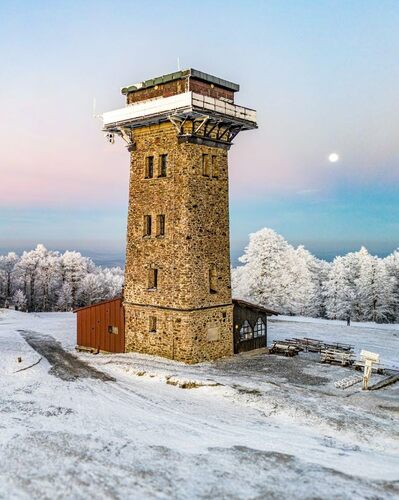
Nagel R.: What is the Voice of the Inhabitants of České Švýcarsko/Bohemian Switzerland?
Communication with the public is an essential part of current nature conservation in national parks. It is absolutely crucial to engage in dialogue with local people, not only about the benefits of having a national park, but also about issues that may be perceived as difficulties by locals, e.g. restrictions on access to certain areas, changes in game control, and forest management. During the quarter-century of the České Švýcarsko/Bohemian Switzerland National Park’s existence, the coexistence of locals with the National Park (NP) has gradually evolved. After an initial phase of mistrust, but also high expectations, the relationship more or less stabilized relatively quickly. Unfortunately, however, after two significant natural events, public trust was undermined, even though neither the European spruce bark beetle (Ips typographus) outbreak nor the extensive forest fire was primarily caused by poor decisions by the NP´s Administration. Fortunately, the trend has been reversed, mainly due to systematic and fact-based communication, supported by a long-term communication strategy. This is also why the National Park Administration decided to conduct a representative public opinion poll. In order for it to be representative, it was necessary to adhere to several basic rules, namely anonymity, a correct and representative sample of the population surveyed, and verification of responses. The results showed that most residents of České Švýcarsko/Bohemian Switzerland perceive the National Park as a “good neighbour.” 80% of respondents expressed overall satisfaction with the National Park´s existence, and more than three-quarters of those surveyed also appreciated the contribution of the NP Administration to the protection, conservation and management of local nature. Tourism and the economic opportunities associated with it are cited as the key contribution of the České Švýcarsko/Bohemian Switzerland National Park. At the same time, however, 77% of respondents believe that nature conservation should take precedence. On the other hand, locals have still been very sensitive to events related to the European spruce bark beetle plague and the fire in 2022. According to almost 75% of respondents, the NP Administration should prioritize ensuring safety on tourist trails/visitor paths, and almost 70% consider fire prevention as a priority.
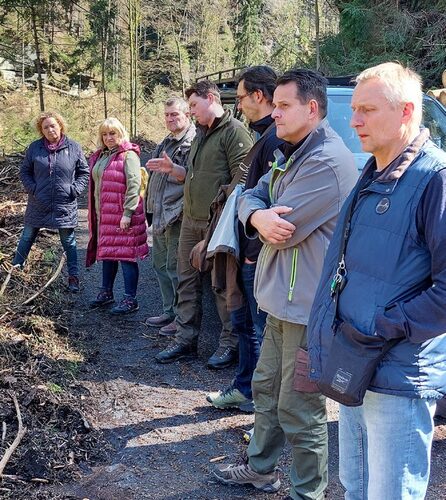
Moravec J.: Ecology Olympiad Thirty Years Old
In 2025, the Ecology Olympiad has celebrated its 30th anniversary. Over the years, it has come a long way from a local event to a respected national competition. Two issues remain unchanged, distinguishing it from probably all other high school Olympiads – it is a team competition (involving teams of three students) and at the same time, a competition with a strong emphasis on practical skills. From the very beginning, the Ecology Olympiad has been closely linked to the Czech Union for Nature Conservation (CUNC), important NGO dealing with nature and landscape heritage across the country. The competition is based on regional rounds, the winners of which then advance to the national round. These are usually multi-day events consisting of a test, nature component determination task, a practical task followed by a “defence” of the results achieved before a professional jury, and thematic non-competitive activities (lectures, excursions, etc.). The theme of the 30th edition was water. Therefore, the practical tasks in the regional rounds often focused on water retention in the landscape, the quality of water elements, or the water regime of a particular area in general. A total of 484 competitors participated in the Olympiad in 2025. The national round took place in the town of Vlašim (Central Bohemia) on June 5-7, 2025. The winner of the 30th annual Ecology Olympics was a team from the Gymnasium and Vocational School of Pedagogy Liberec, consisting of Eliška Krausová, Jan Činčera, and Jan Beránek. The topics are set several years in advance. Thus, the 31st edition of the competition will focus on climate change mitigation and renewable energy sources, the 32nd edition on invasive alien species, the 33rd edition on forests, and the 34th edition on environmental chemicalization.
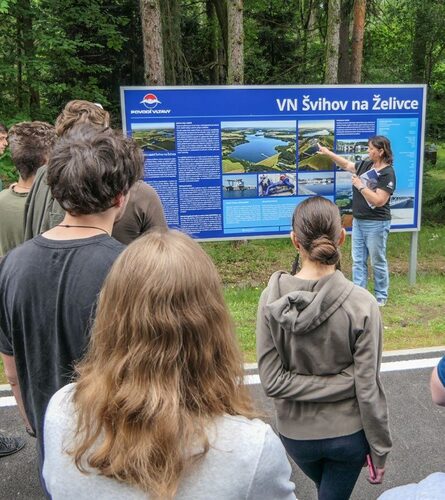
Šoltysová L.: The Český ráj/Bohemian Paradise among the Most Visited Places in the Czech Republic
It is a well-known fact that the Český ráj/Bohemian Paradise region is one of the most popular tourist destinations in the Czech Republic. The wildness and picturesqueness of the landscape have attracted pilgrims, romantics, and artists since time immemorial. The answer to the question of why Český ráj/Bohemian Paradise is one of the most visited places in the Czech Republic can be found not only in its distinctive morphology, but also in the landscape modifications carried out by humans since the beginning of the 17th century. The Český ráj/Bohemian Paradise´s landscape enchanted Albrecht von Wallenstein (1583–1634). His Italian architects had created the first early Baroque composition in the landscape around the town of Jičín, connecting the residence with farmyards with linear plantings of lime trees. Wallenstein’s targeted landscaping continued by architect Jan Baptista Mathey, who designed sacred buildings connected by sightlines and paths on the southern edge of Český ráj/Bohemian Paradise for Count Franz Joseph Schlik (1656–1740). In the 19th century, the western and northern parts of Český ráj/Bohemian Paradise were significantly influenced by the House of Rohan, who built a country residence in Sychrov. The central part of Český ráj/Bohemian Paradise, dominated by Hrubá Skála Castle and Trosky Castle, began to be developed by the Aehrenthal family in 1821. During this period, most of the churches were restored and rebuilt, chapels were built on the volcanic peaks – the dominant features of Ćeský ráj/Bohemian Paradise – and some even had Stations of the Cross added. The interests of public administration, the business sector, and non-governmental non-profit organizations intertwine in Český ráj/Bohemian Paradise. Systematic communication and cooperation using the Concept and the current Management Plan are prerequisites for preserving the region´s natural values. An example of good practice is saving the Sedmihory wetlands, where the excellent communication between the non-profit organization, namely Bukovina Czech Union for Nature Conservation Local Chapter and dozens of landowners and the Nature Conservation Agency of the Czech Republic, including interpretation, led to the implementation of a large and successful ecosystem restoration project.
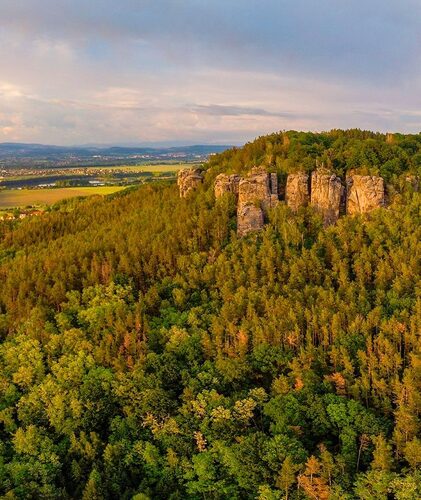
Jehlička J., Mácová K., Melichar J., Farkač B., Škopková H. & Hanson E. J.: Public Perception of Traditional Forest Management
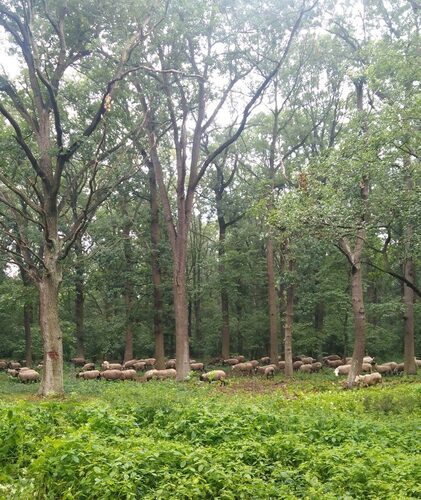
Traditional approaches in forest management, e.g. coppicing (pollarding) or forest grazing, have been a common feature of the Central European landscape for centuries. In the Czech Republic, however, they have now been almost forgotten. Recently, the alternative, nature-friendly forestry management approaches have been reintroduced – to a limited extent and under specific conditions. While the ecological benefits of these interventions are well documented (which is why we are returning to them), their perception by the public remains poorly researched. The results of research on how people perceive forests are not uniform. In fact, many of them seem to contradict each other. This is because scientists study forests from various point of view and focus on different aspects of forest perception. A pilot survey was conducted online by the authors in the spring of 2025. A total of 142 students from various faculties of Charles University Prague took part in the survey. This will be followed by a survey focusing on the general population of the Czech Republic (the general public). The authors plan to publish the conclusions in 2026 in Ochrana přírody/Nature Conservation Journal as a follow-up article to this pilot study.
From the History of Nature Conservation
Zajíček P.: The First Making the Na Špičáku Cave a Show Cave 140 Years Ago
The Na Špičáku Cave is one of the most important natural and cultural monuments in Silesia. Several natural phenomena contributed to its creation and unique shaping. It has been accessible since time immemorial, as evidenced by hundreds of inscriptions, signatures, drawings and paintings on the walls. In 1885, it was officially open to the public for the first time, thus making it a show cave, although for one year only. Nevertheless, a tourist lodge with a dance floor was built there. A number of valuable documents have been preserved from this period. The caves were professionally explored and documented, and the first-floor plan map of the cave was elaborated. After 1885, the official tourist visits at the Na Špičáku Cave ended, but the tourist hut built near the cave continued in its operation. During World War II, the underground spaces beneath Mt. Velký Špičák became a hiding place, and just after the war, members of the Wehrwolf movement also hid there. The modern history of the caves begins in the 1950s. In 1954-1955 the caves were electrically illuminated. A tunnel was built from the outermost part to the new exit. Since the cave tour is on one level and there are no stairs inside the cave, the access route to the exit was modified in 1995 and the tour became wheelchair accessible. The Na Špičáku Cave has a total length of 430 metres with a height range of 10 metres. The visiting route is 220 metres long and the tour takes approx. 35 minutes. The underground spaces are an important wintering ground/hibernaculum for bats and therefore, the cave is closed to visitors in November and December.
Zajíček P.: The Na Pomezí Cave Became a Show Cave 75 Years Ago
The Na Pomezí Caves is the longest cave karst system in the Czech Republic formed in crystalline limestone. The first parts had been discovered in 1937 under circumstances that are not entirely clear. A substantial part of the cave system was then discovered during quarrying activities in 1949. A year later, some sections were modified, electrically lighted up, and made accessible for the public. Currently, the three largest caves – Na Pomezí, Liščí díra/Fox Hole, and Rasovna – form a continuous and interconnected cave system. Speleologically, the connection has only been verified between the Na Pomezí Cave and Liščí díra/Fox Hole Cave. The connection between the Rasovna Cave and Na Pomezí Cave is formed by an impassable system of fissures approximately 25 meters long. However, there is no doubt about the mutual connection between these caves. All of these caves are now important wintering grounds/hibernacula for bats. The Na Pomezí Cave has a total length of 1,320 meters with an elevation of 47 meters (including the Liščí díra/Fox Hole Cave). The cave is part of the Na Pomezí National Natural Monument, declared in 1965. In September 2024, the entire cave system was hit by extensive flooding. A substantial part of the cave was under water. Pumping, removing mud deposits and repairing electrical installations then took several months.
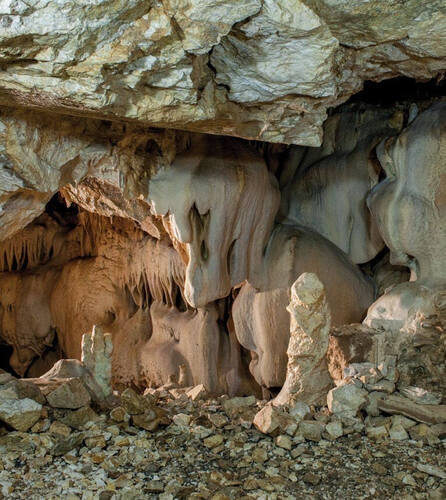
Zajíček P.: Zdeněk Burian was Born 120 Years Ago
120 years ago, the world-famous painter of prehistory and adventure, cartoonist, and illustrator Zdeněk Burian was born in Kopřivnice (northern Moravia). His work is associated with the lives of the Earth’s indigenous peoples and the lives of animals and humans in various prehistoric eras. He illustrated hundreds of popular and specialist books and magazines and created scientific reconstructions of the development of life on Earth. Zdeněk Burian’s comprehensive work went far beyond the scope of standard artistic profession. He spent the first years of his life in the town of Štramberk, where he often visited Kotouč Hill with the Šipka/Arrow Cave, where the skeletal remains of Neanderthal man had been found. He was also influenced by the art exhibitions he saw there. Based on photographs taken by travellers and explorers Enrique Stanko Vráza and Josef Kořenský, he drew and painted animals and inhabitants of world´s various parts. Burian’s role model was the famous artist Walter Paget. Ethnography and portraiture therefore became lifelong interests of the artist.

International Nature Conservation
Plesník J., Rolfová E. & Miko L.: IPBES Published Two Important Reports
Nature conservation is not and cannot be a scientific discipline, although it is sometimes considered to be. Traditionally, conservation biology has been. Nevertheless, both nature conservation and biodiversity conservation, management and sustainable use should be based on the proven evidence provided by science. The Intergovernmental Platform on Biodiversity and Ecosystem Services (IPBES) has been trying to do just that for more than a decade. In 2013, IPBES published a conceptual framework for further action. It emphasises the strong interdisciplinary nature of its assessments, with increasing involvement of economic and social sciences. Thus, in many cases, the authors of IPBES assessment reports do not analyse ecosystems but straight socio-economic systems. On 10-16 December, 2024, the 11th Session of the Plenary of IPBES was held in Windhoek, Namibia, and approved two more important assessments. The first assesses the interlinkages between declining water and food availability, deteriorating human health and ongoing climate change, all in the context of biological diversity. The second assessment report looks at the necessary transformative change, consisting, inter alia, of changes in worldviews and in the structures of human society towards real sustainability.
Hachmöller A., Sudau M., Lauterbach D. & Ruffer J.: Sustainability and Development of Natural Dry Grasslands in Brandenburg in the Framework of LIFE Projects
The Stiftung NaturSchutzFonds Brandenburg (Brandenburg Fund for Nature Conservation) is implementing two LIFE projects for the management of dry grasslands co-funded by the European Union. Within the LIFE project Sand Grasslands carried out in cooperation with the Brandenburg State Environmental Authority, measures for the conservation, development and restoration of calcareous grasslands on dry sands were implemented on an area of 77 hectares between July 2013 and June 2019. In addition to these measures, other natural habitat types listed in Annex I to the EU Habitats Directive, such as European dry heaths and dry sandy heaths with Calluma and Genistra (inland dunes, old and decalcified), have been stabilised or improved on about 151 hectares. These measures were carried out in 20 project sites in the Dahme-Heideseen Nature Park south of Berlin. The project´s budget was EUR 2.4 million (CZK 60 million). In the other LIFE project, entitled Continental Dry Grasslands, the Brandenburg Fund for Nature Conservation, together with the Botanical Garden of the University of Potsdam and the Naturschutzbund Deutschland (German Association for Nature Conservation and Biodiversity, NABU), is implementing measures to protect and develop dry grasslands between 2019 and 2026. Dry habitats associated with dry grasslands, such as the above European dry heaths, inland dunes with open Carynephorus and Agrostris grasslands and dry sandy heaths with Calluma and Genistra, will also benefit from the project measures. The project also aims to extend the distribution range of the Sand jurinea (Jurinea cyanoides) in Brandenburg to five hectares. In total, it covers 29 sub-areas throughout the province and has a budget of EUR 6.3 million (CZK 157 million). The authors´ experience including methods applied there is described in the article.
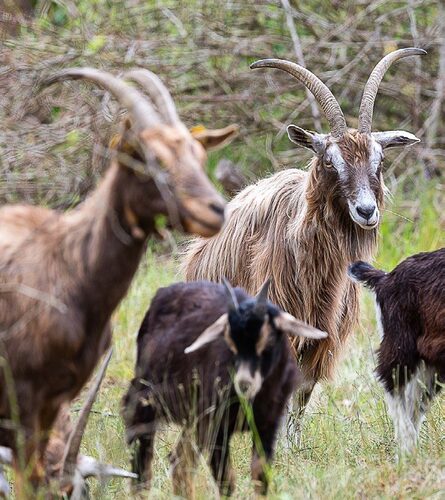
Härtel H.: European Transboundary Protected Areas: Háldi (Norway/Finland)
The Háldi Transboundary Area is part of the network of European transboundary parks certified by the EUROPARC Federation (since 2021). The park covers a total area of 3,099 km², comprising the Käsivarsi Wilderness Area in Finland and Reisa National Park along with the Ráisduottarháldi Protected Landscape in Norway. The transboundary conservation efforts aim at preserving and maintaining the area’s unique natural and cultural values. There are three main landscape types in the Háldi Transboundary Area: (i) mountains (fells), with the highest point, Háldi, at 1,361 meters above sea level on the Norwegian side, (ii) plateaus, and (iii) river valleys, including the deep canyon of the Reisaelva River. The area is part of the Sámi homeland and is closely tied to extensive reindeer husbandry.
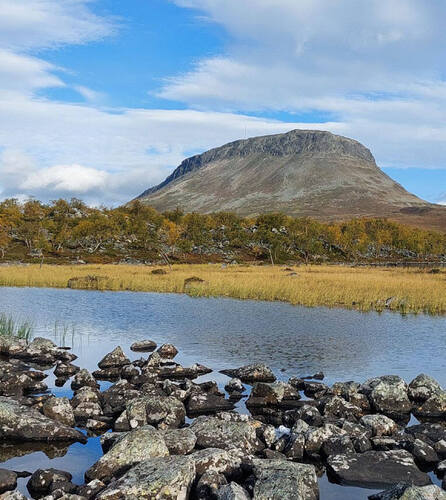
Plesník J.: The IUCN Red List Also Assesses Threats to Ecosystems on a Global Scale
Red Lists of globally threatened species have been regularly issued by the International Union for Conservation of Nature (IUCN) since the early 1960s. But the idea of presenting threatened components of biological diversity has long been about more than just species and other taxa. At the IUCN, the multifaceted issue of ecosystems is dealt with mainly by the Commission on Ecosystem Management (CEM). Delineating what an ecosystem is and establishing benchmarks for their assessment and classification is extremely complex. The first draft of the criteria was published after three years of intensive discussions. Five criteria were proposed for determining the degree of threat to ecosystems, namely: (i) Reduction in geographical distribution of the ecosystem (quantitative loss of the ecosystem); (ii) Restricted geographical distribution of the ecosystem; (iii) Degradation of the non-living (abiotic) component in the ecosystem as environmental degradation; (iv) Disruption in biotic processes and interactions reflecting deterioration of the living component of the ecosystem; and (iv) Quantitative risk analysis, i.e. analysis of the possible collapse of the ecosystem. In 2024, the IUCN published the first ever Red List of Threatened Ecosystems. For this purpose, experts have chosen specific but relatively well-defined ecosystems that have been known for some time to be in a generally unfavourable state - mangroves. We will therefore deal with this topic in more detail in a future issue of our journal.
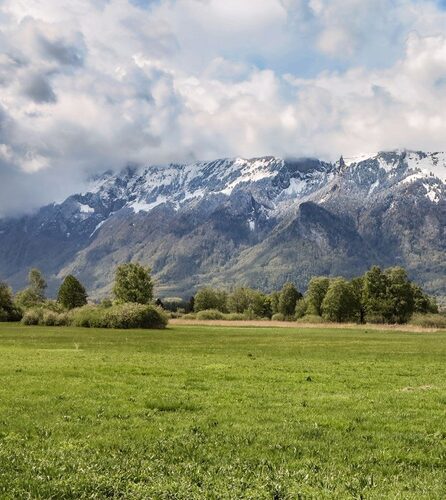
Plesník J.: IUCN Published First Global Red List of Ecosystems – Mangroves
The International Union for Conservation of Nature (IUCN) recently published the first ever global Red List of Ecosystems. Experts chose specific ecosystems for the list that have been for some time known to be in poor condition overall – mangroves. To undertake a comprehensive global assessment of mangrove ecosystems, it had been essential to establish a manageable number of assessment units that are both meaningful and reflective of the variation in the geographical, abiotic and biotic diversity associated with mangrove ecosystems around the world which were then classified using criteria for classifying ecosystems into Red List categories. Thus, experts clustered the world’s mangrove forests into 36 biogeographical units. The world’s mangrove ecosystems cover currently about 150,000 km2 along mainly tropical, sub-tropical and some warm temperate coasts of the world. About 15% of the world’s coastlines are covered by mangroves. In the past, this unique type of ecosystem was mainly degraded by wood exploitation and the acquisition of new land for agriculture, including shrimp farming. Later, it was the establishment of oil palm plantations and rice fields as main driver of decline in mangroves. The construction of dams altering freshwater and sediment fluxes also contributes to their loss. At present, they are also being affected by climate change, including sea-level rise and an increased frequency and severity of cyclonic storms. The IUCN analysis has confirmed that more than half of the mangroves remaining on Earth have already been at risk of collapse. Mangrove forests are one of the most productive types of ecosystems on Earth, where 90% of all marine organisms spend at least part of their lives. In addition, from an anthropogenic point of view they support the lives of 2.4 billion people living within 100 km of the coast through ecosystem services they provide.
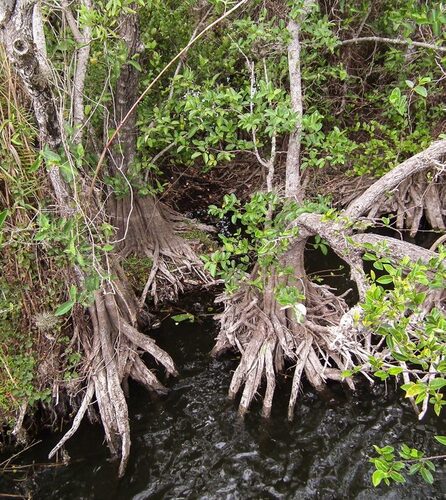
Plesník J. & Hanel L.: Coral Reefs in Various Parts of the World Are Again Experiencing Global Bleaching Event
Coral bleaching, i.e. the noticeable transformation of originally yellow-brown corals into pale, transparent organisms, has been known for more than a century. When corals are stressed by changes in conditions such as temperature, light, or nutrients, they expel the symbiotic algae living in their tissues and providing them with nutrients, oxygen an vibrant colours, thus causing corals to turn completely white. The first extensive study of coral bleaching, caused by increased water temperatures in large sections of the Great Barrier Reef, dates back to 1929. Since then, the process has been recorded regularly in various parts of the world. Between 1998 and 2017, bleaching was reported from 3,351 sites in 81 countries. The first global coral bleaching event in 1998 affected reefs throughout the tropical and subtropical climate zones and claimed the lives of 16% of all corals living on Earth at the time, with as many as half of those in the Indian Ocean perishing. What triggers local coral bleaching? First, and foremost, changes in seawater temperature, high solar radiation intensity, heavy metals (especially copper and cadmium), changes in water salinity, pesticide pollution, excessive nutrient concentrations (eutrophication), fishing, cyanides, ocean acidification, and pathogenic organisms such as bacteria. Local meteorological conditions that warm the sea surface, such as clear skies, high humidity, and high air temperatures, also contribute to coral bleaching. El Niño causes global coral bleaching events by triggering marine heatwaves, which lead to elevated sea surface temperatures that stress corals starving to death. A serious problem remains the fact that corals live in symbiosis with algae, usually in habitats where the water temperature is only 1–2 °C lower than the temperature at which bleaching begins. Coral bleaching is more intense the longer the coral reef is exposed to higher temperatures. However, if corals that have resisted bleaching are able to produce new larvae, the seawater is of good quality, and suitable substrate is available, even severely damaged reefs can recover on.
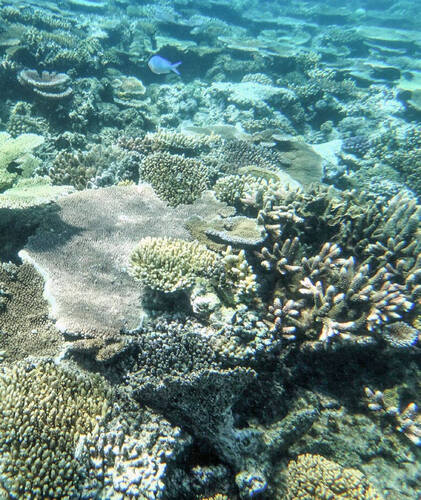
Holer T.: Cave Salamanders of Sardinia
Sardinia is one of the major European biodiversity hotspots and a part of the global one. A number of endemic plant and animal species can be found there, among which the cave salamanders of the genus Speleomantes stand out for their uniqueness. Thanks to the diverse geology of the island and the isolation of individual mountain ranges interlinked with karst caves, a total of five species of cave salamanders occur there, which, together with three other species in mainland Italy, are among the only European representatives of the family of the lungless salamanders (Plethodontidae). As is evident from the name of this otherwise most numerous family of tailed amphibians, cave salamanders do not have lungs and breathe only through their skin. In addition, they reproduce by direct development without an aquatic larval stage and therefore need specific environmental conditions for their life, especially high air humidity and relatively low temperature. It is therefore not surprising that cave salamanders are currently threatened, mainly by climate change affecting the microclimate in caves, but also on the surface in their surroundings, where salamanders under suitable conditions forage for food.
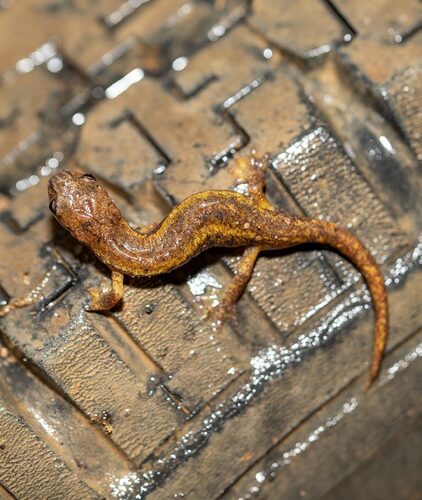
■
- - - -