

Nature Conservation 2026 — 20. 8. 2026 — Nature and Landscape Management — Print article in pdf
How to Ensure the Maintenance of Populations of Species Associated with Old-growth Trees at the Sout
The area above the confluence of the Morava River and the Dyje/Thaya River (South Moravia) is unique in many respects. By Central European (indeed European) standards, it is an area exceptionally rich in biodiversity. The species diversity stands out all the more when one considers that the area in question is, in terms of habitats, relatively uniform compared with other national biodiversity hotspots such as the Pálava Hills, Podyjí/Thaya River Basin, or the Český kras/Bohemian Karst.
In this article, the authors focus on a specific group of organisms – invertebrates associated with wood. These include saproxylic species (dependent on dead wood, including mycophagous species) and xylophagous species (associated with living trees). For practical reasons, both groups are hereafter referred to collectively as xylobiont species. This is a highly species-rich group, with knowledge levels varying considerably among taxa. Beetles are by far the best studied, which is why we focus primarily on them. They include species with such a wide range of habitat selection and life strategies that they effectively cover the needs of representatives of other taxa as well (Hymenoptera, Araneae, Diptera, and many others).
Moreover, what most endangered xylobiont insect species have in common, is a preference for wood that is fully or at least partially sun-exposed. The microclimate within the wood plays an important role in larval development. The presence or absence of light largely determines whether trees are suitable for xylobiont species or not. Even an abundant supply of dead or dying wood will remain unused by many rare species if there is a lack of sunlight.
Open-canopy groves/forests are among the most threatened habitats in Europe. Therefore, plant, insect, and other wild animal species associated with this habitat type are likewise under pressure. In the Morava–Dyje/Thaya Rivers confluence area (South Moravia), the extent of open-canopy forests declined from more than 3,000 ha to less than 500 ha between 1938 and 2009 (Miklín & Čížek 2014). Even in the 1930s, their proportion was undoubtedly significantly lower compared with previous centuries.
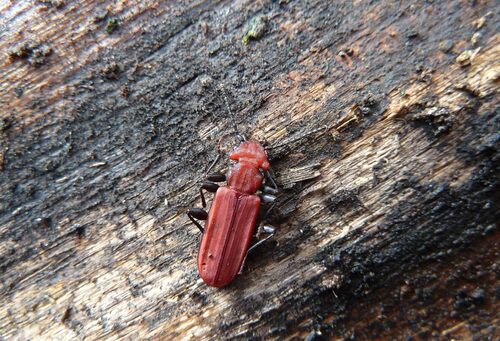
Figure 2. The flattened bodies of both larvae and adults of the Cinnabar flat bark beetle (Cucujus cinnaberinus) facilitate movement beneath the bark of dead branches and trunks of broadleaved deciduous trees. © Pavel Dedek
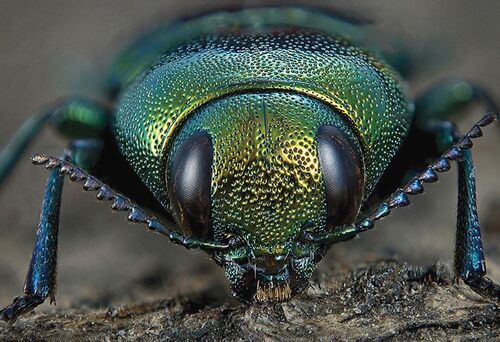
Figure 3. One of the rarest insect inhabitants of old trees is the Oak jewel beetle (Eurythyrea quercus). The Soutok/Confluence Protected Landscape Area supports by far the largest population of this species, which is threatened with extinction.
© Jiří Klváček
A brief history of forest management
Most of the land in the Morava–Dyje/Thaya Rivers confluence area had been owned by the House of Liechtenstein. At that time, there were no sharp boundaries between open land and forest as there are today. Meadows and pastures without trees gradually transitioned through very open, park-like wood pastures into more closed forest stands.
With the modernisation of forestry machinery, forest managers were able to focus much more on cultivating large, branch-free trees with straight trunks, suitable not only for beams, sleepers and boards but also for veneer production. To prevent excessive crown/canopy branching, trees were maintained in close spacing through silvicultural practices. As a result, forests became much shadier than they had been in previous centuries.
To reduce the costs of timber harvesting and subsequent forest management, extensive clear-cuts were established there. In many places, uniform blocks of even-aged forest were established, with stand density prescribed according to management tables.
In recent decades, abiotic conditions have also changed profoundly, resulting in a deterioration in forest health and changes in the species composition of natural regeneration. Beneath today’s centuries-old stands, natural regeneration of oak (Quercus spp.) is absent, with the Field maple (Acer campestre) now dominating the understorey regeneration.
The initial conditions for the active conservation of forest communities are highly complex due to changes in forest management and altered hydrological conditions. Nor are matters helped by the relatively high proportion of older stands or by rapidly spreading diseases that are devastating certain tree species on a large scale. Another factor/driver to consider is the shift in forest tree communities driven by climate change. In many cases, the conservation of diverse forest communities and the multitude of species associated with them is therefore at a disadvantage.
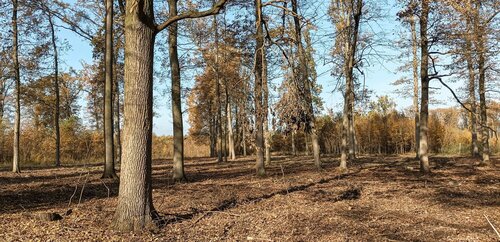
Figure 4. Restoration in biologically valuable stands is carried out through their gradual opening. However, to allow light to reach the understorey, dense regrowth of the Field maple must be removed. © Vladan Riedl
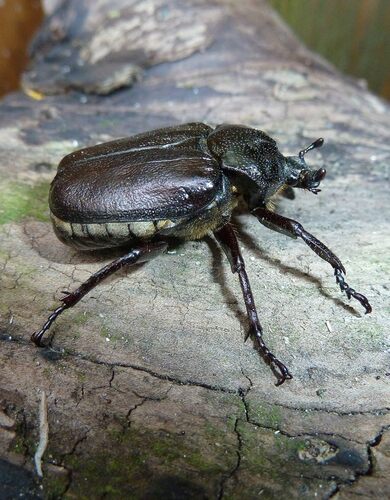
Figure 5. One of the many rare inhabitants of hole in sunlit broadleaved deciduous trees is the Hermit beetle (Osmoderma eremita). © Pavel Dedek
Reserved trees
One of the measures implemented to mitigate negative impacts on species associated with sun-exposed trunks is the use of reserved trees[1] on clear-cuts. Since 2007, reserved trees have been left on regenerated areas at a density of 100 trees per 10 ha. Under the Forest Management Plan for 2020–2029, and on the basis of an agreement between the Nature Conservation Agency of the Czech Republic (NCA CR) and Forests of the Czech Republic, State Enterprise (FCR), the number of reserved trees was increased to 20-30 trees per hectare. Over the course of 18 years, more than 12,000 trees have been reserved in the alluvial forests.
As a result of past forest management practices, however, it is often difficult to find trees with sufficiently developed crowns to cope with the stress of sudden exposure to sunlight. Thus, their lifespan frequently ends sooner than it would have if they had remained within the adjacent stand. Over time, the primary crown often dies back and is replaced by the growth of a secondary crown. Elms (Ulmus spp.) cope particularly poorly with this stress, whereas oaks and lime trees, in North America known as lindens (Tillia spp.), are much better able to withstand it.
Therefore, priority is given to retaining trees with low-set crowns, i.e. essentially trees growing along the edges of stand groups in dense forests. Where edge trees are absent from harvested areas, selected trees are arranged in larger or smaller groups so that they can provide at least partial shade for one another.
As reserved trees gradually die, they become heavily colonised by species favouring sun-exposed trunks and that simultaneously contributing to the accelerated decline of the trees themselves. Although the slower growth of planted trees beneath reserved trees and the fall of reserved trees into young stands may be viewed negatively from a forestry perspective, these small-scale disturbances increase stand heterogeneity.
Releasing trees along stand edges
Solitary trees in meadows are either very young or nearing the end of their life span. Only along the edges of stands adjoining meadows can we still find older, vigorous trees relatively well adapted to sun exposure. The open space on one side results in an asymmetrical crown structure, with branches extending out over the meadow.
As a consequence, mowing machinery cannot reach the forest edge, and shrubs and self-seeding woody plants spread beneath the trees, shading the trunks and gradually expanding the forest at the expense of the meadows. By clearing vegetation around edge trees, it is possible to quickly establish a generation of solitary trees that are adapted to sun exposure, vigorous, and structurally valuable.
Light conditions within forest stands
As described above, the recurring cycle of managed forest with dense regeneration, maturing stands, and mature forest provides no space for heliophilous organisms. Given the current age structure of the forests in the Soutok/Morava-Dyje/Thaya Rivers Confluence, conventional forest management would in many cases result in the replacement of the existing centuries-old oak stands with new clear-cuts.
For this reason, a framework agreement on forest management was concluded between FCR and NCA CR for the EU Natura 2000 network sites Dyje/Thaya Floodplain and the Soutok/Morava and Dyje/Thaya Rivers Confluence–Podluží Region, establishing criteria for the regeneration of stands with an oak proportion exceeding 50%. Under this agreement, regeneration is carried out over 60 years, during which four successive harvesting interventions are conducted. The first intervention should remove approximately 30-40% of the trees.
This should result in a more substantial increase in light availability, to which viable trees are expected to respond not only through increased radial growth, but also through expansion of their crowns. An increase in subordinate tree species is expected in the newly opened areas. Following the first intervention, the greatest risk is considered to be the trees’ response to sudden release. There also is a risk of shock from increased sun exposure, particularly in older individuals, especially when moisture is insufficient. For this reason, interventions should be designed so that both more- and less-open sections remain within the stand.
In the first phase, the regeneration approach was applied primarily to the oldest stands, which, in many cases, are already naturally more open and possess a well-developed lower layer, dominated in particular by field maples. Thus, in many cases, the proportion of removed trees is lower than 40%. Experience to date shows that the first interventions primarily target ash (Fraxinus spp.) trees that have already exceeded the optimal felling age, with subordinate tree species targeted subsequently. At the same time, oaks are harvested only at later stages.
Economic considerations are also taken into account during selection, meaning that sparsely branched oaks with straight, high-quality stems are preferentially felled before trees already exhibiting valuable biological features, e.g. large, low-set crowns, cavities, exposed wood patches, and emergence holes. Where younger oaks are present within the stand, they are retained to diversify the age structure. By the end of 2023, the first phase of regeneration had been completed on approximately 70 ha, representing one-tenth of the area planned for canopy opening over the decade. The average age of the opened stands is 140 years.
The first phase of regeneration should be followed after 15 years by a second phase with an intensity of 30%, and subsequently by a third phase with an intensity of 20%. During all these interventions, the lower storey should also be removed to give the parent oak stand an opportunity to regenerate. Nevertheless, at present, oak natural regeneration is more wishful thinking than reality, mainly because of the disrupted hydrological regime throughout the area, which favours the expansion of the Field maple. Therefore, even now, it is possible to establish advanced regeneration elements with artificial oak planting in areas with substantially reduced canopy cover following removal of the lower storey.
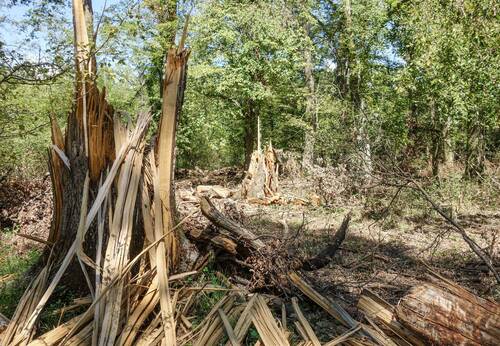
Figure 6. A wide range of wild animals depend on habitats created by natural processes. For this reason, snapped and windthrown trees are not removed in Lanžhotské pralesy/Lanžhot Primary Forests National Nature Reserve. © Vladan Riedl
Old trees surrounded by young stands
Measures aimed at increasing light availability within forest stands also include the release of old trees growing within stands. Between 2006 and 2015, a team from the Institute of Entomology of the Academy of Sciences of the Czech Republic identified nearly 12,000 such trees in the alluvial forests of the two Natura 2000 sites. It assessed both their health condition and biological potential.[2] Among the veteran trees, oaks were the most common (64%), followed by ash (9.8%), willow (9.2%), and elm (5.6%). More than 54% were assessed as almost or completely healthy, 22% showed signs of dieback, and nearly 24% were dying or already dead.
During canopy-opening interventions, particular attention has been paid to releasing heavily branched trees that are at least one generation older than the surrounding stand. The pace of canopy opening, however, remains relatively slow, and by the time all deserving trees are reached, it would already be too late. Therefore, it is necessary to actively release the old veterans even in stands where no intervention is currently planned. The removal of younger trees surrounding an oak both increases its competitive ability and allows much-needed light to reach the tree.
Trees suitable for release must be carefully selected to avoid accelerating their decline following intervention. Priority should be given to the release of vigorous vital trees.
Moreover, the key to developing trees with large crowns can be found in younger stands, which need to be managed accordingly. The ability of young trees to respond to interventions differs fundamentally from that of old individuals, which can no longer flexibly develop their root systems. A major challenge for both foresters and nature conservationists will therefore be to prepare young trees for their future role as carriers of biodiversity through targeted tending interventions in stands younger than 80 years.
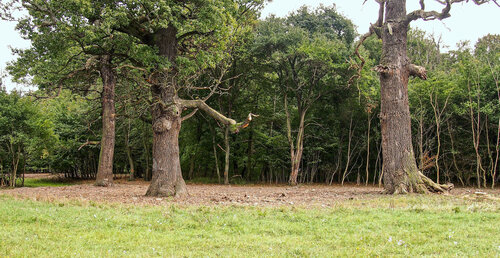
Figure 7. Trees newly exposed on the edges of stands are adapted to full sunlight. Many of them were formerly solitary trees in meadows before being engulfed by forest. © Vladan Riedl
Solitary trees in meadows
The trees, living witnesses of times gone by, support a substantial proportion of xylobiont diversity. A single massive ancient oak may host populations of dozens of threatened species, ranging from lichens and fungi to hole-nesting birds and roosting bats. The decline in groundwater levels resulting from water management interventions over the last century has caused most of these trees to deteriorate. Old trees have been unable to adapt to the new conditions, and their root systems often no longer reach the groundwater. As a result, many of them are dying or declining rapidly. Yet a fully sun-exposed ancient oak that has been still alive is irreplaceable in the short term.
Thanks to the wide range of microhabitats they provide, these trees support species with exceptionally diverse life strategies. Such microhabitats include holes in different parts of the trunk and larger branches, fractures and broken stubs, dead bark-free sections of trunks and branches, as well as still-living parts of the trunk and crown.
The loss of each remaining ancient oak in meadows or along levees already poses a real threat to many more specialised species. As the density of still at least partially living solitary trees declines, the distance that individuals of threatened species must disperse in search of suitable trees increases. Populations may collapse if the number of viable solitary trees falls below a certain threshold – determined individually for each species and influenced, among other factors/drivers, by dispersal ability. After many years during which populations appeared more or less stable, albeit small, a very rapid collapse may occur. Therefore, one of the key measures must also be the management of ageing trees. Their life span can be prolonged through appropriate arboricultural interventions.
The decline of existing solitary trees in meadows must be compensated for by planting new ones. At the same time, it is necessary to take into account the long gap between the death of the last solitary ancient oak and the moment when newly planted trees begin to attract insects associated primarily with senescent stages of trees. Thus, planting oaks in meadows is one of the essential measures, but insufficient on its own if the collapse of the most demanding saproxylic and xylophagous insect species populations is to be prevented.
Areas shaped by natural succession
Most of the newly designated Soutok(Confluence Protected Landscape Area (PLA) is covered by forest stands, providing ample scope for applying different management approaches there. Part of the forests is intended to remain under a non-intervention regime, i.e. left to natural development/succession, primarily within the existing Lanžhotské pralesy/Lanžhot Primeval Forests National Nature Reserve covering almost 440 ha.
Forest stands left without active management are attractive to saproxylic insects primarily because of the abundance of dead wood in various decomposition stages. Not all rare species require sun exposure, and non-intervention management particularly benefits xylobionts that are indifferent to light conditions or even prefer shade.
One beetle species particularly well adapted to exploiting dead wood resources in partial shade is the Rosalia longicorn, also known as the Alpine longhorn beetle (Rosalia alpina). The species, more commonly associated with beech forests, feeds in the Soutok/Confluence area on a much wider range of tree species, with an apparent preference for maples (Acer spp.), including the shade-tolerant field maples.
In non-intervention stands, large-scale natural regeneration of oak cannot be expected, and therefore, the species composition of forests left to spontaneous development will gradually change. The significantly lower future proportion of oak is, however, offset by other benefits for xylobionts and for other groups of organisms associated with old-growth forest habitats.
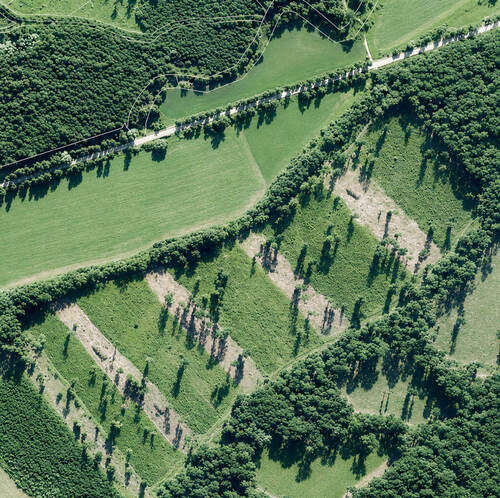
Figure 8. Reserved trees in clearings are one way of maintaining the habitat continuity for species associated with sun-exposed trunks. © www.cuzk.cz.
Lednice Castle Park
Parks are one specific habitat that has gained exceptional importance for xylobionts following changes in forest management. Although entirely artificial and intensively shaped by humans to match the romantic ideals of their creators, they now represent local/sub-national biodiversity hotspots for species associated with sun-exposed senescent trees.
In this respect, the Lednice Castle Park has a particularly prominent privileged position. The proximity of source populations in the surrounding forest stands, together with the high proportion of mature, old and sun-exposed oaks, has made it a unique refuge for “refugees” from the increasingly dense surrounding forests.
In parks, and more generally in urban greenery/green spaces, the numerous inhabitants of trees are threatened not by changes in management practices, but by entirely legitimate requirements concerning tree safety management. In the Lednice Castle Park, representatives of the NCA CR, the National Heritage Institute, and the park administration have found a functional compromise between visitor safety requirements and the need to maintain habitat continuity for rare invertebrate species.
The solution to this seemingly insoluble problem is brought in a differentiated approach to trees assessed as potentially hazardous. The trees are professionally checked and evaluated and, depending on the degree of risk posed by the possible fall of the entire tree or its parts, measures are adopted ranging from relatively “soft” arboricultural interventions, e.g. pruning dangerous branches within the crown, to pollarding the entire crown to create standing trunks, and only in exceptional cases the felling of the whole tree with the woody material left in place for gradual decay and decomposition.
Although the massive tree trunks were initially received with some hesitation, years of practical experience with this approach have led to public acceptance, and they have now become an almost inseparable part of the local castle park’s genius loci. ■
- - - -
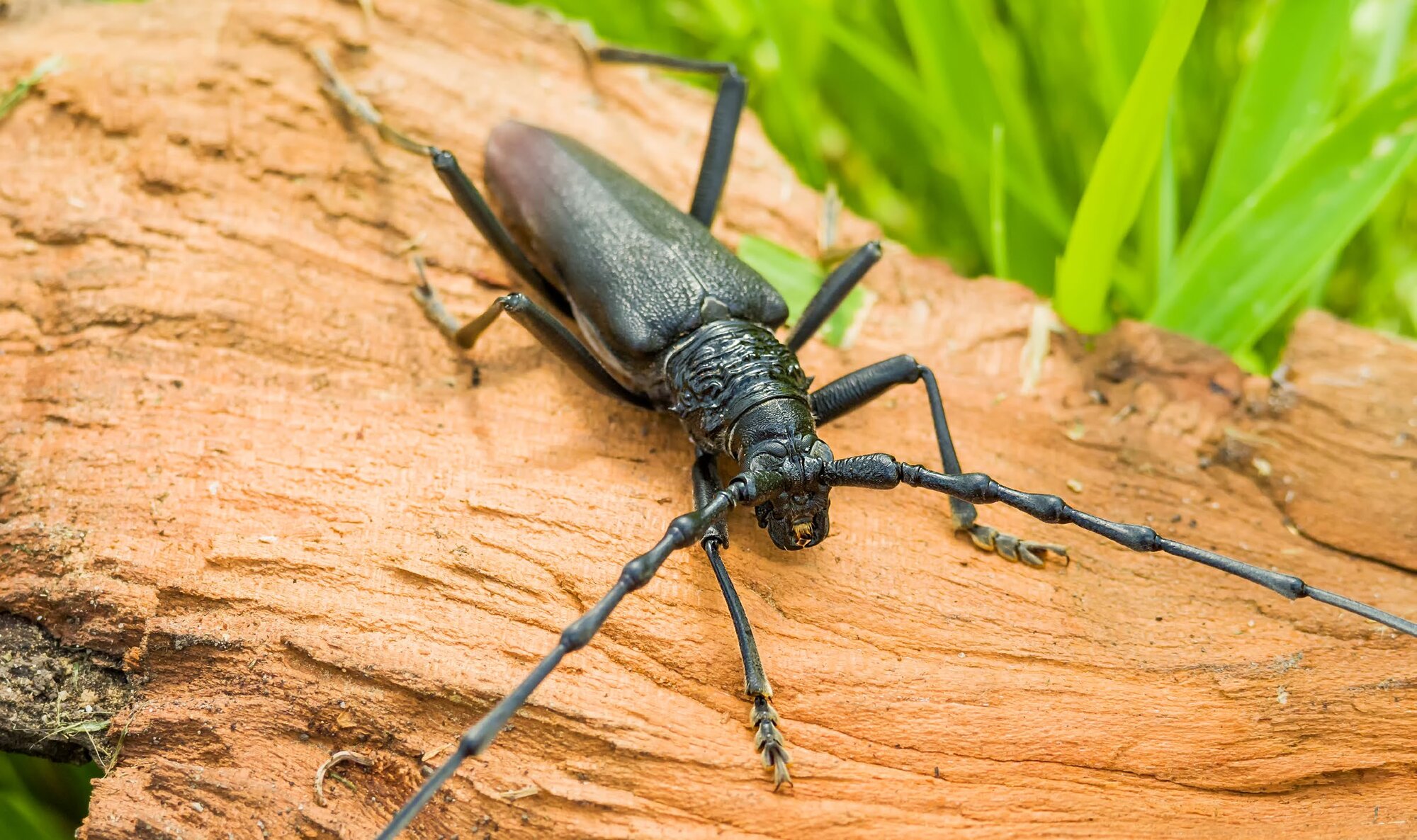
Cover photo: The elegant Great capricorn beetle (Cerambyx cerdo) is one of the insect symbols of Soutok/Confluence Protected Landscape Area. © Jan Miklín
- - - -
[1] reserved tree: a tree intentionally left standing on a clear-cut after harvesting until it undergoes natural physical decay.
[2] Miklín, J., Hauck, D., Konvička, O. & Čížek, L. (2017): Veteran trees and saproxylic insects in the floodplains of lower Morava and Dyje rivers, Czech Republic. Journal of Maps, 13(2), 291–299
- - - -
Literatura:
- Miklín, J., Hauck, D., Konvička, O. & Čížek, L. (2017): Veteran trees and saproxylic insects in the floodplains of lower Morava and Dyje rivers, Czech Republic. Journal of Maps, 13(2), 291-299
- Miklín, J. & Čížek, L., 2014. Erasing a European biodiversity hot-spot: Open woodlands, veteran trees and mature forests succumb to forestry intensification, succession, and logging in a UNESCO Biosphere Reserve. Journal for Nature Conservation, 22, 35-41.
- Šipoš, J., Hédl, R., Hula, V. et al. Patterns of functional diversity of two trophic groups after canopy thinning in an abandoned coppice. Folia Geobot 52, 45–58 (2017). https://doi.org/10.1007/s12224-017-9282-3