

Nature Conservation 2026 — 20. 8. 2026 — Interview — Print article in pdf
About the Soutok with Pavel Pešout
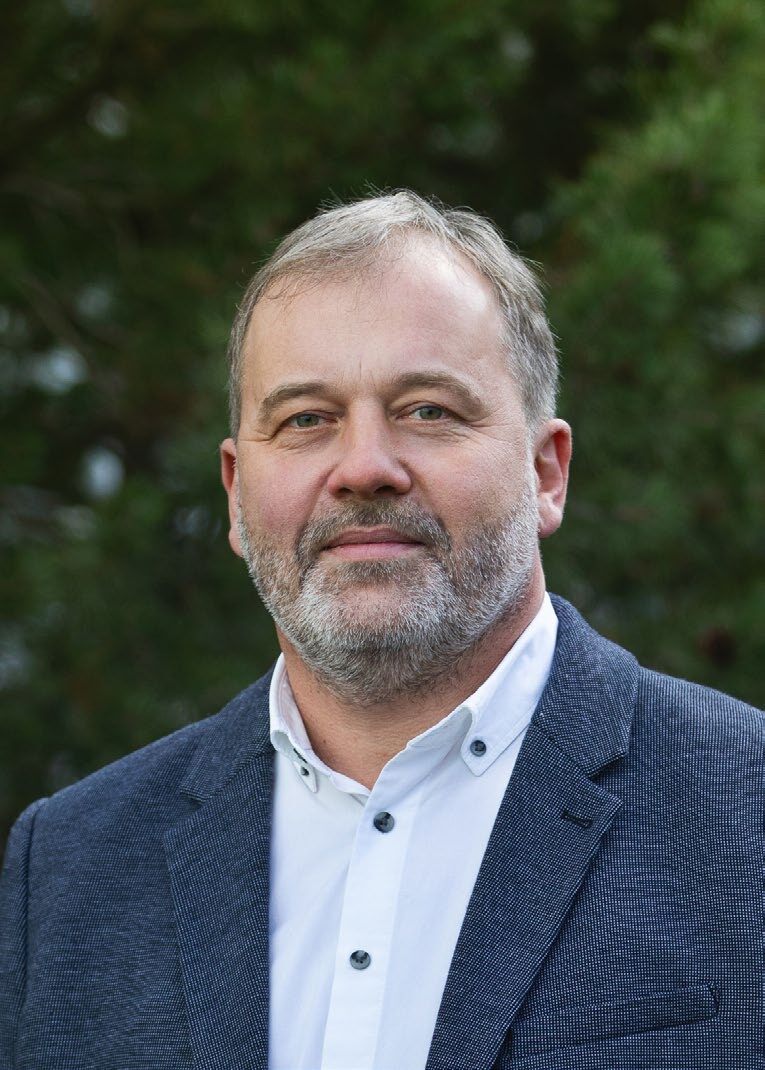
The designation of a protected area at the confluence of the Morava and Dyje/Thaya rivers took nearly fifty years to discuss. Why did it last so long?
During communism, most of the area was part of an inaccessible border zone. Moreover, as of the 1950s, the construction of “great socialist projects” was considered, for which nature conservation would have been an obstacle. Unfortunately, some of them were implemented. The strongest negative impact on the Dolnomoravské luhy/Lower Morava River Floodplains are caused by water management adjustments, involving straightening, deepening, and embanking of the Dyje/Thaya and Morava rivers. And the Nové Mlýny waterworks put an end to periodic flooding of the floodplain forest. That is fortunately definitely an issue of the past – inter alia, for the doubtful economic benefit of the megalomaniacal plan to connect the Dunaj/Danube, Odra/Oder and Labe/Elbe rivers, including harbours and related infrastructure, which would also have meant direct land deprivation.
Another reason why the unique Dolnomoravské luhy/Lower Morava River Floodplains were not designated a protected area was the perceived conflict with hunting interests and differing views of conservationists and foresters on land management. The last attempt at area conservation 15 years ago was thwarted by spreading false information about the negative impact of a Protected Landscape Area on the lives of the local people. For example, rumours went round that access to the forests would be totally prohibited. Even during the process of PLA designation, various false claims were spread, for example that designation would jeopardise the drinking water supply for 70,000 residents.
When did i things start to change, and what was the impulse in your opinion?
Over five years ago, several important events took place. There were protests of local inhabitants against intensive clear-cutting in floodplain forests, which culminated in a petition to save the so-called “Moravian Amazon”. Gradually, also national scientific societies followed. Even the European Commission pointed to the inadequate protection of the area, which is part of the European Union´s Natura 2000 network.
In 2019, the Nature Conservation Agency of the Czech Republic (NCA CR) further decided to publish all information, documents, and decisions concerning the protection of the area at the confluence of the Morava and Dyje/Thaya rivers on a special website. In that time also the dispute between conservationists and foresters culminated with the rejection of forest management plans. That conflict was later solved, and an agreement was reached on management practices for the conservation of Specially Protected Species.
All previous events, often commented on in the public media, had an impact on politics as well, and several political parties included protection of this unique area in their election programmes. Subsequently, the protection of the “Moravian Amazon” was incorporated into the Government of the Czech Republic’s policy statement.
As the Minister’s representative for Protected Landscape Area (PLA) designation, which strategy did you choose in the negotiations?
In my opinion, the most crucial decision had been to discuss the proposal in detail with representatives of municipalities, farmers, associations, and other stakeholders even before the official designation process started. We had about three hundred meetings and met with everyone interested. Their goal was to include into the PLA´s delineation and specific protection measures all possible comments, so that the final proposal would reflect the broadest possible consensus within the region. I think such an approach contributed to the very small number of objections: only five to the zonation, and just nine to the delineation and specific protection measures. Many other ones were identical and sent on behalf of the same lawyer, and their contents and form of submission indicated an attempt at obstruction and making the designation process difficult and troubled.
During the negotiations, many questions and doubts arose. We were able to explain all of them and also to record and publish them with responses on websites. The web included an interactive map of the area, where each landowner, farmer, and stakeholder could gather detailed information about e.g. PLA boundaries and proposed zonation.
Will the change affect the residents of the new PLA in any way?
The Soutok/Confluence PLA has been delineated in a way excluding human settlements. Nevertheless, most of the area is situated in a flood zone, so the designation does not restrict building activities. This eliminates the most common source of disputes and debates in the PLA. The PLA regulations do not restrict leisure and recreation activities in the landscape, nor do they restrict access, collection of wild berries, etc. Restrictions may apply to forestry and agricultural activities on meadows and in forests in stricter protection zones. In such a case, however, the owner is entitled to be compensated. Where possible, we have tried to satisfy farmers, we have made agreements on management issues with the largest enterprise in the area, Forest of the Czech Republic, State Enterprise, we have lowered the protection level e.g. of the premises of Lednice Castle in consultation with the National Heritage Institute, we have taken into account the demands of the Obelisk Gamekeeping Forest owner, and as recommended by the South Moravian Regional Authority, major roads have received the lowest protection level. Based on suggestions from farmers and hunting and fishing associations, also specific protection measures have been amended.
What was a pleasant surprise for you?
Certainly, the commitment of everyone willing to protect, conserve and manage our natural and cultural heritage was the most positive aspect. We did not have to convince anyone about the extraordinary values of the area. The responses from most local governments were positive, just as the ongoing support for the PLA designation by the South Moravian Region and both municipalities with extended competence. The petition supporting the designation, signed by more than 15,000 people, including several thousand local residents, was another boost.
What, on the other hand, was unpleasant?
The group of real opponents of the area’s protection consists of just a few individuals with partial private or development interests in the area, but even the discussions with them were constructive.
However, I regret that we have not been able, despite repeated negotiations, to reach greater consensus with the hunters, with whom we collaborate in many other areas on the implementation of various measures benefiting endangered species or improvement of the landscape.
If we try to compare, when the Kokořínsko/Kokořín Region PLA had expanded to include the Mácha´s Country nearly ten years before the Soutok/Confluence PLA and Brdy Highlands PLA were designated, were the negotiations fundamentally different? Has the attitude of local governments and the public changed?
The attitude of local governments is comparable. Their representatives are interested in informing the residents and finding the best solution for their territory, ensuring a good place to live, and in developing the community sustainably. Of course, we live in a time of fast spreading information, including misinformation, and it is important that officials from can form their own opinion and maintain, defend, and explain that opinion persistently and consistently.
What recommendations regarding communication can be drawn for the designation of any further areas?
We will definitely make an evaluation, but not just now – it has still been too fresh. However, we can already draw some conclusions. It is necessary to involve the locals as early as possible. That is, during the drafting of a proposal to designate a protected area, even before the official designation process begins. It is also important to keep local residents and organisations supporting the protection of an area informed. Both approaches clearly proved to be effective in the case of the Soutok/Confluence PLA.
I must also mention one internal recommendation. Next time, we will need to consider if the internal capacity of the State Nature Conservancy is sufficient before we initiate the process of designating another large-size Specially Protected Area. For the designation of Soutok/Confluence PLA, nobody at the NCA CR was specifically assigned, so everyone at the headquarters and at our South Moravian Regional Branch, handled this matter beyond their regular duties. Our sincere thanks go out to all colleagues who spent their free time on designating the Soutok/Confluence PLA two years long. I realise that such commitment cannot be taken for granted.
As of July 1, 2025, the PLA Administration will be fully operational. What should it concentrate on?
The first task is to develop a management plan for Soutok/Confluence PLA, including all the outcomes and commitments from the discussions, Advisory board should be established, in which many local governments have expressed interest. We would further like to develop projects for restoring hydrological conditions in floodplain forests, on improving meadow management for biodiversity support (including pollinators), on the treatment of ancient oak trees and support of promising trees which could eventually replace them, etc.
Are there any other areas in the Czech Republic which deserve large-size special protection?
There have still been plenty of such valuable areas in our country - besides the Krušné hory/Ore Mts. also the Novohradské hory/Gratzen Mts. and Rychlebské hory/Golden Mts., and the Středomoravské Karpaty/Central Moravian Carpathians. The decision on which area will be designated depends primarily on support from local governments, as was already the case with the recently designated PLAs. Of course, an area must meet the necessary quality criteria, but expert/technical criteria will probably always come in second place after support from local residents, when it comes to the decision which one to designate.
In any case, in the current “post-fact” era with people generally having little trust in public institutions, the media, and even the scientific community, and where a lack of critical thinking makes them susceptible to misinformation, it will be difficult to designate any new large-size Specially Protected Areas. Plans for designating often become a battleground for various groups of people with contradictory demands, and nature unfortunately often comes in last place. ■
|
Pavel Pešout graduated from the Czech University of Life Sciences, Prague in 1993. In 1991–2004 he was with the Mt. Blaník Protected Landscape Area (PLA) Administration (Central Bohemia). At the Ministry of the Environment of the Czech Republic, he later served as Advisor to the Minister (2003–2007) and was member of the Scientific Council (2002–2007). From 2003 to 2007 he was member of the Government Council for Sustainable Development. In 2004–2005 he was Deputy Director for Expert/Technical Affairs at the Nature Conservation Administration. Since 2006 he has been heading the Nature Conservation and Landscape Protection Section and is Deputy Director of the Nature Conservation Agency of the Czech Republic (NCA CR). He prefers dealing with landowners and farmers in nature protection, conservation and management and landscape management. Pavel Pešout has promoted the use of management agreements in the form of public-law contracts and has also designed and now manages a standardisation system in nature conservation. He also is a co-author of the “House of Nature” Programme.
Pavel Pešout has been a member of the Minister of Justice Advisory Board on Water Management, Nature Conservation, and the Environment since 2017. As of 2020 he is also involved in the Czech Commission for UNESCO´s activities.
He has also long been involved in nature conservation as a volunteer. In 1990 he founded the Vlašim Chapter of the Czech Union for Nature Conservation, and served as its chairman for thirty years. From 1994 to 2006, he served on the National Board of the Czech Union for Nature Conservation (from 2003 to 2006 as President). He was one of the founders of Union programmes such as Space for Nature, National Wild Animal Rescue Station Network, and Biodiversity Conservation, and stood at the rebirth of the Krása našeho domova/Our Homeland´s Beauties magazine. |
- - - -
Cover photo: Portrait of Pavel Pešout
- - - -