

Nature Conservation 2026 — 20. 8. 2026 — From the History of Nature Conservation — Print article in pdf
The Czechoslovak First Land Reform and Nature Conservation
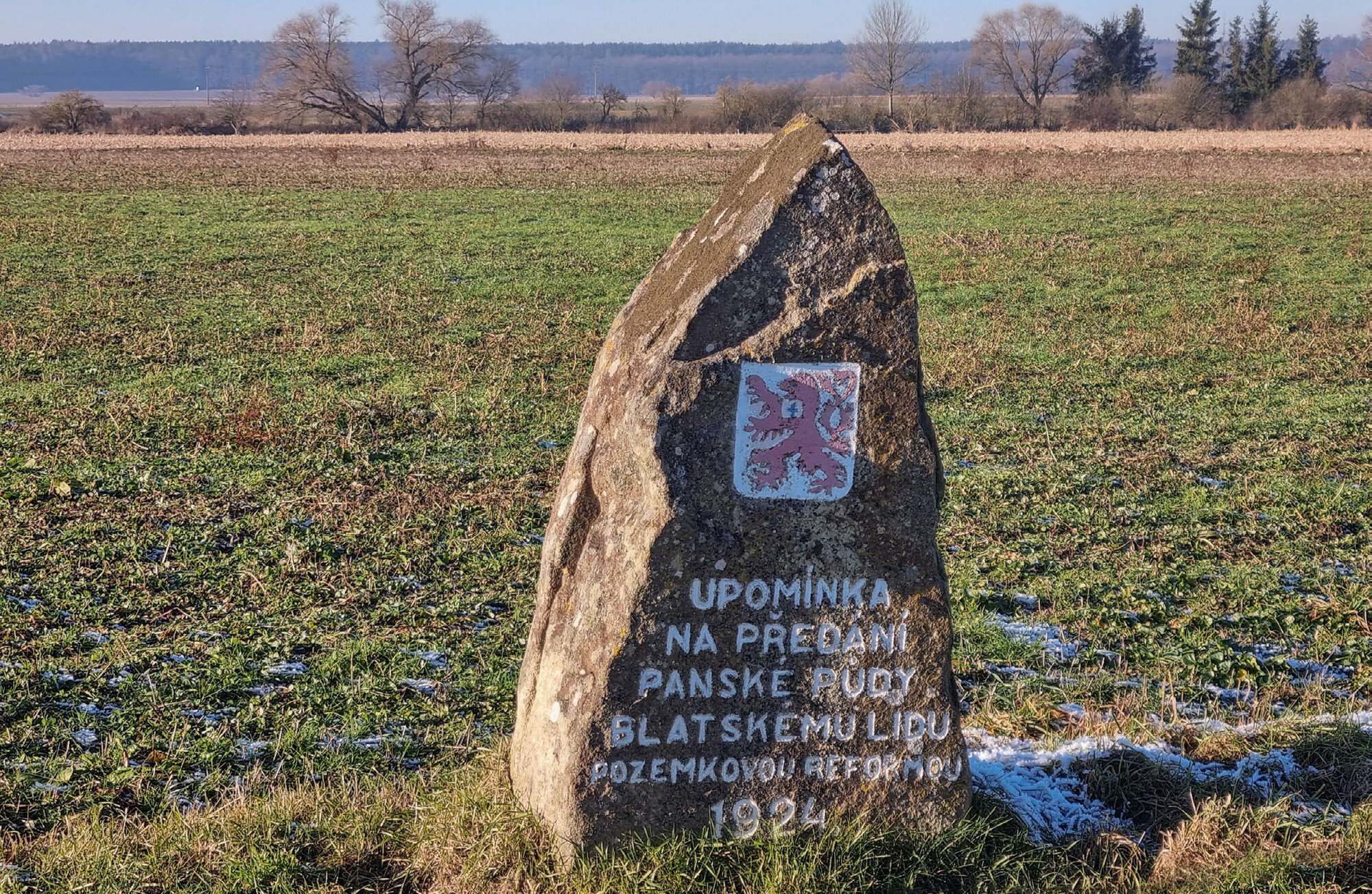
One of the significant milestones in nature conservation in the Czech Republic was the land reform of the First Czechoslovak Republic (the term used for the former Czechoslovakia in 1918 – 1938), which took place a century ago. Its aim was to establish a more socially just system of land ownership, expand the middle class among the agricultural population, and create self-sufficient medium-sized farms that would drive the agriculture modernization. The relevant authorities of the First Republic sought, as part of the reform, to ensure the conservation, protection and management of the natural and cultural heritage of what was then Czechoslovakia.
The implementation of a large-scale land reform was included in the very foundations of the First Republic (the term used for the former Czechoslovakia in 1918 – 1938). The principle that “large estates shall be expropriated for domestic colonisation” had already been included in Masaryk’s Washington Declaration of October 18, 1918. The reasons for such broad political support for the reform can be found primarily in the negative perception of the aristocracy and the anticlerical sentiments of that time.1) Despite the release of half of the confiscated land, the Czechoslovak land reform was one of the largest in Europe. In relative terms—that is, in terms of the proportion of land confiscated—the Czechoslovak land reform ranks third, just behind Latvia and Estonia (Maslov 1929, Peichlová 2011). Of the total area of 4,068,370 hectares, of which 1,312,721 hectares was agricultural land, 1,831,920 hectares was left to owners under various titles, of which 418,858 hectares was agricultural land; the remainder was allocated or sold to new owners or “nationalized for the public good” (Pavel 1938). Land reform had a positive impact on the social structure of rural areas/countryside and their development, leading to an increase in medium-sized farms, a rise in livestock production, etc. (SPÚ 1925).
The land reform had the support of society,2) but also its critics (e.g. Jeřábek 1919). The most prominent among them was one of the leading historians of that time, Josef Pekař. He warned very strongly against the consequences of such an ambitious land reform and proposed a much more gradual pace and a differentiated approach to the reform in the Czech lands and Slovakia (Pekař 1923). He described in detail the reasons for his concerns, particularly regarding the economic impact on public budgets and the threat to cultural and natural monuments. He considered the centuries-old parks surrounding manor houses, the old tree-lined avenues on large estates, and in some places or sites even “true nature reserves” to be seriously endangered as a result of the reform (Pekař 1919).
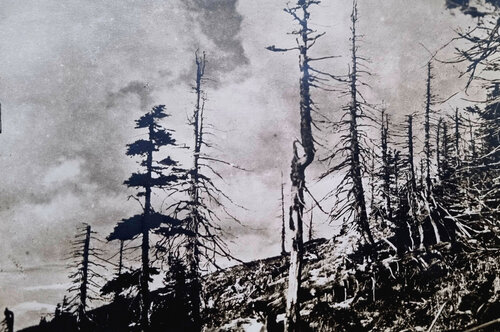
Figure 2. In 1903, Prince John II of Liechtenstein established the first nature reserve in Moravia, covering an area of 172 hectares, known as the Liechtenstein Virgin/Primeval Forest, in the summit parts of Mt. Vozka and Mt. Keprník, northern Moravia (photograph of the local peat bog from 1923). Reserves established before the founding of the Czechoslovakia in 1918 were largely nationalized as part of the land reform. © Rudolf Maximovič
Legislative Framework for the Reform
Constitutional support for the reform legislation came somewhat belatedly in 19203). In fact, the 1918 Act on the Seizure of Large Estates had already foreshadowed the upcoming land reform4): it was intended to ensure that the size of the plots of land subject to land reform would not be reduced. Even the basic law governing the entire land reform, the so-called “Expropriation Act,” was enacted before the Constitution in 19195). The purpose of the framework legislation was to expropriate “large landholdings” located within the Czechoslovak Republic´ territory6). At the same time, this law established the State Land Office (SLO).
One of the most important implementing laws for the Expropriation Act was the “Land Allocation Act7). The law, enacted in 1920, established to whom expropriated land was to be allocated if the state did not use it for public benefit purposes. The second important regulation issued in the same year, which clarified the basic provisions of the Expropriation Act, was the so-called “Compensation Act”8), which established the principles for determining the amount of compensation (purchase price) for the acquisition of expropriated property.
As part of the land reform, representatives of the Ministry of Education and National Enlightenment (MENE) sought to secure territorial protection for significant areas—which had been often already considered nature reserves—by transferring them to the ownership of the Czechoslovak Republic. Examples include the Rokytská, Mlynářská, and Buková in the Knížecí Pláně peat-bogs, Černé jezero/Black Lake and Čertovo jezero/Devil´s Lake (all of them located in the Šumava/Bohemian Forest Mountains), the primeval forest on Žákova hora/Pupils´ Hill, the Českomoravská vysočina/Bohemian-Moravian Highlands), the Milešovka and Říp Hills (Central Bohemia), the Lanžhot old-growth forests (South Moravia), the caves in the Moravský kras/Moravian Karst (South Moravia), the Lednice fishponds (South Moravia), and the park in Průhonice near Prague (Voženílek 1930). The use of agreements with landowners—similar to today’s public-law agreements—became a significant tool for ensuring the protection, conservation and management of valuable natural sites.
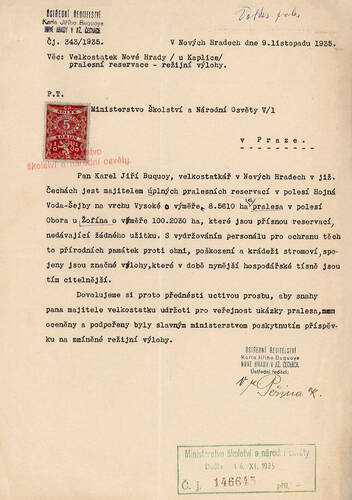
Figure 3. Following the land reform, some landowners had lacked the finances to maintain the natural and cultural monuments that had been released from confiscation. They therefore turned to the State for financial support; in this case, the Central Directorate of K. J. Buquoy is requesting support from the Czechoslovak Ministry of Education and National Enlightenment. Source: Nature Conservancy Central Register, Nature Conservation Agency of the Czech Republic Prague, photo reproduction © Josef Votrubec
Exemption from Expropriation for Nature Conservation Purposes
The Expropriation Act9) set forth two exceptions allowing for the exclusion of land from expropriation based on the nature of the property and certain types of ownership (municipal, district, and provincial property was excluded from expropriation). However, a third exception, enacted later in the Land Allocation Act7), is important for regional nature conservation. The provision required the State Land Office to ensure “that the allocation does not disrupt natural beauty and the character of the landscape and that natural, historical, and artistic monuments are not harmed.”9) While the inclusion of the provision was appreciated—“Were it not for this, instead of beautiful trees and flowers, beets would be growing around the castles today!” (Batěk 1925)—it did not silence the critical voices represented by J. Pekař (see above) and many other prominent figures. Experts and journalists pointed out the impossibility of maintaining castle parks with valuable dendrological collections using the income from the remaining estates, especially when such a park became freely accessible to the public. They cited, for example, the fate of the Průhonice or Buchlovice parks, or “how the once-beautiful Konopiště parks have been plundered since being opened to the public.” Land reform was also criticized for failing to adequately protect monuments, tree-lined avenues, and orchards—as well as the natural environment and landscape—after the land was allocated to new owners. The failure to account for the higher costs associated with the maintenance of natural and cultural heritage was seen as the greatest shortcoming of the legislation. The disadvantaged landowners found no support even from the Supreme Administrative Court, which stated that “there is no justification for allocating more land to the maintenance of these unproductive estates” (Batěk 1925).
As noted above, the State Land Office had the option, pursuant to an exception in the Land Allocation Act, to allow the owner—at his request—to retain above the limit for an extensive property6) additional land and structures containing “natural, historical, and artistic monuments”9) and to set conditions for their use that were binding on the owner’s heirs or other successors and were to be recorded in the land registers as “public law encumbrances.” The SLO assessed each individual request on a case-by-case basis and did not always grant them. For example, it did not grant Jan II of Liechtenstein’s request to release the so-called “Předměstský les/Suburban Forest” near the town of Uherský Ostroh, as it found that the forest was of a standard commercial nature11). In some situations, the office also utilized other forms of agreement with the owner. For example, in 1933, it had concluded an agreement with the Forest Directorate of Karel Jiří Buquoy to retain the “Prales/Virgin Forest” reserve (part of today’s Žofín Forest National Nature Reserve) “for free management until 1955,” and it was not released from expropriation. This did not happen until a year later (see below).
Ensuring the conservation, protection and management of natural and cultural heritage during the implementation of land reform was complicated by a jurisdictional dispute between the State Land Office and the State Heritage Authority, which was ultimately decided by the Supreme Administrative Court¹⁰, which ruled in favour of the Ministry of Education and National Enlightenment. The SLO continued to decide on exemptions from expropriation; owners submitted their applications to the SLO, listing the natural and cultural monuments they wished to retain, along with a request for additional land to cover their maintenance costs. The SLO was required to seek the opinion of the Ministry of Education and National Enlightenment. At the Ministry, the agenda was handled by the Department of Public Enlightenment under the leadership of Zdeněk Wirth. Rudolf Maximovič prepared the statements regarding the release of natural monuments, which constituted the largest part of the agenda (Stejskal 2006). The expert opinion was drafted based on an on-site inspection and discussion with the owner and, in addition to an assessment of the monument’s significance, also included conditions for its continued use. The SLO incorporated these conditions into its decision, which usually included a warning that in the event of non-compliance, the State Land Office would have the right to “continue to consider the released land and structures as confiscated and to immediately take them over and allocate them.” Because the use of the exception under the Allocation Act—that is, for the purpose of ensuring the conservation, protection and management of natural and cultural heritage—allowed for a significant increase in the area of property released from requisition, and the owner was entitled to retain the properties in question provided the conditions were met, this exception was widely requested12) This placed a heavy burden on the Ministry of Education and National Enlightenment, leading to situations where the SLO decided on the release but the specific terms were not determined until later. An example is the decision to release land from requisition in the case of the Nové Hrady and Rožmberk estates dated December 18, 1934, by which the NLO in Prague subsequently released the land from requisition based on a request from the owner – Karel Jiří Buqoy – 4,033.3 hectares of predominantly forested land, provided that “the owner complies with the conditions” to be subsequently added by the Ministry13.
Conditions for Release
The primary aim of the conditions was to ensure the preservation of the natural and cultural heritage. The areas were not to be reduced in size, built upon, used for quarrying, or utilized for other purposes. Forest stands were to be managed sustainably, using selective cutting, and only native woody plant species were to be used for reforestation.
For example, in the aforementioned case of the Nové Hrady and Rožmberk estates, the Ministry of Education and National Enlightenment supplemented the conditions with a protocol in 1935, following a local investigation conducted on behalf of the Ministry by Chief State Conservation Officer Rudolf Maximovič14). According to the amended conditions, the owner was required to ensure “strict /complete/ preservation as a primeval forest in the Hojná Voda–Šejby forest district on an area of 8,561 hectares, in which any activity would be permanently prohibited. Fallen trunks were not to be utilized, except in the event of an imminent bark beetle threat or where a forest road ran through the reserve” (this refers to the current Hojná Voda National Nature Reserve), as well as in the Obora/Game Preserve forest district, to continue maintaining the “complete reserve” established as early as 1838 and permanently exclude it from commercial use (this is the core of the current Žofínský prales/Žofín Virgin Forest National Nature Reserve).
In the case of castle grounds frequently released from expropriation, the owner was required to preserve their integrity and ensure adequate maintenance. Significant changes and renovations were subject to prior approval by the heritage authority or, in the case of natural sites, by the MENE. Trees in parks were to be protected, maintained, and replaced in a timely manner in the event of death; e.g. specific protective conditions were established for non-forest trees in Babiččino údolí/Grandmother´s Valley (today’s National Nature Reserve) owned by the Náchod Estate: “All trees, unless they are part of forests, that form avenues, tree-lined paths, or stand individually or in groups in the meadows of the Babiččino údolí/Grandmother´s Valley , especially trees distinguished by their size, age, or historical significance, shall be spared in every way possible and shall not be felled or pruned without prior permission from the State Heritage Authority.”15
The terms and conditions for releasing some sites/areas placed great emphasis on making the relevant sites and buildings accessible to researchers and, in some cases, to the general public. For example, in the above case of the Náchod Estate, the State Land Office, in agreement with the Ministry of Education, Ministry of Education and National Enlightenment, stipulated to the owner, Bedřich of Schaumburg-Lippe, inter alia, that all roads and trails16) would be accessible to pedestrians visiting the Babiččino údolí/Grandmother´s Valley and that no motorized or other vehicles would be permitted there. It was further stipulated that “free camping, lighting fires, and walking off the trails and paths, as well as swimming in areas not designated for that purpose, shall not be permitted on the retained properties, particularly in the Babiččino údolí/Grandmother´s Valley. Furthermore, the owner was required to “allow the installation, placement, and maintenance of tourist signs and directional signs,” and conversely, not to permit the placement of advertising signs of any kind15). From these few selected conditions, it is clear that the SLO sought to regulate the activities of third parties through the owners.
Areas Released from Expropriation
Areas that could be released from expropriation included, inter alia, those designated as parks, nature parks, or areas that otherwise serve to enhance the landscape, or whose purpose is to preserve an example of the landscape’s original scenery/character9). The criteria were general, and therefore depended on the assessment made during specific proceedings. The release of natural beauties and monuments from requisition was closely watched by the public and widely covered by the media. The scientific community proposed many sites for conservation/protection, while the public criticized the release from requisition of objects that were allegedly of no value (e.g. the garden in Červené Pečky [Pšeničková 2000]).
In total, more than two hundred sites were left in the hands of their original owners for the purpose of protecting natural monuments (as of 1930, this included 205 sites of natural beauty [Voženílek 1930]). Today, less than a third of them are protected within the Specially Protected Areas network, i.e. within the nationally designated protected areas. Below is a selection of only a few that are currently protected by the State Nature Conservancy.
The most common type of released sites/areas are castle parks, such as Kačina, Letovice, Paskov, Petrohrad, Veltrusy, Vinoř, and Vlašim, which today serve as refuges for a wide range of endangered species and are mostly specially protected as Nature Monuments. Landscape units have also been protected; today, they often are the cores of National Nature Monuments, Nature Reserves, National Nature Reserves, or Protected Landscape Areas, e.g. as the Prachovské skály/Prachov Rocks, Hruboskalsko, the Adršpašské skály/Adršpach Rocks, Babiččino Valley/Grandmother´s Valley, Terčino údolí/TerkaValley, and the Žehuňská obora/Žehuň Game Preserve, inter alia. (However, some sites/areas met a different fate, e.g., the Vltava River Valley with the Svatojánské proudy/St. John´s Flows rapids, which was released from confiscation on the grounds of protecting natural beauty.) Many of the virgin/primeval forest reserves were provided with protection by conditional retention with the original owner, e.g., Javorina, Kokšín, or Vrapač. Natural monuments whose protection, conservation and management justified their exclusion from confiscated property also included karst phenomena (e.g. the Mladečské jeskyně/Mladeč Caves), distinctive rock formations (e.g., Mrhatina or Mnichova skála(Monk´s Rock near the town of Telč, Výrova skála/Eagle Owl´s Rock near the village of Tavíkovice, etc.), veteran/memorable trees (e.g. Oldřichův dub/Oldřich’s Oak in the village of Peruc, Napoleonův dub/Napoleon’s Oak near the town of Znojmo), and arboreta (e.g. the Americká zahrada/American Garden, Bukovina in the Český ráj/Bohemian Paradise).
The Benefits of Land Reform for Nature Conservation
Even already while the reform was underway, its benefits were viewed with mixed contradictory opinions. Both the SLO and the MENE highlighted the benefits (cf. SPÚ 1925), including establishing state reserves and the securing of additional ones through agreements with landowners. Moreover, a significant part of the professional community and journalists, assessed the situation much more critically17).
The World War II and post-war developments, nationalisation, the expulsion of the German population, collectivisation and socialisation of the countryside caused the breaking the owners’ relationships to the land and almost wiped out the results of the First Republic land reform. All this was completed after 1989 by the state land privatisation, which did not even attempt to take into account the objectives of the First Republican land reform. The positive impact of the reform on the agricultural landscape - the establishment of medium-sized farms and family farms and the increase in rural employment - has thus largely disappeared. The benefits of the now unimaginable interference with property rights are difficult to assess even after a century. In any case, however, the persistent efforts of the completely understaffed Department of Enlightenment at the then Czechoslovak Ministry of Education and National Enlightenment to ensure the protection of areas of natural importance as part of the land reform should be highlighted (Pešout 2019). During the First Republic, when several attempts to pass a nature conservation law failed (Pešout 2022), these efforts were the only real form of territorial protection. It can be stated that without the efforts of the above MENE´s Department of Enlightenment, many sites/areas would not have been preserved, areas that today rank among the most significant Nature Reserves or Nature Monuments from a nature science perspective (Pešout 2013). ■
- - - -
Notes:
1) See, e.g. the excerpt from a speech by T.G. Masaryk: “Our homeland was a land of large estates; as a result of the forced re-Catholicization of this Hussite country by the Habsburg dynasty, nearly three-quarters of the land was confiscated and divided between the Crown and its Catholic administrators; the republic abolished the aristocracy, the owners of the large estates, took over their land, paid them a fair price for it (the enemies of our republic speak of ‘land confiscation’), and distributed the land among the landless; in this way, around half a million new landowners were created. I am presenting you with only a very brief outline of our land reform, which is the greatest and most difficult undertaking of the new republican administration; it was, in fact, a great economic and social revolution—mistakes may have been and are being made, but all in all, the activity deserves the attention of thoughtful statesmen in all countries.” (Masaryk & Fejlek 2003)
2) “Land reform brought Czechoslovakia quite far from Eastern conditions, and was one of the forces that brought the state closer to and made it more like the West.” (Peroutka 1934)
3) Section 109 of the Constitutional Charter No. 121/1920 Gazette of Laws and Regulations, dated February 29, 1920; Act No. 121 of February 29, 1920, enacting the Constitutional Charter of the Czechoslovak Republic.
4) No. 32/1918 Gazette on the Seizure of Large Estates, dated November 9, 1918.
5) No. 215/1919 Gazette on the Confiscation of Large Landholdings, dated April 16, 1919.
6) “Large landholdings are defined as groups of real estate properties, together with the rights associated with their ownership, where the total area located within the territory of the Czechoslovak Republic and owned by a single person or by the same co-owners exceeds 150 hectares of agricultural land (fields, meadows, gardens, vineyards, hop fields) or 250 hectares of land in total. Unmarried spouses are considered a single person” (Section 2 of Act No. 215/1919 Gazette., as amended5)).
7) Act No. 81 of January 30, 1920, which, pursuant to Section 10 of Act No. 215 of April 16, 1919, as amended, establishes provisions regarding the allocation of confiscated land and regulates the legal relationship with respect to the allocated land (the Land Allocation Act).
8) Act No. 329 of April 8, 1920, on the Acquisition and Compensation for Confiscated Real Property (Compensation Act).
9) According to Section 20 of the Land Allocation Act7): “When drawing up the plan, the State Land Office shall ensure that the allocation does not impair the natural beauty or scenery/character of the landscape and that it does not damage natural, historical, or artistic monuments. To this end, the State Land Office may authorize that areas designated as parks, nature parks, or areas otherwise serving to enhance the landscape, or whose purpose is to preserve an example of the original scenery/character of the landscape, or to secure and protect historical monuments and their closely related surroundings, be left to the owner in addition to the area of land which, pursuant to Section 11 of the Act of April 16, 1919, No. 215 Gazette of Laws and Regulations, may be released from expropriation to the current owner if the owner complies with the conditions set by the State Land Office in agreement with the relevant ministries regarding the accessibility of those sites to the public, to scientist and artists, or their use for philanthropic purposes.”
10) Judgment No. 22763 of the Supreme Administrative Court, dated December 23, 1924.
11) State Land Office in Prague, Decision No. 33532/28-II/3 dated March 22, 1928.
12) By 1933, under the Land Allocation Act (Section 209)), 803,072 hectares of land had been released from requisition to 600 landowners (Pšeničková 2000). A total of 1,178,758 hectares were released from requisition, of which 67,989 hectares were agricultural land (Peichlová 2011).
13) State Land Office in Prague, Decision No. 67649/34-II/1 dated December 18, 1934.
14) Report of June 28, 1935. Reservation Book of the Žofínský prales/Žofín Primeval Forest National Nature Reserve, Box No. I, Nature Conservancy Central Register, Nature Conservation Agency of the Czech Republic Prague.
15) State Land Office in Prague, Addendum Ref. No. 158006/31-II/1 dated September 11, 1931, to Decision Ref. No. 146025/26-II/2 dated February 17, 1927.
16) Excluding the path leading past the gazebo to Bažantnice/Pheasantry, see 15)
17) “...the State Land Office should not even mention its own contribution to establishing nature reserves in the Šumava/Bohemian Forest Mountains virgin/primeval forests, the national parks near Karlův Týn/Karlstein, and the Aderbašské skály/Adersbach Rocks. – Or should the virgin/primeval forests, which foreign nobles have preserved for generations, for centuries, be cut down, and should quarries be opened in the Adersbašsské skály/Adersbach Rocks…?” (Batěk 1925).
- - - -
Cover photo: A monument near the village of Zálší in the Soběslavská Blata/Soběslav Marshes region (South Bohemia) bearing the inscription “In memory of the transfer of manorial land to the people of Blata region through the 1924 land reform” illustrates support for the First Republic’s land reform—an intervention in the private rights of landowners that would be unimaginable today. © Pavel Pešout
- - - -